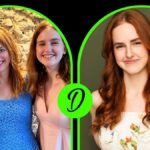
Vera Davich is known publicly almost entirely through her brief marriage to Scott Patterson, the American actor who later became widely recognized as Luke Danes on Gilmore Girls. Patterson’s entertainment career later included film, television, voice work, and a return to the Gilmore Girls universe, but his marriage to Davich belonged to an earlier chapter of his life. Reliable biographical references record that they married in 1983 and divorced in 1985, when Patterson was still pursuing professional baseball rather than television stardom.
Because Davich did not build a public career around that connection, responsible coverage requires a different approach from a conventional celebrity biography. Her name attracts curiosity because of Patterson, yet that curiosity should not be used to manufacture a career, age, family history, or present-day lifestyle that reliable sources do not establish.
Quick Bio
| Detail | Verified Information |
|---|
| Full Name | Vera Davich |
| Known For | Former wife of Scott Patterson |
| Relationship | Married to Patterson in 1983; divorced in 1985 |
| Public Profile | Private individual |
| Age | Not established by reliable public biographical sources reviewed |
| Residence | No reliably documented current residence |
| Children | Secondary reporting states she and Patterson had no children together |
| Known Philanthropic Interests | No well-sourced public philanthropic activity specifically attributed to Davich in sources reviewed |
| Social Media Presence | No verified public account identified in reliable sources reviewe |
Who Is Vera Davich?
Vera Davich is Scott Patterson’s former and first publicly documented wife. That relationship is the central verified reason her name appears in entertainment biographies today. Film Reference records Patterson as marrying Davich in 1983 and divorcing her in 1985, while IMDb likewise lists the marriage as lasting from 1983 to 1985.
Her significance should therefore be described historically rather than exaggerated. Davich was connected to Patterson before the period that made him famous to television audiences. Patterson became best known for portraying diner owner Luke Danes on Gilmore Girls, a role that turned him into a recognizable television personality years after the marriage had ended. Hallmark’s official cast biography identifies Luke Danes as his signature Gilmore Girls role and also documents his wider acting career.
The Private Life of Vera Davich
What distinguishes Vera Davich from many people connected to actors is the absence of an established public career built around the relationship. Secondary biographies consistently describe her as having remained outside the entertainment spotlight after the divorce, and no strong public record shows a later media career, recurring interviews, or celebrity-brand activity.
That restraint is important when writing about her. Privacy does not automatically prove particular personality traits such as humility, shyness or a dislike of fame. Those would be interpretations rather than facts. What can be said is simpler: the available public record is dominated by the marriage itself rather than by Davich’s independent public activities. A trustworthy biography should respect that distinction rather than transform silence into invented personal history.
Early Life and Background of Vera Davich
A frequently repeated online account claims that Vera Davich and Scott Patterson were high school sweethearts and links them to Haddonfield Memorial High School in New Jersey. Baseball-Reference independently supports Patterson’s attendance at Haddonfield Memorial, which lists the school in his baseball record.
Several secondary biographies claim that Davich attended the same school, including profiles specifically about her, but stronger sources documenting Patterson’s life do not provide comparable detail about Davich’s education.
For that reason, the high-school-sweetheart story can be described as widely reported secondary information, rather than elevated to the same evidentiary level as the documented 1983–1985 marriage. Details about Davich’s parents, university education, occupation, or childhood should likewise not be supplied without stronger evidence.
Marriage and Partnership With Scott Patterson
Vera Davich and Scott Patterson married in 1983 and divorced in 1985. Those dates are among the clearest facts about their relationship.
The timing provides useful factual context. Patterson was a professional minor-league pitcher at the time. Baseball-Reference records him as a pitcher drafted by the Atlanta Braves in 1980, while historical reporting documents his subsequent baseball career and movement through professional organizations.
This means their marriage belonged to Patterson’s baseball years, not his Gilmore Girls years. Major biographical sources reviewed do not establish a significant archive of red-carpet appearances, entertainment interviews, or promotional events featuring Davich and Patterson as a couple. Their relationship had already ended long before Patterson achieved his greatest television recognition.
Vera Davich’s Role Behind the Scenes
It would be tempting to describe an actor’s former spouse as a hidden force behind his success, but there is no strong factual basis for assigning that role to Vera Davich. Patterson’s later acting achievements developed after their divorce, and the documented timeline makes it inappropriate to credit Davich with professional decisions for which there is no evidence.
Patterson spent seven years in professional minor-league baseball before establishing himself in acting, and contemporary Los Angeles Times reporting shows that he was still actively pursuing baseball opportunities in 1986, after the marriage ended.
The more accurate interpretation is historical: Davich was part of Patterson’s early adulthood, before his transformation from professional athlete to working actor and, eventually, television star.
Family Life: Raising the Next Generation
Secondary sources state that Vera Davich and Scott Patterson had no children together. This wording matters because it avoids unsupported claims about Davich’s later family life.
Patterson later became a father. Current biographical records list him as having one child, and he has publicly discussed his son in interviews related to his later life and career.
Therefore, articles that imply Davich is the mother of Patterson’s child conflate two distinct periods in his personal history. The verified chronology places Davich in his first marriage in the 1980s, while Patterson’s experience of fatherhood belongs to his much later family life.
Philanthropy and Community Engagement
The material reviewed contains no well-sourced public evidence establishing specific charities, foundations, or philanthropic campaigns operated by Vera Davich. That absence should not be converted into either a positive or negative judgment.
Celebrity-related websites sometimes expand private biographies by assigning charitable interests, community activities, or causes without documentation. Doing so would conflict with E-E-A-T principles. Unless a reputable source, charity record, or public statement directly associates Davich with such work, philanthropy should not be presented as an established element of her biography.
The same standard protects readers and the person being discussed: documented activity belongs in a biography; assumptions do not.
The Power of Privacy: Influence Without Publicity
Vera Davich offers an unusual contrast with modern celebrity culture. Her former husband’s public profile eventually became substantial: Gilmore Girls ran for seven seasons, Patterson later revisited the series through his I Am All In podcast, and his association with Luke Danes remains prominent decades after the show premiered.
Davich, meanwhile, is not documented as having used that connection to maintain a comparable public platform. It would be speculation to explain why she remained private, but the result is clear: public interest in her far exceeds the amount of reliable personal information available.
That gap is precisely why careful sourcing matters.
Public Curiosity and Misconceptions About Vera Davich
The biggest misconception surrounding Vera Davich is that repeated online claims automatically become verified facts. Her age, current residence, occupation, wealth, later relationships, and personal motivations are sometimes presented with unwarranted certainty.
Another commonly repeated claim is that immaturity caused the divorce. Several secondary articles attribute such a comment to Patterson, but the sources reviewed did not include a clearly traceable, high-quality primary interview establishing the exact statement.
Consequently, the safest factual description is that the marriage ended in 1985. Any more detailed explanation of the couple’s private reasons should be properly sourced before being presented as settled fact.
Legacy and Future
Vera Davich’s public significance remains tied to a short but genuine chapter in Scott Patterson’s early life. Their marriage occurred when Patterson was pursuing professional baseball and ended long before Luke Danes made him familiar to millions of television viewers.
Her story therefore does not require invented drama to be interesting. It illustrates how the past of a successful public figure can create lasting curiosity about someone who never developed a comparable public persona.
For future coverage, the standard should remain simple: if new information comes from Davich herself, Patterson, public records, or another reputable source, it can be responsibly incorporated into the biography. Until then, the documented marriage and its historical context are more valuable than unsupported detail.
Conclusion
Vera Davich and Scott Patterson were married from 1983 until 1985, during Patterson’s years as a professional minor-league baseball player and well before his breakthrough as Luke Danes on Gilmore Girls.
Beyond that relationship, Davich has left a very limited, reliably documented public footprint. That fact should shape how her biography is written. Her privacy is not an invitation to invent occupations, wealth estimates, family details, motives, or personality traits. Instead, the most trustworthy account recognizes her as part of Patterson’s early personal history while clearly separating firm evidence from repeated internet claims. In an era when celebrity-adjacent biographies often reward speculation, Vera Davich’s story is best understood through careful chronology, restrained reporting and respect for what the public record can—and cannot—prove.
Read this too:Jessica Dornan: The Private Life, Creative Work and Family Story of Jamie Dornan’s Sister
(FAQs)
1. Who is Vera Davich?
Vera Davich is best known as actor Scott Patterson’s first publicly documented wife.
2. When did Vera Davich marry Scott Patterson?
Biographical references record their marriage as beginning in 1983.
3. When did Vera Davich and Scott Patterson divorce?
Their marriage ended in 1985, approximately two years after they married.
4. Did Vera Davich and Scott Patterson have children?
Secondary biographical reporting states that they had no children together.
5. Was Vera Davich Scott Patterson’s high-school sweetheart?
Several secondary biographies describe them as high-school sweethearts, although the strongest independent documentation reviewed clearly establishes Patterson’s Haddonfield schooling rather than Davich’s complete educational history.
6. Why did Vera Davich and Scott Patterson divorce?
The verified fact is that they divorced in 1985. Claims that immaturity caused the breakup circulate in secondary biographies, but the primary interview does not clearly establish this in the reliable sources reviewed.
7. Is Vera Davich active on social media?
No verified public social media account belonging to Vera Davich was identified among the reliable sources reviewed.
8. What is Vera Davich known for today?
Her public recognition remains primarily connected to her 1983–1985 marriage to Scott Patterson, rather than to an independently documented entertainment career.