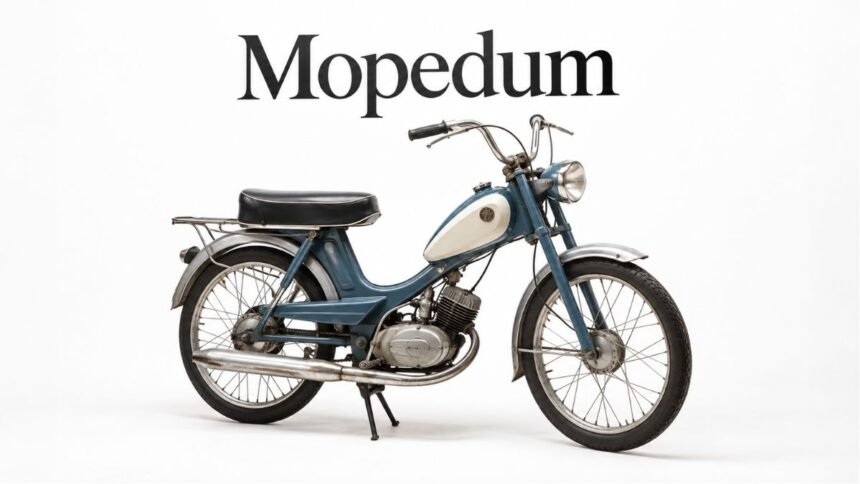
Mopedum is closely linked to vintage mopeds, Swedish daily life, and nostalgia from the 1950s to the 1970s. For many years, Mopedum – Svenska Nostalgimuseet was a museum in Nynäshamn, Sweden, where visitors could see historic mopeds along with recreated rooms, household items, clothing, toys, furniture, and other reminders of post-war Swedish life.
The museum offered more than just a display of old mopeds. Its exhibitions focused on the years 1952 to 1979, using the moped’s development to show changes in technology, design, and daily life. Many described this period as the Swedish moped’s “golden age.”
The original museum in Nynäshamn has closed, but the story of Mopedum continues. Many of its recreated historical settings were bought by Vällingby Centrum, where they are now part of a nostalgia exhibition. The Mopedum website also shares information about vintage mopeds and their history.
What Is Mopedum?
Mopedum was a Swedish nostalgia museum focused on the cultural history of mopeds and the world where they became popular. Instead of showing vehicles alone, the museum recreated period settings to show how Swedish homes, shops, styles, and daily items changed along with transportation.
The main timeline ran from 1952 to 1979. Visitors walked through displays from different parts of that era, seeing mopeds as part of a bigger social story. The museum included scenes like an old shop, a 1950s kitchen, period interiors, and displays of household items and clothing.
This approach made Mopedum interesting to more than just motorcycle or moped fans. The museum focused on memories and daily life, with the moped serving as a strong symbol connecting the decades.
The Origins of Mopedum
The museum started with the collecting passion of Nisse and Lotta Skogmyr. Reports from the time describe how the couple gathered nostalgic items and turned an old bathhouse in Nynäshamn into a museum with moped displays, period objects, and spaces for visitors.
Plans for Mopedum were talked about publicly even before the museum opened. A vintage-moped club publication described ideas for a center in Nynäshamn focused on nostalgia and classic mopeds, aiming to highlight the moped’s most important years.
By 2012, sources described Mopedum as a new museum, and club reports from that time covered its official opening, which featured Swedish entertainer Lill-Babs.
Why the Years 1952–1979 Mattered
Mopedum focused mainly on the years 1952 to 1979, instead of covering the whole history of motorized two-wheelers.
This focus gave the exhibition a clear historical structure. The development of mopeds served as a timeline, while other objects showed bigger changes in Swedish life. Museum descriptions from the time called these years the moped’s “golden age” and highlighted the link between changing vehicles and home life.
The idea went beyond just showing engines or explaining how mopeds worked. Visitors could see how transportation fit in with furniture, products, clothes, toys, and new ideas about modern life.
This mix turned a collector’s display into a way of telling the story of social history.
Inside the Mopedum Museum
What made Mopedum stand out most was its use of recreated environments.
DescriptioDescriptions of guided visits mention a 1950s kitchen, a small shop, and a filling station from that era, along with clothing, furniture, and many familiar objects from past decades.al academic commentary also noted that the museum portrayed everyday Swedish life between 1952 and 1979 through staged scenes, while displaying approximately 70 mopeds.
A period vehicle-club report similarly described A vehicle club report from the time also described nearly 70 vintage mopeds displayed with objects from the same decades.ehicle collection and an immersive look at changing Swedish material culture.
More Than a Collection of Mopeds
The name Mopedum might make you think only of mopeds, but reports from the time show the museum was never just about motorcycles or scooters.
The museum included household goods, toys, clothes, furniture, cultural items, and recreated interiors. One account called it a time capsule built around mopeds, but expanded to show a much wider picture of life from 1952 to 1979.
Another unique feature was the museum’s use of a fictional family’s journey through the decades as a way to tell its story. Visitor accounts describe following these characters through changing settings, with mopeds and other objects established the period.
This storytelling approach made the collection easy to understand, even for visitors who didn’t know much about vintage vehicles.
The People Behind Mopedum
Public records and subsequent statements from Vällingby Centrum identify Nisse Skogmyr and Lotta Skogmyr as the owners and creators of Mopedum.
Their role mattered because Mopedum was mainly a museum created by collectors, not just a typical vehicle exhibition run by an institution.
Reports from enthusiasts at the time credited the couple with collecting the objects and creating the museum’s settings. Their collection grew to include enough items to show several decades of daily life, not just one narrow category.
This way of collecting also explains why it was important to keep the interiors together later on. Splitting up the collection would have lost much of the historical context created by grouping related items.
Mopedum and Swedish Everyday History
Mopedum’s historical value came from how everyday objects connect to personal memories.
Big historical events are recorded in official documents, newspapers, and by major institutions. Everyday life, though, is often remembered through kitchens, toys, packaging, clothes, furniture, vehicles, and products that once seemed ordinary.
Mopedum brought these objects together in settings people could recognize.
Academic commentary on Swedish uses of history specifically noted Mopedum as a nostalgia museum that portrays everyday Swedish life from 1952 to 1979 and presents its substantial moped collection.
For older visitors, these objects could bring back personal memories. For younger visitors, they offered real examples of how people lived in earlier times.
Why Did Mopedum Close?
The original Mopedum in Nynäshamn closed permanently at the end of 2022.
This matters because old travel pages and visitor information can still show up in search results, which might make it seem like the original museum is still open.
Before the closure, Swedish organizations arranging visits explicitly warned that people needed to visit before December 28, 2022, because the museum was closing for good.
Vällingby Centrum later explained that Nisse and Lotta Skogmyr, the owners and creators of Mopedum, chose to retire. This gives a clear reason for the museum’s closure, instead of leaving people to guess about financial problems or other causes.
What Happened to the Mopedum Collection?
Closing the original museum did not mean all its historic settings disappeared.
Vällingby Centrum bought the museum’s contents and several mopeds after the creators retired. The center said the goal was to keep the collection together, rather than let the unique items be split up and sold separately.
The recreated rooms were later set up throughout Vällingby Centrum’s public areas.
This made sense because both Mopedum’s displays and Vällingby’s own style are closely tied to mid-20th-century Sweden.
Mopedum at Vällingby Centrum
A new nostalgia exhibition using former Mopedum material officially opened at Vällingby Centrum on March 17, 2023.
Today, Vällingby Centrum has displays like a 1950s kitchen, a historic shop, a 1970s children’s room, and a selection of Swedish and European mopeds made between 1952 and 1979.
Brands represented in the moped display include Crescent, Husqvarna, Monark, Fram and Victoria.
This exhibition gives part of Mopedum’s physical legacy a new life, even though the original museum in Nynäshamn is closed.
Mopedum Online Today
The website Mopedum.se now focuses on “veteranmopeder och nostalgi,” which means veteran mopeds and nostalgia.
The site publishes articles about collecting vintage mopeds, Swedish moped history, the story of Monark, and tips for people interested in older mopeds.
Readers should remember that the current website is different from the old museum. The original Mopedum in Nynäshamn is closed, even though the name is still used online and some of the collection is kept elsewhere.
Why Mopedum Still Matters
Mopedum shows how a focused collecting hobby can save more than just machines.
A vintage moped tells us about engineering and design, but when it’s shown with kitchens, clothes, ads, toys, and products from the same time, it becomes part of a bigger historical story.
That was what made Mopedum special.
The original building no longer welcomes visitors, but the collection hasn’t disappeared. Some parts are kept at Vällingby Centrum, and the Mopedum name is still linked to vintage moped culture online.
In this way, Mopedum has changed shape instead of being forgotten.
Conclusion
Mopedum was a unique Swedish nostalgia museum that combined vintage mopeds with recreated settings showing daily life from 1952 to 1979. Started by Nisse and Lotta Skogmyr in Nynäshamn, it took visitors on a journey through the years when mopeds became a common part of Swedish transport and youth culture.
The original museum closed for good in December 2022 when its creators retired. Still, a big part of its story lives on. Vällingby Centrum took over the historic settings and several mopeds, and now includes them in its own nostalgia exhibition.
Today, anyone looking up Mopedum should know the name refers to the old museum in Nynäshamn. Its legacy continues through preserved exhibits, and the name is still active online with vintage moped content.
FAQs,
1. What is Mopedum?
Mopedum was a Swedish nostalgia museum in Nynäshamn centered on veteran mopeds and everyday Swedish culture from 1952 to 1979.
2. Is Mopedum still open?
No. The original Mopedum – Svenska Nostalgimuseet in Nynäshamn closed permanently in December 2022.
3. Where was Mopedum located?
The museum was located at Vikingavägen 39 in Nynäshamn, Sweden.
4. Who created Mopedum?
Mopedum was created and owned by Nisse Skogmyr and Lotta Skogmyr.
5. What years did the Mopedum exhibitions cover?
Its main historical timeline covered 1952 through 1979, a period presented as the golden era of the Swedish moped.
6. Was Mopedum only a moped museum?
No. Although vintage mopeds were central to the concept, the museum also featured reconstructed rooms, clothing, furniture, toys, and other objects representing everyday Swedish life.
7. What happened to Mopedum after it closed?
Vällingby Centrum acquired significant parts of the collection and several mopeds. The recreated environments are now on display in the shopping center.
8. Does Mopedum still have a website?
Yes. Mopedum.se currently publishes content focused on veteran mopeds, vintage vehicles and nostalgia.