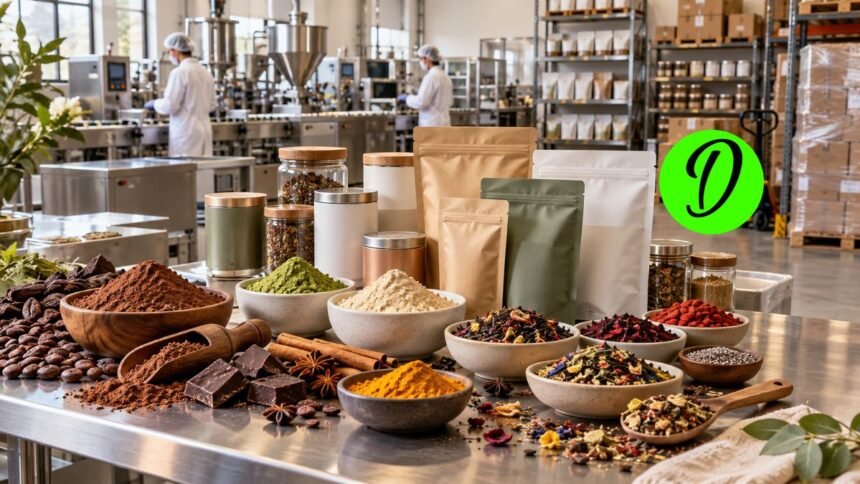
Launching a successful food brand requires more than an appealing recipe. Entrepreneurs must secure ingredients, find manufacturing partners, arrange packaging, manage inventory, and establish reliable distribution channels. For smaller businesses, those responsibilities can become particularly challenging when manufacturers demand production volumes beyond their budgets.
Foodie Co is an Australian food manufacturing and distribution business that helps address these challenges. Based in Dingley Village, Victoria, the company provides powder-blending manufacturing, product development support, packaging, third-party logistics, and retail distribution.
Rather than operating primarily as a traditional consumer-facing food brand, Foodie Co helps other businesses develop and deliver their products. Its services are designed especially for startups and smaller enterprises that want more flexible manufacturing arrangements.
Understanding Foodie Co means examining the business activities that connect a product concept with commercial production and retail distribution. Its publicly described services offer a useful picture of the opportunities and practical considerations facing emerging Australian food brands.
Who Is Foodie Co?
Foodie Co is a Melbourne-area contract manufacturing and distribution company that helps food and beverage businesses bring products to market.
Its operations focus particularly on powdered food products, including drinking chocolate, latte mixes, nutritional blends, and spices. The company’s public materials describe services covering formulation, blending, packing, ingredient sourcing, warehousing, and distribution.
What distinguishes its stated approach is an emphasis on businesses that cannot necessarily commit to the production volumes demanded by larger manufacturers.
Foodie Co explains that sourcing difficulties and minimum order quantities helped shape its business proposition.
For an emerging food entrepreneur, outsourcing production can provide an alternative to establishing a manufacturing facility. Foodie Co offers several related services under one business, although the precise arrangements depend on each customer’s product and requirements.
This combination of manufacturing and logistics makes the company part of the business-to-business food supply chain.
The Private Business Behind Foodie Co
Foodie Co operates as a privately held business rather than a publicly listed corporation. Its LinkedIn company profile identifies its headquarters in Dingley Village and categorizes its operations within food confectionery manufacturing.
The company’s public presence focuses on its manufacturing capabilities and services for business customers. Its website provides information on production, distribution, raw materials, and how to submit inquiries.
This service-oriented presentation is relevant because contract manufacturers often build relationships with other businesses rather than seeking recognition from ordinary shoppers.
A consumer might regularly purchase a powdered drink or packaged food without knowing which company manufactured or distributed it.
That distinction also helps explain Foodie Co’s positioning. Its value proposition rests on providing practical manufacturing and supply-chain services, not on creating a celebrity-style public profile.
Early History and Background of Foodie Co
According to its LinkedIn profile, Foodie Co was founded in 2024. The company’s description links its business approach to the difficulties smaller food brands face when sourcing ingredients and arranging manufacturing.
A central challenge is the minimum order quantity (MOQ) many manufacturers require.
An MOQ establishes the smallest quantity a supplier or manufacturer will accept for a particular order. These requirements can create financial pressure for newer companies with limited capital or uncertain demand.
Foodie Co markets its services around more flexible production arrangements, offering both smaller and larger powder-blending runs.
That approach addresses a common obstacle in food entrepreneurship: businesses need a commercially manufactured product to build consistent sales, yet manufacturers may require substantial orders before production begins.
The company’s stated solution is to work with smaller brands on manufacturing volumes suited to their needs.
Manufacturing and Business Partnerships
Foodie Co offers manufacturing support for businesses at different stages of product development.
Its published manufacturing process covers product creation, production, third-party logistics, and distribution. Customers can choose a broader service arrangement or select specific services.
For example, a business developing a powdered beverage might need help with formulation, ingredient sourcing, blending, and packaging. An established brand with a finalized formulation might instead need packing services.
This flexibility matters because manufacturers and brand owners don’t always contribute the same resources to every project.
Contract manufacturing allows a food business to use another company’s facilities and production expertise. However, the brand owner still needs to establish clear commercial arrangements covering its formula, packaging specifications, pricing, responsibilities, and product requirements.
Foodie Co’s public information emphasizes customized solutions, so direct discussions about individual requirements are essential to evaluating its services.
Foodie Co’s Role Behind the Scenes
One of Foodie Co’s most clearly documented functions is supporting raw-material sourcing.
Its website identifies ingredients that it can help supply, including organic cacao and cocoa powders, coconut sugar, sweeteners, salts, spices, dried fruit powders, and tea extracts.
More specifically, the company lists ingredients such as stevia, erythritol, cinnamon, cardamom, ginger, raspberry powder, and organic black tea extract powder.
Ingredient sourcing matters because the quality, availability, cost, and suitability of raw materials directly affect food production.
A beverage formulation may require several ingredients from different suppliers, while a spice blend might depend on consistent sourcing to maintain its intended characteristics.
Having manufacturing and ingredient-sourcing services available through the same company can simplify communication for a smaller business.
However, ingredient availability and pricing should be confirmed for each order. A published ingredient list establishes the types of materials a supplier handles, not a guarantee that every ingredient is continuously in stock.
Products, Packaging, and Manufacturing Capabilities
Foodie Co specializes in powdered food and beverage products.
Its website lists hot chocolate mixes, latte blends, tea blends, baking mixes, spices, and nutrition-related powders as product categories it can blend and pack.
These categories have different commercial requirements. A drinking chocolate product might use cocoa, sugar, and other dry ingredients, while a spice mixture may involve a different combination of powdered or ground materials.
Packaging also influences how products are sold, stored, and presented.
Foodie Co advertises packaging options such as composite tins, heat-sealed pouches, and bags.
A suitable package must account for the product’s nature, intended use, storage requirements, and applicable labeling rules.
For startups, choosing a packaging format is both a practical and financial decision. Packaging costs, order volumes, shelf presentation, and shipping requirements can all affect the final product.
Foodie Co invites businesses to discuss their specific product and packaging needs rather than offering a one-size-fits-all production arrangement.
Distribution and Third-Party Logistics
Manufacturing a product is only one stage of operating a packaged-food business. Finished stock must also be stored, order-picked, transported, and delivered through appropriate channels.
Foodie Co offers third-party logistics (3PL) services.
Its website describes support for storage, business-to-business and business-to-consumer requirements, and freight arrangements.
Third-party logistics lets businesses outsource selected warehousing and delivery operations instead of managing every task internally.
Foodie Co also describes a distribution network involving health-food retailers, independent supermarkets, studios, and cafés.
These channels can help smaller food brands reach retail and food-service customers beyond major supermarket groups.
The company’s combination of manufacturing, warehousing, and distribution services offers several potential support points along the product supply chain.
The specific scope, pricing, service areas, and performance commitments would need to be established through individual commercial agreements.
Organic Manufacturing and Quality Standards
Foodie Co identifies itself as a certified organic manufacturer in its public business materials.
Organic manufacturing can be especially relevant for businesses developing products intended to carry organic claims.
Such products require attention to ingredient eligibility, handling procedures, documentation, and the rules applicable to their certification and sale.
Foodie Co’s public description makes its claimed organic manufacturing capability an important part of its service offering.
Nevertheless, a manufacturer describing itself as certified organic differs from a finished product being authorized to carry an organic label.
A brand considering organic production should request current certification documentation, confirm the certification scope, and establish which requirements apply to its particular ingredients and finished product.
The same principle applies to other quality and compliance matters. A suitable manufacturing partnership depends on documented standards and agreed procedures, not simply promotional descriptions.
Public Profile and Community Engagement
Foodie Co’s public communications primarily emphasize its commercial relationships with startups, smaller food brands, and retail businesses.
Its distribution activities connect it with an existing network of food retailers and food-service customers.
This reflects a business role within the wider food industry, particularly for smaller companies trying to reach new sales channels.
The company also maintains a LinkedIn presence and provides contact information for prospective customers through its website.
These channels support professional visibility without requiring the company to operate as a high-profile consumer brand.
Publicly accessible material reviewed for this article does not establish specific charitable donations, philanthropic foundations, or formally documented community initiatives associated with Foodie Co.
Therefore, it would be inappropriate to attribute charitable partnerships or personal philanthropic values to the company without supporting evidence.
Its documented contribution is commercial: providing manufacturing, ingredient sourcing, logistics, and distribution services to other businesses.
Public Curiosity, Misconceptions, and Future Outlook
The name Foodie Co could suggest a restaurant, a food-delivery platform, or a consumer snack company. However, its Australian website identifies a business specializing in manufacturing and distribution services.
Another potential misunderstanding concerns the company’s scale.
Foodie Co’s LinkedIn profile lists a company size of 2–10 employees. This is a self-reported profile category, not a verified employee count or a measure of production capacity.
Similarly, the availability of small-batch services does not establish universal minimum order quantities, fixed manufacturing prices, or guaranteed production timelines.
Looking ahead, Foodie Co’s stated business model offers a possible route to support additional emerging food brands. The combination of manufacturing and distribution services could appeal to businesses that want fewer separate operational providers.
However, its future commercial performance cannot be predicted from service descriptions alone.
Prospective customers should evaluate the company’s current capabilities, request clear quotations, and confirm production and distribution arrangements before proceeding.
Conclusion
Foodie Co operates in a part of the Australian food industry that consumers often don’t see. It focuses not simply on producing food but on helping other businesses manage the steps between product development and distribution.
Based in Dingley Village, Victoria, the company offers services that cover raw-material sourcing, powder blending, packaging, third-party logistics, and retail distribution. Its emphasis on smaller food brands reflects the practical challenges businesses face when entering a manufacturing sector that can demand substantial production commitments.
The company’s public information clearly outlines its service categories, though individual manufacturing arrangements and quality requirements must be confirmed directly.
Ultimately, Foodie Co illustrates the role of specialist suppliers in the packaged-food industry. For an emerging brand, suitable manufacturing and logistics partners can be important to turning a commercial food concept into a product that reaches customers.
(FAQs)
1. What is Foodie Co?
Foodie Co is an Australian food manufacturing and distribution company specializing in powder blending, packaging, raw-material sourcing, and third-party logistics for food businesses.
2. Where is Foodie Co located?
Foodie Co is based in Dingley Village, Victoria, Australia, in the Melbourne metropolitan area.
3. When was Foodie Co founded?
The company’s LinkedIn profile lists 2024 as its founding year.
4. What types of products does Foodie Co manufacture?
The company advertises manufacturing services for drinking chocolate, latte blends, tea blends, baking mixes, spices, and various nutritional powdered products.
5. Does Foodie Co work with small businesses?
Yes. Foodie Co specifically promotes its manufacturing services to startups and smaller food brands, including businesses seeking relatively small production runs.
6. Is Foodie Co a certified organic manufacturer?
Foodie Co describes itself as a certified organic manufacturer. Customers should verify its current certification documentation and relevant scope before making product-specific organic claims.
7. Does Foodie Co provide packaging and delivery services?
Yes. Its website advertises packaging options, including tins, pouches, and bags, alongside storage, freight, and third-party logistics services.
8. Does Foodie Co help food brands reach retail stores?
Yes. Foodie Co says its distribution activities include health-food stores, independent supermarkets, studios, and cafés. Retail placement for an individual product is subject to commercial arrangements.