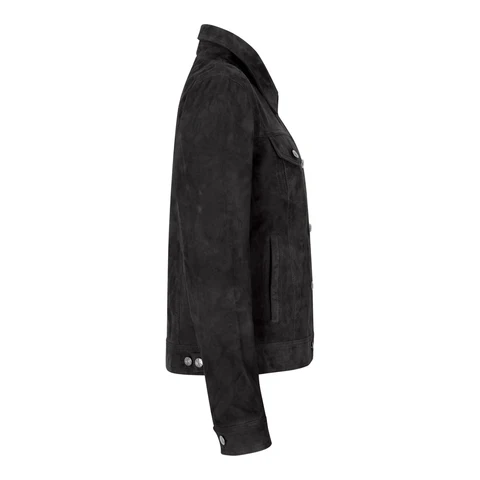
Choose an everyday leather biker jacket by thinking about what you will wear underneath it and where you want the hem to sit. A jacket bought for lightweight tops can have a closer cut than one intended for knitwear. It should fasten comfortably in either case, even if you usually wear it open.
Colour, collar shape and hardware come next. A dramatic cross-zip design may be exactly what you want, while a simpler jacket can feel easier with office trousers and casual weekend clothes. The useful choice is the one that suits your normal wardrobe and the way you spend your day.
Begin With the Clothes You Wear Most
Look at your most frequently worn outfits before shopping. If most days involve jeans and a jumper, take a similar jumper to the fitting. If you expect to wear the jacket over dresses, check it against the waist and skirt shape of a favourite dress.
Think about how you carry things. A shoulder bag needs enough strap length to sit above the jacket without compressing the sleeve. If you regularly use a crossbody bag, check whether its strap rubs over raised buckles or sits awkwardly against a wide collar.
An everyday jacket also needs to suit your routine. A close-fitting style can be comfortable for walking but feel restrictive when reaching forward on a train or sitting at a table. Try those movements before deciding that the fit is right.
Compare Cross Zip and Simpler Fronts
The angled fastening and broad lapels of a classic biker create a recognisable look. They work well if you enjoy visible metal details and plan to keep the rest of an outfit fairly plain. A belted hem adds further structure, although you should check where the buckle falls when seated.
A straight zip or smaller collar creates a quieter effect. This can be useful if you wear scarves, collared shirts or patterned tops regularly. Look at the jacket both open and fastened, since lapels can sit quite differently once the zip is closed.
Ladies leather biker jacket options from TruClothing include belted, cross-zip and shorter fitted designs. Those differences are worth comparing before settling on colour. Two black jackets can have very different proportions even when their product photographs initially look similar.
Check The Fit Without Relying on Stretch
Use the size information for the individual jacket. Check whether the measurements describe the body or the garment, because those are different things. A garment needs room beyond your body measurement to accommodate its cut and the clothing beneath it.
Fasten the zip without holding your breath or pulling the fronts together forcefully. Move your arms forward, bend your elbows and sit down. Some leather feels firm when new, but restricted movement is a reason to reconsider the size or shape. Do not buy a painful fit on the assumption that wearing it will solve everything.
Inspect the sleeves with your arms relaxed and bent. They should not cover most of your hands or pull uncomfortably above the wrists when you reach. Zipped cuffs change the opening around the wrist, but they cannot correct a sleeve that is fundamentally too narrow or short.
Look at the shoulder line, too. In a fitted style it usually follows the edge of the shoulder. A deliberately oversized design may sit lower. The intended cut should explain the shape, rather than the jacket simply being several sizes too large.
Decide Between Black Tan and Other Colours
Black is a practical starting point if you wear dark denim, grey trousers or monochrome outfits. It also gives bright tops and printed dresses a consistent outer layer. Check the finish in daylight, if possible, as a glossy black jacket can look quite different from a matt one.
Tan and brown can work well with blue jeans, cream knits and olive trousers. A deep brown jacket is also worth trying if black feels too stark beside the colours you wear. You do not have to replace black footwear simply because you choose brown leather.
A coloured biker can be an everyday piece when the colour already belongs in your wardrobe. If you regularly wear pink, burgundy or blue, a jacket in that shade may be more useful than an unfamiliar neutral. Compare it with several outfits rather than one specially assembled combination.
Read The Material and Care Details
Check the description for the outer material, lining and any different panels or trims. Photographs show the cut, but they cannot tell you everything about the weight or feel. Ask about missing material information before buying if it affects your choice.
Follow the care label and the maker’s instructions for the particular finish. Suede and smooth leather do not necessarily need the same treatment. Test any approved care product as directed and avoid using a household cleaner simply because it is already available.
Store the jacket on a supportive hanger with space around it. If it becomes damp, follow its care guidance and let it dry away from direct heat. Regular care starts with how you handle the garment after ordinary wear, rather than waiting until a visible mark needs attention.
Keep the care label and material information available after purchase. If the jacket needs professional cleaning later, those details will help the cleaner assess the finish and choose a suitable treatment.