Clenbuterol is one of the most-searched compounds in the bodybuilding market and one of the most consistently misdescribed. It is called a fat burner, grouped with anabolic steroids, sold alongside them, and discussed as though it belonged to that class. It does not. It is a bronchodilator, and the distinction is not pedantry: it explains why the compound behaves the way it does, why the adverse effects are cardiovascular rather than hormonal, and why a great deal of the advice circulating about it is borrowed from a category it does not belong to.
This piece is about those distinctions.
What the compound actually is
Clenbuterol is a beta-2 adrenergic agonist. That is the pharmacological description, and it places the compound in a family that includes salbutamol, salmeterol and other bronchodilators used in the treatment of asthma. Its approved use, where it is approved, is as a bronchodilator: it relaxes smooth muscle in the airways.
It is not an anabolic steroid. It does not bind the androgen receptor, it does not aromatise, and it does not suppress the hypothalamic-pituitary-gonadal axis. Those three facts separate it from every compound it is usually sold beside, and they explain why the side-effect profile looks the way it does.
The confusion arises because of a real effect rather than a marketing invention. Beta-2 agonism has a documented effect on skeletal muscle in some species and under some conditions, and that finding is the origin of the compound’s use in bodybuilding. The effect exists. It is also not the effect most of the marketing implies, and the difference between the two is the whole story.
Where the “fat burner” label comes from
Two mechanisms are usually invoked, and they are worth separating because one is better established than the other.
The first is thermogenesis. Beta-2 agonists increase metabolic rate, and that increase is measurable. It is also modest, and it diminishes with continued exposure because the receptor downregulates — a phenomenon called tachyphylaxis that affects the whole beta-2 class and is the reason the compound is traditionally used in short blocks rather than continuously.
The second is the muscle effect. In animal studies beta-2 agonism has been shown to increase lean mass, and that finding generated a great deal of interest in the 1980s and 1990s. The human evidence is much weaker, and the doses required to pursue a muscle effect in humans are generally higher than those used for bronchodilation, which is where the risk profile becomes the dominant consideration.
So the accurate description is: a bronchodilator with a modest thermogenic effect that diminishes with exposure, and an animal-derived muscle-sparing effect whose human significance is uncertain. That is a long way from “fat burner”, and the gap is where a lot of the bad advice lives.
The cardiovascular profile, which is the real issue
Because the compound acts on beta receptors, its adverse effects are cardiovascular and neurological rather than hormonal. That is the single most important thing to understand about it.
Beta-2 agonism increases heart rate and can provoke palpitations, tremor and anxiety. At higher exposures it affects blood pressure and can disturb cardiac rhythm. These are not rare idiosyncratic reactions; they are the predictable consequence of stimulating a receptor that is present in the heart as well as the airways, and they are why the compound is a prescription medicine rather than an over-the-counter one in most jurisdictions.
The distinction matters for anyone reading comparisons. An anabolic steroid’s risks are largely endocrine and hepatic, developing over months and often silently. Clenbuterol’s are cardiovascular and symptomatic, arriving quickly and sometimes acutely. They are different kinds of risk and they are not interchangeable in a risk discussion.
There is also a specific concern worth naming: clenbuterol has been used as a adulterant in the illicit drug supply, and there are documented cases of hospitalisation following its unintentional consumption. That is a separate problem from its use as a performance compound, and it reflects the compound’s potency at low doses.
Tachyphylaxis, and why the dosing lore exists
The downregulation of beta-2 receptors is why the compound is traditionally discussed in terms of short cycles and escalating doses, and it is worth understanding the tension in that advice.
Receptor downregulation means the same dose produces less effect over time. The conventional response is either to increase the dose or to take time off to allow receptor density to recover. Increasing the dose chases a diminishing return up a cardiovascular risk curve, and that trade is the central problem with the compound rather than an optimisation to be solved.
That is a pharmacological observation, not a protocol. It explains why the dosing folklore looks the way it does without endorsing any of it.
What it is not
Three claims recur and are worth correcting directly.
It is not an anabolic steroid. Different receptor, different mechanism, different risk profile. Grouping it with them is a category error that leads people to apply the wrong safety framework.
It is not a stimulant of the caffeine class. It acts on a specific receptor, and its effects on heart rate and rhythm are correspondingly more direct than those of the methylxanthines.
It is not a substitute for diet. The thermogenic effect is modest and self-limiting. Whatever role it plays, it is not one that produces a meaningful deficit on its own, and the marketing that implies otherwise is describing a different compound.
Detection, and why it matters here
Clenbuterol has a detection profile worth knowing about because it behaves in the opposite way to most of what is discussed around it.
The compound’s symptomatic duration is short, but its detectable life is much longer — measured in days to weeks rather than hours. That asymmetry is unusual: most compounds in this market have a detection window that corresponds roughly to their active period, while clenbuterol remains identifiable long after the effects a user would notice have passed.
For anyone in a tested sport that is the relevant fact, and it is one of the reasons the compound appears in doping cases with some regularity. It is also why the concentration of the compound in the body matters beyond its effect: the same property that makes it detectable makes an unintentional exposure detectable too, which is the mechanism behind the adulteration cases described earlier.
The beta-2 family, and what it tells you
Clenbuterol is one member of a family, and looking at the others clarifies what the mechanism does and does not produce.
Salbutamol is the best-known member, used clinically as a rescue bronchodilator. A buy salbutamol online listing is the same receptor target with a shorter duration and a well-established clinical profile. The differences between the members are largely about duration and selectivity rather than about a fundamentally different effect, which is why the family is regulated as a class in sport.
Thyroid hormone is frequently discussed alongside the beta-2 agonists for a different reason: it acts on metabolic rate through an entirely separate mechanism. A buy t3 online listing describes liothyronine, which raises basal metabolic rate by acting on nuclear receptors rather than on adrenergic ones. The two mechanisms are genuinely different, and combining them compounds the cardiovascular load without a correspondingly established benefit.
Reading them together is more informative than reading any one, because the family boundary is where the confusion lives: beta-2 agonists are not thyroid hormones, and neither is an anabolic steroid.
Where it is sold, and what to check
Clenbuterol is a prescription medicine in most jurisdictions and is prohibited in sport, where it is one of the more reliably detected compounds because of its long half-life in the body relative to its short symptomatic duration.
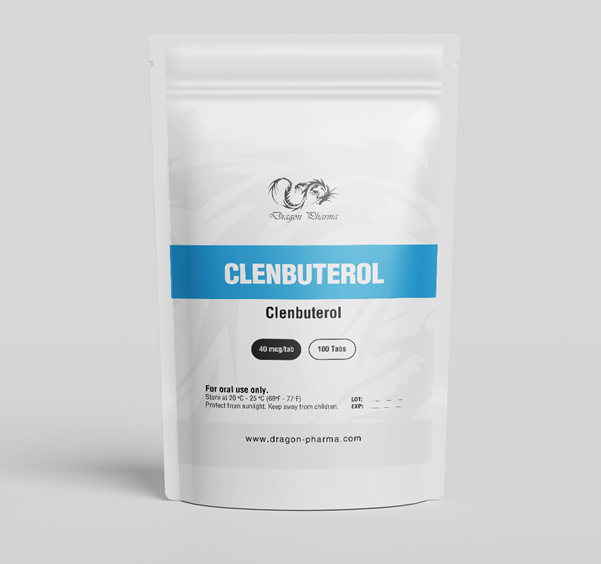
In the research market it is sold in tablet form, commonly at 20 to 40 microgram presentations, which reflects the pharmaceutical product rather than any property of the compound. That dosing unit is worth noting: micrograms, not milligrams, because the active quantity is three orders of magnitude smaller than for the compounds sold beside it. A buy clenbuterol online listing should make the unit unambiguous, because a listing that conflates micrograms and milligrams is describing a product that could be a thousand times the intended strength.
The documentation requirements are the usual ones, and they matter here for a specific reason. Small active quantities mean that a manufacturing error or a substitution produces a proportionally larger deviation from the label, and the analyte is difficult for a buyer to verify. A batch-specific certificate with identity confirmation by mass spectrometry is the only check available, and the unit on that certificate should match the unit on the label.
The the oral range of this site sets it beside the compounds it usually gets confused with, which is worth reading precisely because it is not one of them.
Questions people ask
Is clenbuterol a steroid? No. It is a beta-2 adrenergic agonist, a bronchodilator. It does not act on the androgen receptor and does not suppress natural testosterone production.
Does it build muscle? The animal literature shows an effect; the human evidence is much weaker, and pursuing it requires exposures well above the bronchodilator range.
Why do people cycle it? Because beta-2 receptors downregulate with continued exposure, so the same dose produces less effect over time. Short blocks are the conventional response to that.
What is the main risk? Cardiovascular. Increased heart rate, palpitations, tremor and effects on cardiac rhythm are predictable consequences of the mechanism rather than rare events.
Why is it measured in micrograms? Because the active quantity is very small relative to the compounds it is sold beside. The unit on the label is not a detail.
The bottom line
Clenbuterol is a bronchodilator with a modest and self-limiting thermogenic effect, sold in a market that treats it as though it were an anabolic steroid. The misclassification matters because it produces the wrong safety framework: the risks here are cardiovascular and arrive quickly, not endocrine and arriving over months.
The useful corrections are simple. It is not a steroid. Its effect diminishes with use. It is measured in micrograms. And its adverse effects are the direct consequence of stimulating a receptor that is present in the heart, which is why the compound is a prescription medicine rather than a supplement.