Industrial inspection has changed considerably as businesses adopt robotic equipment, remote monitoring systems, and increasingly sophisticated diagnostic technologies. Industries that once relied heavily on direct human access to machinery and enclosed structures can now use specialized equipment to examine hard-to-reach areas.
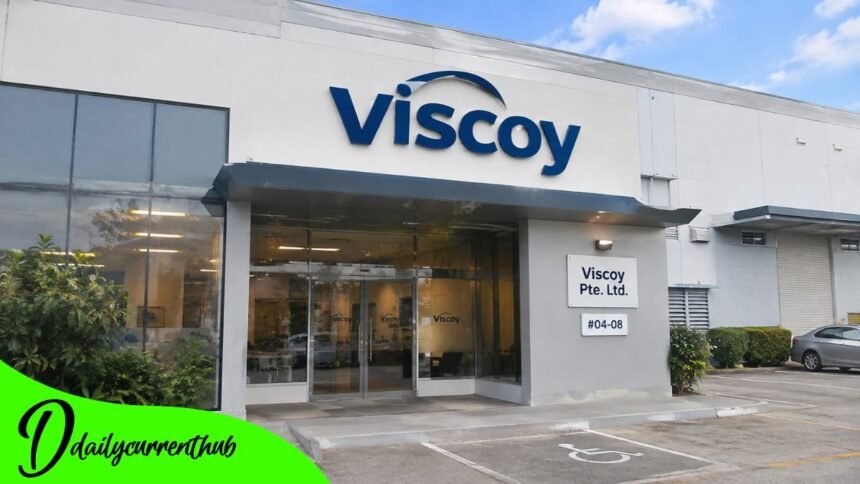
Viscoy, officially registered as VISCOY PTE. LTD., is a Singapore-based company working in this specialized field. Established in March 2014, the business supplies remote visual inspection equipment and related technologies for infrastructure assessment, equipment maintenance, and industrial condition monitoring.
Its product portfolio includes inspection drones, industrial endoscopes, robotic crawlers, acoustic cameras, and other specialized systems. These technologies serve industrial applications in sectors including marine operations, petrochemicals, aerospace, and city infrastructure.
This article explores Viscoy’s verified company background, its inspection technologies, leadership, services, industrial applications, and approach to incorporating robotics into modern maintenance work.
What Is Viscoy?
Viscoy is an industrial technology company specializing in equipment and solutions for inspecting physical assets, machinery, and infrastructure. Its operations focus on remote visual inspection, an approach that lets operators observe and assess equipment or structures through cameras and other specialized instruments.
The business is particularly relevant to environments where inspection presents practical difficulties. Large industrial vessels, narrow pipelines, enclosed machinery, and elevated structures may require equipment designed for limited access and demanding operating conditions.
Viscoy supplies a range of technologies to meet these inspection requirements. Its activities extend beyond conventional inspection cameras to include robotic platforms, drones, monitoring equipment, and technical services.
The company also works with technology manufacturers and engineering teams to bring inspection systems into industrial applications.
Company History and Early Development of Viscoy
Establishment in Singapore
Viscoy was incorporated in Singapore on March 5, 2014, under registration number 201406266G. Its corporate identity and registration details appear in Singapore company records.
The company’s early business focused on distributing industrial videoscopes, specialized optical instruments used to examine spaces that cannot easily be observed directly.
Industrial videoscopes are used to examine machinery, enclosed components, and other equipment where access is restricted. Their flexible or specialized designs enable inspection without necessarily requiring complete disassembly.
From this starting point, Viscoy expanded its product offerings to address a wider range of industrial inspection requirements.
Expansion into Advanced Technologies
The company’s published profile describes an expansion from industrial endoscopes into broader Remote Visual Inspection solutions.
This development included inspection cameras, robotic crawlers, confined-space drones, and other technologies used in condition assessment.
Its current product catalog reflects this broader scope. Rather than focusing on a single instrument, Viscoy offers different equipment categories for different industrial tasks.
The distinction matters because the appropriate inspection method depends on the physical environment, the material being examined, and the measurements or observations required.
Remote Visual Inspection Technology at Viscoy
Understanding Remote Visual Inspection
Remote Visual Inspection, often abbreviated as RVI, involves using specialized imaging equipment to view areas that may be inaccessible, hazardous, or difficult for a person to examine directly.
Technologies used for this work include borescopes, videoscopes, robotic camera systems, and remotely operated platforms.
For example, a videoscope can be inserted into a confined opening to provide images of internal surfaces. A robotic crawler can travel through an industrial pipeline while transmitting footage for assessment.
The purpose is to provide useful visual information while reducing the need for direct physical access when appropriate.
The Importance of Equipment Selection
Remote inspection is not a single technology with one universal application.
A narrow mechanical cavity may require a small-diameter endoscope, while an extensive pipeline network may require a wheeled crawler or specialized CCTV system.
A large enclosed industrial structure may suit a drone designed to operate without conventional satellite positioning.
Viscoy’s catalog includes equipment across these categories, allowing businesses to choose approaches based on their operational requirements.
However, a system’s suitability depends on inspection conditions, operator capability, applicable safety procedures, and the equipment’s technical limitations.
Industrial Drones and Robotic Inspection Solutions
Confined-Space Drone Technology
One prominent category in Viscoy’s portfolio is confined-space drone technology.
The company features the Flyability Elios 3, a drone platform designed for industrial inspection in difficult environments, including areas where GPS signals are unavailable.
Its listed capabilities include 3D mapping and compatibility with specialized measurement or detection payloads.
Potential applications include inspecting industrial tanks, enclosed structures, large machinery, and internal infrastructure spaces.
Such systems provide another way to collect inspection information where conventional access arrangements may be complicated.
Robotics for Difficult Environments
Viscoy also lists robotic platforms designed to navigate spaces unsuitable for ordinary inspection equipment.
These include camera-equipped crawlers and remotely operated inspection systems.
The Machine Lab products featured in its catalog include PTZx-HD, MicroTraxx, and Glimpse.
These systems illustrate the broader role robotics plays in industrial inspection: moving a camera or instrument into a position where operators need visual information.
Robotic inspection remains dependent on factors such as surface conditions, available access, communication reliability, and equipment design.
Pipeline Inspection and Infrastructure Maintenance
Inspection of Pipes and Drainage Systems
Pipelines are an important application for Viscoy’s equipment.
The company supplies in-pipe CCTV cameras, push-camera systems, robotic crawlers, and equipment associated with pipeline maintenance.
Camera-based inspection helps operators observe internal pipe conditions and identify visible features that require further assessment.
Different pipeline dimensions and operating environments call for different camera configurations.
A push camera may suit one inspection scenario, while a motorized crawler may suit another.
Maintenance and Rehabilitation Equipment
Beyond inspection cameras, Viscoy’s catalog includes in-pipe cutters and jetting equipment.
These technologies support certain cleaning, cutting, and rehabilitation tasks within pipeline systems.
The company features equipment associated with manufacturers such as Dancutter and Sewer Robotics.
The inclusion of inspection and maintenance technologies shows how visual assessment and subsequent maintenance activities can be part of infrastructure management.
Leadership and Technology Partnerships
Company Leadership
Viscoy’s official team page identifies Vincent Lim as a director.
The company also publicly lists personnel working in business development, sales, engineering, field operations, finance, and commercial operations.
These functions reflect the different responsibilities involved in supplying technical inspection systems.
Engineering personnel may support equipment deployment and technical problem-solving, while commercial and operational teams handle other aspects of customer service and business activity.
The public team information offers an identifiable organizational profile without requiring assumptions about employees’ private lives.
Collaboration with Technology Manufacturers
Technology partnerships form a visible part of Viscoy’s business model.
Its website lists manufacturers and technology brands associated with industrial inspection, including Flyability, IT Concepts, Gutermann, and Sensor Networks.
Such relationships connect specialist equipment manufacturers with businesses seeking inspection technologies.
Viscoy describes its mission as accelerating the adoption of robotics and digital technology in industrial asset inspection and maintenance.
This stated objective helps explain the breadth of products represented in its catalog.
Training and Technical Support Services
Equipment Training
Viscoy provides product training to help customers understand and operate the equipment it supplies.
Its services page describes a dedicated training facility for confined-space drone operations, including simulated obstacles representing industrial inspection environments.
Training is especially relevant where equipment must be controlled in narrow spaces, around structures, or under complex operating conditions.
Technical proficiency and appropriate procedures are necessary considerations when using specialized inspection systems.
Repair and Maintenance
The company also offers repair and maintenance services.
According to its published service information, its engineers receive manufacturer-specific training, while the company maintains stocks of selected spare parts and consumables.
This support matters because industrial inspection equipment may wear out or require servicing after use in demanding environments.
Equipment Rental and Inspection Services
Viscoy offers equipment through sales, rental, and leasing arrangements.
It also provides inspection services and on-site proof-of-concept activities, although equipment provision remains a primary business focus.
These arrangements give customers different ways to access specialist equipment depending on operational needs and availability.
Industries Served by Viscoy
Petrochemical and Process Industries
Industrial plants contain equipment and structures that require regular inspection and condition monitoring.
Viscoy serves petrochemical and other process industries.
Its catalog includes technologies suitable for visual assessment, corrosion monitoring, gas detection, and other specialized inspection applications.
Marine and Offshore Operations
Marine and offshore environments present inspection challenges involving enclosed compartments, large structures, and equipment exposed to demanding operating conditions.
Viscoy’s case-study library includes applications involving ballast tank inspections and ultrasonic wall-thickness measurements using drone-mounted equipment.
These examples demonstrate the types of industrial tasks addressed by technologies in its portfolio.
Aerospace and Infrastructure
The company also identifies aerospace and urban infrastructure as markets for its products.
Industrial endoscopes can be used in selected machinery inspection applications, while CCTV systems and crawlers are relevant to infrastructure inspection.
Viscoy’s published case studies include stormwater drain inspection and the examination of building ventilation spaces.
Each application shows how equipment selection changes based on the structure being examined.
Safety, Efficiency, and Environmental Considerations
A central reason for adopting remote inspection technology is its ability to collect information without always requiring someone to enter the area being inspected.
This approach can be particularly relevant to confined spaces and hard-to-reach industrial locations.
Nevertheless, remote equipment does not eliminate every operational hazard. Risk assessment, equipment suitability, operator competence, and site-specific procedures remain essential.
Viscoy’s stated mission emphasizes safer and more efficient workplaces, alongside sustainability.
From an asset-maintenance perspective, inspection data can inform decisions about further investigation, repair, replacement, and ongoing monitoring.
The quality of those decisions depends on reliable measurements and appropriate professional interpretation.
Claims about financial savings, emissions reductions, or inspection performance should therefore be assessed against each project’s conditions and evidence.
Public Information and Common Misconceptions About Viscoy
One potential source of confusion is the name itself.
Viscoy is a registered company name. It should not be confused with viscosity, the scientific property describing a fluid’s resistance to flow.
The company operates in industrial inspection, not as a scientific unit or a type of fluid.
Another important distinction concerns its identity.
Publicly verifiable company records identify Viscoy as a corporate entity, not a celebrity or private individual. A biography involving a spouse, children, marriage, or personal philanthropic activity would therefore be inappropriate without evidence identifying a separate person by that name.
The most useful account of Viscoy is its documented corporate history, actual products, publicly identified leadership, and published activities.
Future Development and Industry Relevance
Viscoy operates at the intersection of robotics, digital imaging, and asset-monitoring technologies.
Its current portfolio already includes equipment associated with 3D mapping, remote inspection, ultrasonic monitoring, and robotic mobility.
These capabilities show the range of technologies available through the company today.
Future product developments, commercial expansion, and new partnerships should only be described as confirmed when supported by company announcements or other reliable documentation.
What can be established is Viscoy’s publicly stated intention to encourage the adoption of robotics and digital technology in industrial inspection.
Its continuing relevance will depend on how effectively its equipment and services address the practical requirements of industrial customers.
Conclusion
Viscoy is a Singapore-based industrial inspection technology company with a documented operating history dating back to March 2014.
Starting with industrial videoscopes, it has expanded into a broader portfolio covering remote visual inspection, robotic crawlers, confined-space drones, pipeline cameras, monitoring technologies, and specialist inspection equipment.
Its business also includes technical training, repair and maintenance support, equipment rental, leasing, and selected inspection services.
The company operates across several industrial sectors, including infrastructure, marine operations, petrochemicals, and aerospace.
The strongest understanding of Viscoy comes from its verifiable business records, published product information, named leadership, and documented technology applications.
These establish its identity as an industrial technology provider rather than a private celebrity figure, while explaining the practical role its products and services play in modern asset inspection.
(FAQs)
1. What is Viscoy?
Viscoy is a Singapore-based company supplying industrial inspection equipment, robotics technologies, and remote visual inspection solutions.
2. When was Viscoy established?
VISCOY PTE. LTD. was incorporated in Singapore on March 5, 2014.
3. Where is Viscoy located?
The company lists its business location at Jackson Square, Toa Payoh, Singapore.
4. Who is the director of Viscoy?
Viscoy’s official website identifies Vincent Lim as a director.
5. What products does Viscoy provide?
Its portfolio includes industrial endoscopes, inspection drones, robotic crawlers, pipeline cameras, leak detection equipment, and monitoring technologies.
6. Does Viscoy offer equipment rental services?
Yes. The company advertises equipment sales, short-term rental subject to availability, and leasing arrangements.
7. Which industries use Viscoy’s solutions?
Its identified markets include petrochemicals, marine and offshore operations, aerospace, power generation, infrastructure, and the built environment.
8. Is Viscoy a person or a company?
The verified public records identify Viscoy as a Singapore-registered company rather than a private individual.