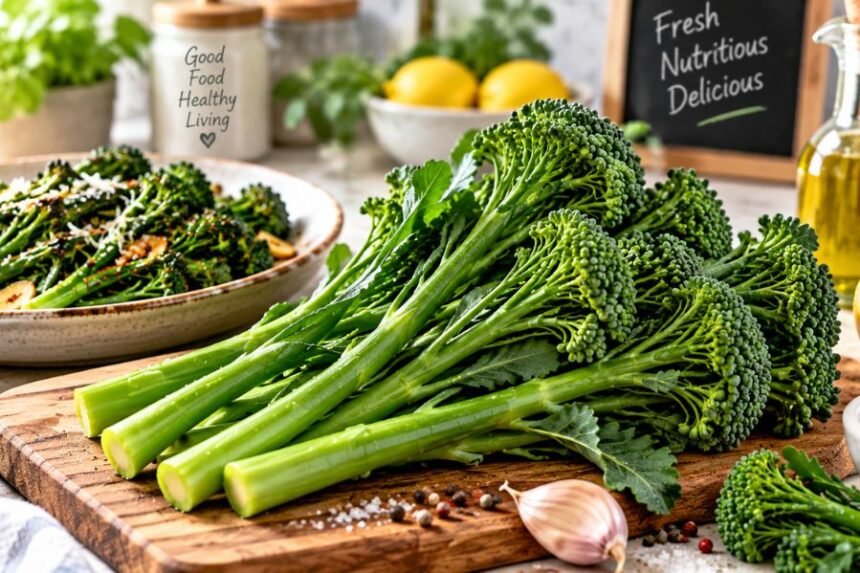
Crocolini has been showing up more often in food searches, recipes, and articles, but its meaning is often misunderstood. After checking horticultural, academic, and agricultural sources, there is no solid proof that Crocolini is the official botanical name for a separate vegetable. In most cases, it seems to be an informal or mistaken spelling of broccolini, the long-stemmed green vegetable that comes from crossing broccoli with Chinese broccoli, also called gai lan or Chinese kale.
Broccolini itself is well documented. University extension sources describe it as a cross between standard broccoli and Chinese broccoli, producing slender stems, small florets, and a flavor generally considered milder than that of ordinary broccoli.
This guide sorts out the facts from common online claims and explains what people searching for Crocolini are probably trying to find.
This article covers what Crocolini means, why the name is confusing, how it relates to broccolini, what it looks and tastes like, its nutrition, ways to cook and store it, and the main misunderstandings about the term.
What Is Crocolini?
Broccolini is really just an informal food term, not the official name of a unique vegetable. Online, Crocolini usually describes a vegetable with long green stems, small florets, and tender leaves—traits that match broccolini.
Reliable horticultural sources describe broccolini as a hybrid of conventional broccoli (Brassica oleracea var. italica) and Chinese broccoli (Brassica oleracea var. alboglabra), also known as Chinese kale. Oregon State University specifically describes broccolini as resembling long, slender broccoli side shoots.
This difference matters if you are looking up recipes, nutrition, or how to grow it. Searching only for Crocolini can yield mixed results, since some sites treat it as a separate vegetable, while others use it as another name for broccolini.
In practice, if you see Crocolini used to describe a vegetable with thin edible stems and small green florets, it’s most likely broccolini.
Why the Name Crocolini Causes Confusion
Similarity to the Word Broccolini
The main reason is simple: Crocolini and broccolini are only a few letters apart, so it’s easy for people to make typing errors, mispronounce the word, or copy the mistake online.
When a spelling mistake often appears online, search engines keep showing pages with that term. But just because a word is repeated doesn’t mean it’s a new type of vegetable.
Broccolini has a much stronger documentary trail. It appears in university extension publications, agricultural literature, government material and trademark records. A U.S. trademark registration for BROCCOLINI covering fresh vegetables was registered in July 2000 and remains on record.
Broccolini does not have a comparable established identity in the authoritative horticultural sources reviewed for this article.
The Documented Origin of Broccolini
A Cross Between Two Familiar Brassicas
The background often linked to broccolini is really the story of broccolini.
Oregon State University identifies broccolini as a hybrid of standard broccoli and Chinese kale (Chinese broccoli) and credits its development to Sakata Seed Company.
Illinois Extension similarly describes broccolini as a cross between European broccoli and Chinese broccoli. It notes that shoppers may also encounter terms such as mini broccoli, sprouting broccoli or baby broccoli in markets and restaurants.
This can be confusing. Broccolini is sometimes sold as baby broccoli, but that doesn’t mean it’s just regular broccoli picked early. It’s actually a unique hybrid.
Broccolini vs Broccoli
Appearance
Standard broccoli typically develops a substantial central stalk that supports a large, dense crown of florets.
Broccolini develops a noticeably different structure. Its stems are longer and thinner, while its flowering heads are comparatively small. UMass Amherst describes broccolini as having long, thin stems and small heads, while ordinary broccoli has larger heads and thicker stems.
These differences affect how you cook them. Broccoli crowns are usually broken into florets, while broccolini is often cooked whole.
Taste
Broccolini generally has a milder taste than conventional broccoli. Oregon State notes descriptions ranging from sweeter and less pungent than broccoli to asparagus-like.
UMass Amherst also characterizes broccolini as mild and slightly sweet.
Of course, taste can change depending on how fresh it is, how you cook it, and what you add. That’s why broccolini is often roasted, grilled, or quickly sautéed.
Nutritional Value of Broccolini
When talking about broccolini’s nutrition, it’s best to use proven data for broccolini rather than guessing about “Broccolinii”, since that term isn’t standardized.
Broccolini belongs to the Brassica group, alongside broccoli, kale, cabbage, and related vegetables. Research has specifically examined its vitamin C content. A Georgia Southern University nutrition study reported measurable levels of vitamin C in raw broccolini and compared them with those in broccoli.
Brassica vegetables more broadly are valued as sources of nutrients and plant compounds. Broccoli, for example, is recognized for providing vitamin C, fiber and other micronutrients.
The main takeaway is simple: broccolini is a healthy part of a varied diet, but it shouldn’t be seen as a miracle food or a cure for illness.
Nutrition also depends on how much you eat, how you cook it, and what you add, like oils, sauces, or salt.
How to Cook Crocolini
Steaming
Steaming helps broccolini keep its shape and tender texture. Since its stems are thinner than regular broccoli, they soften up pretty fast.
Avoid overcooking if you prefer firm stems and bright florets.
Roasting
Roasting is great because the florets brown nicely while the stems get soft. You only need a little oil and some basic seasoning.
Garlic, lemon, black pepper and herbs complement the mild flavor without masking it.
Sautéing
Broccolini is perfect for quick pan-cooking. Its thin stems mean you can sauté the whole vegetable without much chopping.
If you find thick stems, just slice the bottom part lengthwise so everything cooks evenly.
Grilling
Broccolini’s long shape makes it easy to grill. A bit of charring adds more flavor but keeps the inside tender.
Stir-Frying
Since broccolini is related to Chinese broccoli, it works really well in stir-fries. Ginger, garlic, sesame, soy sauce, and other savory flavors go great with its mild taste.
Choosing and Preparing Broccolini
If you see something labeled “Broccolini” at the store, check the vegetable itself rather than just trusting the name.
Look for firm green stems, compact florets, and fresh-looking leaves. UMass Amherst recommends choosing broccoli-family vegetables with firm stalks and tightly closed florets while avoiding yellowing heads.
Getting broccolini ready is simple. Wash the stems thoroughly, remove any damaged leaves, and trim the dry or tough ends at the base.
One nice thing about broccolini is that you can eat most of it. The stems, florets, and young leaves usually cook well together, so there’s less waste.
Growing and Agricultural Importance
More Than a Restaurant Vegetable
Broccolini has caught the attention of farmers, too.
Illinois Extension describes it as an emerging alternative to traditional broccoli and notes that the plant can produce multiple shoots, allowing repeated harvests under suitable conditions. The source also discusses its potential resilience under warmer growing conditions compared with traditional broccoli.
These features make long-stemmed broccoli types appealing to farmers who want to grow a variety of specialty vegetables.
But this doesn’t mean Crocolini is a new, recognized crop. Instead, farm research highlights the distinction between broccolini and the ambiguous “Crocolini” name.
Public Curiosity and Misconceptions About Crocolini
The biggest issue with Crocolini is really the confusion caused by the name.
Some online articles confidently describe Crocolini as a newly invented vegetable. Others call it a broccoli hybrid without explaining whether they actually mean broccolini. A few pages even assign entirely unrelated meanings to the term.
This shows why it’s important to check the quality of your sources.
Just because an article appears on many websites doesn’t mean it’s true. Research from agricultural extension services, universities, and official plant guides is more reliable than articles that lack evidence of a new crop.
Here are three common myths that need clearing up:
Crocolini is not verified as a distinct vegetable simply because the term appears online.
Broccolini is not merely early-picked broccoli.
The documented hybrid involves broccoli and Chinese broccoli rather than an unspecified collection of green vegetables.
The Future of the Crocolini Search Term
Crocolini might keep appearing in search results because online language often changes faster than scientific terminology.
If stores, farmers, or brands ever use Crocolini as the official name for a product, its meaning could become clearer. For now, though, don’t assume every mention of Crocolini means a new type of vegetable.
The best way to understand Crocolini is by context. If it’s shown as a long-stemmed, broccoli-like vegetable, it’s probably broccolini.
Conclusion
Crocolini might sound like a new and unusual vegetable, but the facts tell a different story. Trusted horticultural sources don’t list Crocolini as a separate crop. Instead, it’s usually just another name for broccolini, the hybrid of regular broccoli and Chinese broccoli.
Broccolini has long, thin edible stems, small florets, and a mild flavor. You can steam, sauté, roast, grill, or stir-fry it, and most of the plant is edible with little trimming needed.
The main thing to remember is not to believe every online definition of broccolini. By focusing on proven facts about broccolini and ignoring unsupported claims, shoppers and home cooks can make smarter choices about what they buy, cook, and eat.
FAQs
1. What is Crocolini?
Crocolini is an informal term appearing online that most commonly refers to broccolini. It is not well established as the official botanical name of a separate vegetable.
2. Is Crocolini the same as broccolini?
In most food-related uses, that appears to be the intended meaning. Broccolini is the established name supported by horticultural and agricultural sources.
3. What is broccolini made from?
Broccolini is a cultivated cross involving standard broccoli and Chinese broccoli, or gai lan.
4. Is broccolini just young broccoli?
No. Although it is sometimes marketed as baby broccoli, broccolini is a hybrid rather than simply immature standard broccoli.
5. What does Crocolini taste like?
If Crocolini refers to broccolini, expect a flavor similar to broccoli but generally milder, slightly sweeter, and less pungent.
6. Can you eat Crocolini stems?
Yes, when the term refers to broccolini. Its tender stems are commonly cooked and eaten along with the florets and young leaves.
7. What is the best way to cook broccolini?
Steaming, roasting, grilling, sautéing, and stir-frying all suit broccolini’s slender structure. The ideal method depends on whether you prefer softer stems or a firmer, lightly charred texture.
8. Is Crocolini healthier than broccoli?
There is not enough standardized evidence to make a universal claim that one is inherently healthier. Both broccoli and broccolini are nutritious Brassica vegetables, and nutritional value depends partly on portion size and preparation.