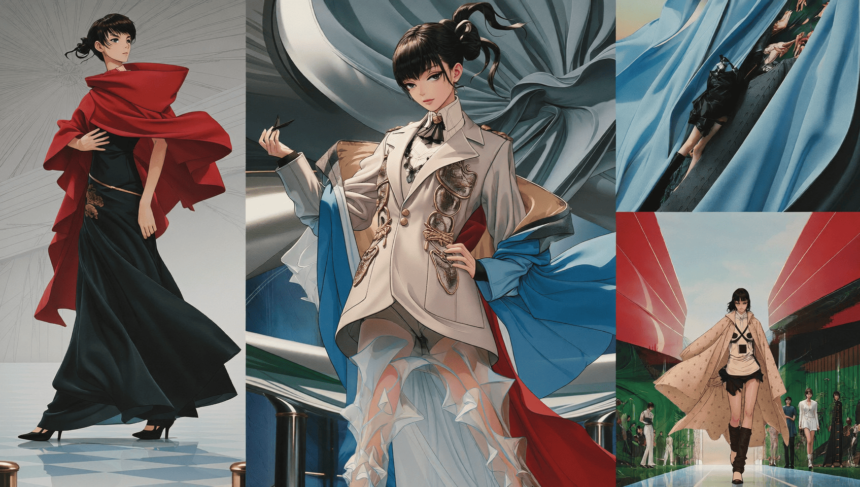
The anime look has been selling clothes for thirty years, and most of the people using it now have no idea how carefully the brands that pioneered it handled the rights.
Japanese labels built entire identities around manga and animation visual language, and when they wanted an actual character on a garment they went and licensed it. Those collaborations became events precisely because they were real agreements rather than borrowed artwork, and the brands involved spent money on exactly the thing most people now assume is free.
That distinction has not changed. What has changed is that anybody can produce something in the style in about forty seconds, which makes knowing where the line sits considerably more useful than it used to be.
An AI Anime Video Generator sits squarely in that question, and Higgsfield provides one, so the rules are worth stating plainly.
Where Exactly Is the Line?
Between a style and a character.
- The aesthetic is open and always has been
- Specific characters are not, in any style
- Recolouring changes nothing about identifiability
- A recognisable silhouette is still that character
- An AI Anime Video Generator output has to clear this before posting
This is the distinction people most often get wrong, because the style and its most famous examples feel like the same thing. They are not. Working in a visual language is legitimate; reproducing somebody’s character is not.
Japanese rights holders pursue commercial use a great deal more actively than most people assume they will, and the tolerance generally extended to non-commercial fan art does not extend to anything that is selling something.
If somebody who watches the form could name the character, it is that character.
What Should Never Appear in Fashion Content?
Four things, and all of them are common.
- Never produce a recognisable character, however restyled
- Never put one on a garment you are selling
- Never use a franchise’s distinctive design as your own
- Never imply an official collaboration that does not exist
- Never let an AI Anime Video Generator produce licensed artwork
Merchandise is where this becomes genuinely expensive rather than merely awkward. A T-shirt, a print or a phone case carrying borrowed character design is a commercial product built directly on somebody else’s property, and that is precisely where enforcement actually happens.
The implied collaboration is the subtler problem. Content styled to suggest a brand partnership that was never agreed misleads an audience and annoys the rights holder simultaneously.
Original characters are the only ones you can safely build anything commercial on top of.
What Does the Style Actually Consist Of?
Techniques, and they are learnable.
- Limited animation, which an AI Anime Video Generator rarely defaults to
- Speed lines indicating motion without movement
- Dramatic lighting shifts between cuts
- Extreme perspective, particularly low angles
- The pause before action, which builds the moment
The frame rate point separates work made by somebody who watches the form from work made by somebody imitating it. The characteristic rhythm comes from animating on twos and threes, and smoothing that out removes what makes it read as anime at all.
Speed lines do enormous work in still images, which matters for anybody producing fashion content as photographs rather than video.
Learning the underlying grammar beats copying the surface look every time, and it happens to be the part that nobody can claim ownership of.
Why Does Generated Anime Often Look Wrong?
Because the defaults fight the form.
- Motion is too smooth by default
- Hollywood-smooth movement reads as uncanny here
- Fine detail degrades at small sizes
- Hands remain difficult, consistently
- An AI Anime Video Generator setting usually needs reducing
Dropping the frame rate deliberately is comfortably the single most effective correction available to anybody. Around twelve frames per second for the key sequences does considerably more for authenticity than any amount of surface styling ever will.
The small-size problem matters particularly for fashion content, which is consumed almost entirely on phones. Detail that looks impressive on a laptop disappears entirely in a feed.
Check everything at the size people will genuinely see it, which is a phone screen in a scrolling feed.
How Does This Apply to Clothing Photography?
Carefully, because the garment has to be real.
- Never alter the garment in a styled image
- Never change a colour that a buyer will compare
- Never adjust the fit or drape
- Never generate a garment that does not exist
- Keep an AI Anime Video Generator treatment to the background
The garment is the product and the product has to be represented accurately. A stylised background is a straightforward creative choice, while a stylised jacket is a description of the exact thing somebody is about to spend money on.
Colour is the specific risk here. Buyers compare what arrives in the parcel against what they saw on screen, and the return rate across the industry tells you how often that comparison goes badly.
Style around the clothes rather than through them, and the garment stays exactly what the buyer will receive.
What About the People in Fashion Content?
Real people, with agreement.
- Never generate a model or a person
- Never produce somebody in an anime style without consent
- Never create an influencer who does not exist
- Disclose any paid relationship, clearly
- Keep an AI Anime Video Generator away from faces entirely
Stylised portraits are a genuine tradition drawn by illustrators and commissioned properly, and that tradition involves the person’s participation.
Advertising disclosure rules apply to fashion content regardless of follower count or how informal the post feels, and audiences in this particular space are notably good at spotting whatever has not been properly declared.
Use real people, credited properly, with written agreements in place before anything is shot.
Where Does It Genuinely Help?
Backgrounds, transitions and atmosphere.
- Backgrounds and environments, which carry enormous mood
- Title cards and section breaks
- Transitions between filmed segments
- Abstract texture behind text
- A consistent AI Anime Video Generator treatment across a series
Higgsfield keeps this alongside other tools as part of an AI creative suite, which suits somebody producing their own fashion content without a studio.
Backgrounds are simultaneously the strongest case and the most underused one. The environment work in the canonical films carries as much of the feeling as the characters themselves do, and all of it is entirely available to produce originally without touching anybody’s property.
The clothes, the people and anything real stay photographed.
Does Seasonal Content Work Differently?
It does, and the planning window is longer than people expect.
- Party season content is produced months ahead
- Stock availability changes before publication
- Prices move, particularly around sales periods
- Check links still resolve before anything goes live
- A reusable AI Anime Video Generator treatment saves rebuilding each season
Seasonal fashion guides, of the kind that gather party season jackets and boots into one place, date faster than almost any other format because the products behind them sell out.
Build the visual treatment once properly and then refill it each season. Reconstructing the whole look from scratch every few months wastes exactly the recognition you spent the previous season building.
Note the publication date somewhere visible on the page. Readers finding a seasonal guide in February deserve to know when it was actually written and priced.
Does the Secondhand Market Change Anything?
It does, and resale content has its own rules that catch people out.
Vintage and resale fashion is one of the biggest content categories going, and a great deal of it involves photographing garments carrying somebody else’s branding.
What applies when reselling:
- Photographing a genuine item you own is fine
- Never restyle a logo or alter branding in an image
- Never imply endorsement by the original brand
- Never produce an item you do not physically have
- Keep any AI Anime Video Generator element well away from the garment
The alteration point is where resale sellers get into difficulty. Enhancing or cleaning up a worn logo in an image misrepresents the condition of the exact item somebody is buying, and condition is the whole proposition in resale.
Photograph the wear honestly. Buyers in this market expect wear and specifically distrust listings that look too clean, so showing it works in your favour.
Counterfeits are the other consideration. Promoting replica goods carries real legal exposure in most jurisdictions, and styling content around one is promoting it.
Stylised backgrounds work well for vintage content precisely because the garment stays entirely as photographed while the presentation does the work.
How Do You Keep a Look Consistent?
Fix the specifics and write them down.
- Lock the AI Anime Video Generator palette as exact values
- Keep the same treatment across platforms
- Reuse the same transitions and cards
- Store the Higgsfield project holding all of it
- Review it annually, not seasonally
Consistency is the thing that makes a small operation look properly established, and it costs essentially nothing once the decisions have been made once.
The cross-platform point matters more in fashion than elsewhere, because the same audience encounters the same creator in several places and recognition compounds.
Annual review rather than constant tinkering. Changing the look every few weeks undoes exactly what it was built for.
What Should Be Disclosed?
Both the commercial and the produced.
- Declare gifted items and paid partnerships
- Follow the applicable advertising rules
- Label produced imagery where it could mislead
- Never present a generated scene as a location you visited
- Keep AI Anime Video Generator material visibly stylised
The visibly stylised point is the practical protection. Nobody mistakes an obviously illustrated background for a photograph, which means the disclosure happens automatically.
Advertising disclosure is a separate obligation from any of this and is enforced. Gifted items count.
Both disclosures cost a single line of text each and remove the whole question entirely.
How Should the Assets Be Organised?
By season, with the treatment separate.
- One folder per season, with AI Anime Video Generator files kept apart
- Keep photographs apart from produced material
- Record the colour values used, outside Higgsfield
- Store the Higgsfield project for the treatment
- Archive rather than delete, since looks return
Keeping photography separate from produced imagery prevents the only confusion that genuinely matters here, which is a stylised element ending up where a garment should be.
Archiving matters in fashion specifically because trends cycle back round reliably. Material shot three seasons ago becomes genuinely useful again sooner than anybody expects it to.
What Would One Series Involve?
An afternoon, once the treatment exists.
- Study the grammar, not just the surface look
- Design original characters if you want any
- Photograph the clothes properly and honestly
- Produce backgrounds in an AI Anime Video Generator
- Drop the frame rate for any motion
- Check everything at phone size
- Save the Higgsfield project for next season
Then show it to somebody who watches a lot of anime and ask what it reminds them of.
They will name anything you accidentally borrowed within about ten seconds, which is exactly the check worth having.
FAQ’s
Can the anime style be used freely?
The aesthetic is open. Specific characters are not, in any style, and recolouring does not change that.
What about putting a character on a garment?
Never without a licence. Merchandise is where enforcement actually happens, and Japanese rights holders pursue it.
Why does generated anime look wrong?
Motion is too smooth by default. Traditional animation holds a pose then changes, and dropping to around twelve frames per second fixes most of it.
Can a garment be altered in an image?
No. Buyers compare what arrives against what they saw, and colour is where that goes wrong most often.
What should an AI Anime Video Generator be used for?
Backgrounds, titles, transitions and atmosphere. Never the clothes, never a person, never a borrowed character.
Conclusion
The anime aesthetic became part of fashion through collaboration rather than borrowing, and the brands that did it properly are the ones people still talk about.
An AI Anime Video Generator handles backgrounds, titles and the treatment around real photography, and Higgsfield keeps that consistent across a season.
Learn the grammar, drop the frame rate, photograph the clothes honestly, and design anything you want to own yourself.