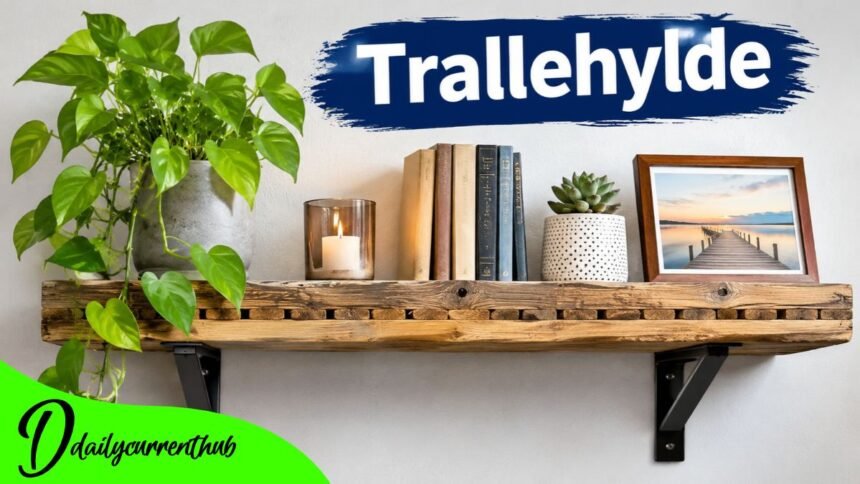
A Trallehylde is a wooden shelf made from, or inspired by, the slatted timber structures traditionally used in Danish scaffolding. Its appeal comes from a straightforward combination of practical storage and distinctive woodwork. Rather than concealing timber’s natural appearance, this shelving style often highlights the grain, knots, and construction details that give wooden furniture its character.
The term has become associated with rustic shelves, reclaimed materials, and furniture that combines everyday usefulness with simple design. Depending on its construction, a Trallehylde can hold books, decorative objects, plants, or household essentials.
Understanding what makes this type of shelving different is useful before purchasing or building one. Materials, dimensions, wall fittings, finishes, and load capacity can vary considerably.
This guide explains the meaning of Trallehylde, its construction, common applications, material options, installation requirements, and maintenance considerations. It also explores how this practical furniture style fits into contemporary interiors.
What Is a Trallehylde?
The word Trallehylde combines two Danish terms: tralle and hylde. In Danish, tralle describes a long, narrow structure assembled from wooden slats, traditionally used for scaffolding platforms. Hylde means shelf.
Together, these words describe a shelf made from, or styled after, this form of timber construction.
A Trallehylde is not one standardized furniture model. Danish manufacturers and retailers offer variations that differ in wood type, dimensions, finish, and appearance.
Some shelves preserve the visible character of reclaimed construction timber, while others use newly processed wood to create a cleaner finish. Some models show the spaces between individual slats, while others provide a more continuous storage surface.
The defining connection is the relationship between the shelf and traditional slatted wooden construction.
For homeowners, the appeal is a functional storage surface that also contributes to a room’s overall look.
The Origins and Meaning of Trallehylde
From Traditional Scaffolding to Household Furniture
Understanding the history of the wooden tralle helps explain the characteristics of a Trallehylde.
Traditional wooden traller were designed primarily for practical use. Their connected wooden elements formed platforms used in scaffolding and related construction work.
These structures were made for an entirely different purpose from household decoration. Their original function helps explain the straightforward appearance that remains visible in furniture inspired by them.
When timber from construction applications is reused for shelving, the material takes on a new purpose. A plank or slatted structure that once belonged to a working environment can become part of a domestic interior.
The result often retains visible features of the original wood, including irregular grain, knots, and marks associated with its previous use.
However, not every shelf described as a Trallehylde is manufactured from reclaimed scaffolding timber. Some products use new wood and reproduce the style without incorporating previously used construction materials.
That distinction matters when evaluating a manufacturer’s product description.
The Connection with Scandinavian Furniture Design
A Trallehylde can fit naturally into interiors influenced by Scandinavian design, especially spaces that emphasize useful furniture, natural materials, and restrained decoration.
Wood is particularly suitable for this approach because its appearance can complement both neutral surroundings and more colorful interiors.
A simple wooden shelf can introduce visible texture without requiring elaborate ornamentation.
The rustic characteristics of reclaimed timber may also work well alongside modern furniture. Smooth painted walls, clean furniture lines, and natural wooden surfaces create a contrast between refined and irregular materials.
Still, Trallehylde is a descriptive shelving term, not an officially defined Scandinavian design movement.
Its appearance depends on the material, craftsmanship, and design choices involved.
Materials and Construction of Trallehylde
Reclaimed Timber and Its Natural Character
Reclaimed timber is one material used in rustic Trallehylde products.
Its visual appeal often comes from characteristics that would be less noticeable in newly manufactured furniture. Differences in color, surface texture, and grain can make individual shelves appear distinct.
Before reclaimed wood is suitable for domestic shelving, its condition should be assessed.
Old timber may contain splinters, cracks, weakened sections, or remnants of previous fittings. These defects can affect both safety and appearance.
Cleaning and sanding can help prepare the surface, while a suitable finish may protect the wood during everyday use.
Where the previous treatment or exposure history of reclaimed timber is uncertain, buyers should seek clarification before using it indoors, particularly in kitchens or children’s spaces.
Judge a reclaimed wood shelf by its current condition and construction, not simply by the material’s age or appearance.
New Wood and Contemporary Finishes
Trallehylde designs can also be manufactured using new timber.
New wood offers an alternative for buyers who want a more consistent appearance or prefer furniture with fewer marks from previous use.
Different wood species have different grain patterns, hardness, and working characteristics. The manufacturer should identify the material rather than leaving buyers to assume that every shelf uses the same timber.
Surface treatment also influences everyday maintenance.
An oiled finish may emphasize the wood’s natural appearance, while lacquer or paint can produce a different surface texture and level of protection.
The best finish depends on the shelf’s intended location, the manufacturer’s recommendations, and how much contact the surface will receive.
Brackets, Fasteners, and Structural Support
The wooden shelf is only one part of a safe installation.
Wall brackets, screws, anchors, and the supporting wall all contribute to the finished structure.
A shelf designed for decorative objects may require a different installation from one intended to hold a substantial collection of books.
Follow the manufacturer’s instructions for bracket spacing and quantity, considering the shelf’s dimensions and expected load.
For any wall-mounted Trallehylde, the complete installation must be considered. Strong timber does not compensate for unsuitable anchors or weak wall construction.
Different Types of Trallehylde
Rustic Wall-Mounted Shelves
Rustic wall-mounted shelves are among the most recognizable forms of Trallehylde.
These designs may use visible wooden slats, substantial planks, or reclaimed timber with a textured surface.
You can use them to display books, ceramics, framed photographs, or decorative objects.
Visible metal brackets can reinforce the wood’s industrial character, while more discreet mounting components can create a less prominent support structure.
The choice depends on both appearance and practical requirements.
Minimalist Wooden Shelves
Some Trallehylde-inspired products use smoother surfaces and simpler detailing.
These designs may suit contemporary homes where the owner wants natural wood without a heavily weathered appearance.
The shelving can provide visual contrast against painted walls or complement other wooden furniture.
Minimalist construction does not automatically mean simpler installation. The shelf’s weight, depth, and fixings still determine how it should be mounted.
Reclaimed-Wood Shelving Units
Wooden trailer materials may also be incorporated into larger storage arrangements.
Multiple shelves can create a wall-mounted storage system or form part of a freestanding furniture unit.
These designs are useful when a single shelf doesn’t provide enough space.
However, freestanding and wall-mounted furniture have different safety considerations. Tall or heavy units may require anti-tip restraints or other appropriate securing methods.
The stability of the complete structure matters more than its decorative style.
Trallehylde in Modern Interior Design
Creating Natural Contrast in Living Rooms
In living rooms, wooden shelves can provide useful display space while helping organize decorative items.
The natural grain of timber creates a surface that looks different from painted boards, glass, or metal.
A Trallehylde may complement neutral walls, upholstered furniture, and simple lighting.
Rather than filling every available space, homeowners can arrange objects so that both the shelf and its contents remain visible.
Books, framed photographs, and small decorative pieces can be grouped according to their size and weight.
A well-organized shelf serves two purposes: it keeps selected belongings accessible and contributes to the room’s appearance.
Kitchen Storage and Everyday Convenience
Wooden shelves are also used in kitchens, where accessible storage helps.
A properly installed Trallehylde may hold cookbooks, small containers, or other suitable kitchen items.
However, kitchens expose materials to humidity, temperature changes, and cooking residue.
Untreated timber is more vulnerable to staining and moisture absorption, so choosing the right finish matters.
Shelves should be positioned away from excessive heat and other conditions that may damage the wood.
Heavy objects require particular attention to load limits and mounting strength.
Bedrooms, Hallways, and Home Offices
A Trallehylde can provide extra storage in spaces with limited floor area.
In bedrooms, a wall-mounted shelf may hold books or modest decorative accessories.
In hallways, it can offer a convenient spot for selected everyday objects, as long as it doesn’t obstruct movement.
Home offices can also benefit from accessible wall storage for books, stationery, and lightweight equipment.
The most suitable arrangement depends on the room’s layout and the items that need to be stored.
Practical placement often matters more than decorative complexity.
Benefits of Choosing a Trallehylde
Functional Storage with Visible Character
One advantage of wooden shelving is its ability to combine storage with a natural-looking surface.
Unlike fully enclosed cabinets, open shelves keep their contents visible and accessible.
This works well for frequently used items or collections meant for display.
Timber’s visual character also means the shelf can contribute to the interior even when it holds relatively few objects.
Flexible Styling Possibilities
A Trallehylde can work with several decorating approaches.
Reclaimed wood and exposed brackets can complement industrial interiors. Smoother timber and restrained decoration may suit Scandinavian-inspired spaces.
Wood can also introduce contrast in rooms dominated by painted surfaces or metal furniture.
These possibilities do not depend on a single prescribed design. The shelf’s finish, dimensions, and surrounding furnishings determine how successfully it fits the space.
Potential for Material Reuse
When a Trallehylde is genuinely made from suitable reclaimed wood, it gives existing material a second life.
This can reduce the need for newly sourced timber in that particular product.
However, reclaimed construction alone does not capture a shelf’s full environmental impact. Processing, transportation, treatment, durability, and manufacturing practices also matter.
Buyers interested in sustainability should look for clear information about material sources rather than relying solely on descriptions such as natural, rustic, or eco-friendly.
How to Choose the Right Trallehylde
Measure the Available Space
Before buying a shelf, measure the intended wall area.
Consider its width, depth, and the height at which it will be installed.
A shelf that looks suitable in a product photograph may project too far into a narrow hallway or sit awkwardly above existing furniture.
Also allow enough clearance for doors, windows, and other nearby features.
Accurate measurements help avoid unnecessary modifications during installation.
Match the Shelf to Its Intended Use
The items placed on a shelf determine how much support it needs.
Lightweight decorations create different demands from large books or heavy pottery.
Buyers should check whether the manufacturer provides a load rating and installation instructions.
You can’t reliably determine a shelf’s capacity from its appearance alone.
When a product has no documented load information, avoid assuming that it can safely support heavy objects.
Examine Finish and Build Quality
A well-made Trallehylde should have sound timber, appropriate joining methods, and a finish suited to its intended environment.
Inspect the surface for sharp edges or splinters.
For reclaimed products, check whether the wood has been properly cleaned and prepared.
Ask about the included brackets, mounting hardware, and recommended wall types.
These details help distinguish a practical, well-specified shelf from one selected mainly for appearance.
Installation and Safety Considerations
A safe Trallehylde installation begins with identifying the wall construction.
Solid masonry, timber framing, and plasterboard walls may require different mounting methods.
Select fasteners for the wall type and anticipated loads, following the shelf and fixing manufacturers’ instructions.
Where suitable, fastening directly into structural wall members can provide a reliable mounting approach.
A spirit level helps position the shelf evenly, while accurate marking reduces unnecessary drilling.
After installation, the shelf should be inspected for movement or insecure connections before objects are added.
Distribute weight appropriately, placing particularly heavy objects only where the design and supports allow.
If the wall construction is uncertain or the proposed load is substantial, seek advice from a qualified installer rather than improvising.
Cleaning and Maintaining a Trallehylde
Routine care helps preserve wooden shelving.
Dust can generally be removed with a soft cloth. For suitable finished surfaces, you may use a lightly dampened cloth, following the manufacturer’s instructions.
Avoid prolonged water contact, especially on untreated timber.
Spills should be cleaned promptly, and strong cleaning chemicals should not be applied without confirming their compatibility with the finish.
Oiled shelves may require occasional maintenance treatment, while painted or lacquered surfaces have different care requirements.
Regularly inspect the mounting brackets and the timber itself.
Loose fittings, newly developed cracks, or visible deterioration should be addressed before the shelf is loaded again.
Proper care depends on the wood and finish, not the Trallehylde name alone.
Reclaimed Wood and Sustainability
Reusing existing timber extends the useful life of materials.
A reclaimed-wood Trallehylde may incorporate components that would otherwise be discarded or used for another purpose.
This creates an opportunity to use existing resources in domestic furniture.
Some Danish furniture sellers specifically advertise shelves made with recycled wooden tralle materials.
However, environmental claims require more than a rustic appearance.
A new shelf made to look weathered is not necessarily reclaimed, and a reclaimed shelf is not automatically superior in every environmental measure.
Product origin, processing methods, coatings, transportation, and longevity all affect sustainability.
For consumers, the most useful approach is to examine the manufacturer’s material descriptions and any relevant supporting documentation.
Common Misconceptions About Trallehylde
One common misunderstanding is that Trallehylde refers to a wheeled trolley or mobile storage cart.
Although the words may look similar to English speakers, the Danish term is connected to wooden tralle construction and shelving.
Another misconception is that every Trallehylde is made from old scaffolding timber.
In reality, products may use reclaimed or newly manufactured materials.
The term also has no universal load rating, standard dimension, or required wood species.
A rustic appearance should not be treated as proof of durability or structural strength.
The actual product specifications remain the most reliable basis for evaluating a shelf.
Conclusion
Trallehylde represents a practical connection between traditional Danish wooden construction and contemporary household shelving. Inspired by the slatted timber structures known as traller, these shelves offer storage while retaining the natural character of wood.
Their appearance can range from weathered reclaimed timber to cleaner, more contemporary designs. That flexibility makes them suitable for living rooms, kitchens, bedrooms, home offices, and other spaces that need accessible storage.
The best choice isn’t simply the shelf with the most distinctive appearance. Materials, dimensions, finish, installation hardware, and load capacity all deserve careful attention.
For homeowners interested in reclaimed materials, a Trallehylde can also give existing timber another practical purpose.
Whether purchased ready-made or built for a particular space, a properly designed and securely installed wooden shelf can be a useful, attractive part of everyday home organization.
(‘FAQs)
1. What does Trallehylde mean?
Trallehylde is a Danish term describing a shelf made from, or inspired by, slatted wooden traller associated with traditional scaffolding.
2. Is Trallehylde a brand name?
No single brand defines Trallehylde. The term is used descriptively for wooden shelving, although individual retailers may use it as a product name.
3. What materials are used to make a Trallehylde?
Depending on the manufacturer, a Trallehylde may be constructed from reclaimed timber or new wood, sometimes combined with metal mounting brackets.
4. Can a Trallehylde be installed in a kitchen?
Yes, as long as the shelf has suitable mounting hardware, an appropriate finish, and is positioned away from excessive heat and moisture.
5. Is every Trallehylde made from recycled wood?
No. Some products use reclaimed construction timber, while others are manufactured from new materials.
6. How much weight can a Trallehylde support?
There is no universal weight capacity. Safe loading depends on the specific shelf, its dimensions, brackets, fixings, and supporting wall.
7. How do you clean a wooden Trallehylde?
Use a soft cloth for dusting and follow the manufacturer’s cleaning recommendations. Avoid prolonged moisture exposure and unsuitable chemicals.
8. Is Trallehylde suitable for modern interiors?
Yes. Depending on its finish and design, wooden Trallehylde shelving can complement rustic, industrial, minimalist, and Scandinavian-inspired interiors.