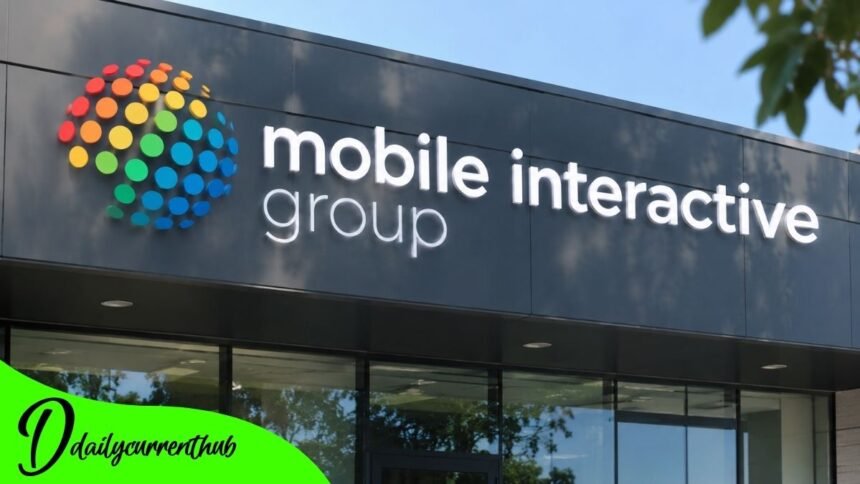
Mobile Interactive Group (MIG) was a British technology business that helped shape mobile marketing, interactive communication, and digital commerce during the early growth of the smartphone industry. Established in 2004 by Barry Houlihan, Anthony Nelson, and Nick Aldridge, the company developed technology that enabled businesses to connect with audiences through mobile messaging, advertising, applications, and interactive services.
MIG grew from a relatively small technology venture into an international mobile communications provider serving major brands, broadcasters, and telecommunications operators.
Its business expanded beyond the United Kingdom into several international markets, attracting attention for its technology platforms and customer relationships.
A major turning point came in November 2011, when mobile advertising company Velti acquired MIG. The transaction reflected the growing commercial importance of mobile customer engagement.
This article explores the company’s founding, technologies, business development, acquisitions, and lasting significance within the mobile marketing industry.
What Was Mobile Interactive Group?
Mobile Interactive Group was a mobile and digital communications company offering technology solutions to brands, broadcasters, telecommunications networks, and other organizations.
The company’s services helped businesses communicate with consumers through mobile devices. These capabilities included messaging, customer engagement, marketing campaigns, mobile applications, interactive broadcasting, and payment processing.
During its expansion, MIG served organizations operating in retail, entertainment, media, financial services, and telecommunications.
Unlike a business focused exclusively on advertising, MIG combined several connected technologies. Companies could use mobile messaging to communicate with customers, develop mobile applications, support interactive campaigns, and add payment capabilities.
This combination became increasingly relevant as businesses developed digital services for customers using mobile phones.
MIG’s history shows how communication evolved from basic messaging to integrated marketing and commercial technology.
Early History and Background of Mobile Interactive Group
The Company’s Origins in Mobile Communications
MIG’s origins were closely tied to the development of mobile services at telecommunications company O2.
Before establishing MIG, its founders had experience working with mobile communications and interactive services.
Barry Houlihan, Anthony Nelson, and Nick Aldridge established the business in May 2004 after working in the mobile industry.
An early business profile reported that the founders received support through a £125,000 Department of Trade and Industry loan. They subsequently secured additional private investment.
Although the business launched in 2004, the UK company registration records an incorporation date of February 20, 2003. These dates describe different stages of its legal and operational history.
Building a Business Around Emerging Technology
The founders entered a market in which mobile phones were becoming increasingly useful for commercial communication.
Businesses were already exploring SMS marketing, interactive television, mobile content, and customer messaging.
MIG concentrated on developing technology that organizations could use to manage these activities.
One important early project involved mobile interaction for the Live 8 concerts in 2005.
The project demonstrated the demands of delivering mobile technology for large public events, where thousands of participants could potentially interact with a service.
Early contracts with broadcasters, including ITV, helped establish the company’s commercial reputation.
Mobile Marketing Technology and Services
Mobile Messaging and Customer Communication
Messaging was an important component of MIG’s technology offering.
The company developed services supporting SMS and MMS communication, allowing businesses to interact with mobile users.
Such services could support promotional messages, interactive participation, customer notifications, and marketing activity.
For broadcasters, mobile messaging also created opportunities for audience participation in television programs.
These capabilities helped connect traditional media with mobile communication, particularly before smartphone applications became widely adopted.
Mobile Applications and Digital Experiences
As mobile technology developed, MIG expanded its services to include mobile websites, applications, and user experience design.
Its technology portfolio included mobile publishing and interactive communication platforms.
These systems enabled organizations to build mobile experiences rather than rely exclusively on conventional desktop websites.
The wider shift toward mobile applications changed how brands approached digital customer relationships.
MIG’s range of services reflected that transition, combining established messaging capabilities with newer digital experiences.
Mobile Advertising and Marketing Platforms
Advertising technology formed another important part of the business.
MIG developed capabilities for organizations seeking to reach consumers through mobile channels.
The company’s historical business operations included mobile advertising, interactive campaigns, and technology supporting customer engagement.
Its advertising division, 4th Screen Advertising, was one of the group’s specialist businesses.
This combination allowed MIG to operate across different parts of the mobile marketing market.
Major Clients and Business Partnerships
Working With Recognized International Brands
By 2011, Mobile Interactive Group had built relationships with many enterprise customers.
Contemporary business reports identified companies such as Vodafone, O2, PepsiCo, ITV, BBC, Sony, Barclaycard, and Marks & Spencer.
Other reported customers included organizations in telecommunications, financial services, retail, and entertainment.
These relationships demonstrated the breadth of industries adopting mobile communication technology.
For example, broadcasters needed interactive audience services, while retailers could use mobile platforms to develop customer engagement.
The underlying technologies differed based on each customer’s objectives, but mobile communication remained central to the services MIG supplied.
Connecting Mobile and Social Platforms
MIG also became involved in technology linking social interaction with mobile communication.
At the time of its acquisition by Velti, the company had Facebook Preferred Developer Consultant status and a global partnership with Skype.
Its mobile and broadcast interaction technology supported communication between audiences and media services.
These developments reflected a wider transition in digital marketing, as companies increasingly explored ways to connect social platforms, broadcasting, and mobile devices.
International Expansion and Acquisitions
Expanding Beyond the United Kingdom
International growth became an important part of MIG’s commercial development.
By November 2011, its services extended across 44 countries, with reported operations in the United Kingdom, United States, Netherlands, Belgium, and Australia.
International expansion gave the business access to additional customers and mobile communications markets.
Rather than depending entirely on internal development, MIG also expanded through acquisitions.
Acquisition of Piri Limited
In June 2010, MIG acquired Piri Limited, a Manchester-based provider of mobile marketing and customer relationship management technology.
Piri offered capabilities related to mobile marketing platforms and customer communication systems.
The acquisition strengthened MIG’s portfolio by adding complementary technology.
It also demonstrated the company’s strategy of combining different mobile services within a broader technology business.
Acquisition of Golden Bytes International
In February 2011, MIG announced its acquisition of Golden Bytes International, a mobile technology business with operations in the Netherlands and Belgium.
Golden Bytes had experience in mobile messaging and related services.
The transaction helped MIG extend its European presence and increase the reach of its technology offerings.
It also formed part of a wider effort to bring mobile advertising, messaging, digital development, and commercial services together.
Acquisition of Zaypay
Another significant development occurred in 2011 when MIG acquired the Netherlands-based mobile payments company Zaypay.
Zaypay provided micropayment technology supporting transactions through mobile messaging, phone calls, and other payment methods.
Developers and digital businesses could use its technology to charge customers for online services.
This acquisition expanded MIG’s involvement in mobile payments and digital monetization.
The development was significant because it moved the company’s capabilities beyond communication and advertising into transaction processing.
Leadership and Business Strategy
Barry Houlihan and the Founding Team
Barry Houlihan served as MIG’s founder and chief executive officer, working alongside co-founders Anthony Nelson and Nick Aldridge.
The founding team’s mobile communications experience shaped the company’s early commercial direction.
Contemporary interviews described a strategy focused on winning customers, developing technology, and carefully expanding business operations.
MIG invested in proprietary technology and operated specialist businesses serving different areas of mobile communication.
Its growth suggests the commercial advantages of combining technical development with established industry relationships.
However, the company’s achievements should also be understood in the context of the broader expansion of the mobile communications market.
Employees and Organizational Growth
MIG expanded its workforce as its business activities increased.
When Velti announced the acquisition in 2011, MIG had more than 160 employees.
The company also reported more than $100 million in gross billings and over $20 million in net revenue for 2010.
Gross billings and net revenue are different financial measures and should not be treated as interchangeable.
These figures illustrate the scale MIG had reached before its acquisition.
They also help explain why its technology, customer relationships, and market presence attracted interest from a larger business.
Mobile Commerce and Digital Payments
How Mobile Payments Supported Digital Business
Mobile commerce was becoming increasingly relevant as businesses sought convenient methods for customers to make payments through mobile devices.
MIG developed mobile billing and commerce services, supported by its existing messaging and technology operations.
The acquisition of Zaypay strengthened its position in this area.
Payment technology was particularly relevant for businesses selling digital products, services, and content.
By combining payments with other mobile capabilities, MIG broadened the activities its technology could support.
The Importance of Integrated Mobile Services
MIG’s business model reflected a growing demand for integrated digital services.
Messaging, marketing, applications, and payments had different purposes, but they could support different stages of a customer relationship.
A business might first communicate with an audience, encourage interaction, and later facilitate a purchase.
MIG’s technology portfolio addressed several parts of that process.
This historical approach helps explain why broader mobile marketing platforms became attractive to advertisers and enterprise customers.
The Acquisition of Mobile Interactive Group by Velti
The November 2011 Transaction
One of the defining moments in MIG’s history came on November 14, 2011, when Velti completed the acquisition.
Velti was an international provider of mobile advertising and marketing technology.
The acquisition expanded its access to MIG’s enterprise customers, technology platforms, and geographic markets.
The initial announcement described a transaction potentially worth up to approximately $59 million, depending on future performance.
Velti’s subsequent annual filing reported minimum consideration of $35.2 million, including $25.2 million paid at closing, and possible additional performance-related payments of up to $27 million.
These figures reflect transaction terms disclosed at different stages, not a single final amount ultimately paid.
Why the Acquisition Mattered
MIG brought existing relationships with major businesses and a combination of mobile marketing, messaging, commerce, and billing technologies.
Velti’s acquisition strategy included expanding its technological capabilities and international market presence.
The transaction brought MIG into a larger corporate structure.
It also marked the end of MIG’s independent existence.
The company’s technology operations and commercial relationships had become valuable assets within the developing international mobile marketing industry.
What Happened to Mobile Interactive Group?
Changes Following the Velti Acquisition
MIG’s ownership changed again after Velti encountered wider financial difficulties.
In November 2013, Velti announced an agreement to sell several mobile marketing businesses to affiliates of GSO Capital Partners, the credit division of Blackstone.
The proposed transaction included business operations associated with Mobile Interactive Group in the United Kingdom.
Velti subsequently confirmed that the sale closed on January 3, 2014.
This transaction formed part of a broader restructuring involving several international business operations.
Dissolution of the UK Company
Official Companies House records establish that Mobile Interactive Group Limited, company number 04672067, was dissolved on April 7, 2015.
The legal entity’s dissolution is distinct from the earlier acquisition and transfer of business operations.
The historical company should therefore not be presented as an independently operating mobile marketing provider today.
References to MIG in company directories and historical news reports generally describe its earlier commercial activities.
The records document its incorporation, acquisition history, and dissolution, but do not establish that all of iOwnership’s products or technologies ceased to exist immediately after those corporate changes.
Industry Influence and Lasting Legacy
Contributions to Mobile Marketing Development
Mobile Interactive Group operated during a period of major change in digital communications.
Its early work focused on messaging and interactive media, while later operations expanded into applications, digital marketing, social interaction, and mobile payments.
That progression illustrates how businesses adapted to changing mobile technologies.
MIG’s commercial history also shows the importance of serving different industry sectors through connected technology.
Broadcasters, retailers, telecommunications providers, and financial organizations could all benefit from mobile engagement services, although their commercial objectives differed.
Lessons From Its Business Development
Several documented features of MIG’s development remain relevant to understanding technology businesses.
The company grew through a combination of internal technology development, customer relationships, and acquisitions.
It expanded internationally while strengthening its portfolio of related mobile services.
Its acquisition by Velti demonstrated the commercial value placed on technology platforms and enterprise customers.
Its later corporate history also shows how ownership changes and restructuring can alter a technology business’s identity.
MIG’s legacy is therefore best understood through its historical contribution to mobile communications rather than through unsupported claims about its present activities.
Conclusion
Mobile Interactive Group played a notable role in the growth of mobile marketing and interactive digital communication during the 2000s and early 2010s.
Founded by Barry Houlihan, Anthony Nelson, and Nick Aldridge, the business developed from a British mobile technology venture into an international provider serving major brands and communications organizations.
Its services covered messaging, mobile advertising, digital applications, interactive broadcasting, and mobile commerce.
Acquisitions involving Piri, Golden Bytes, and Zaypay expanded its technical capabilities and international reach.
Velti’s 2011 acquisition marked a major commercial milestone, while the subsequent restructuring and dissolution of its UK legal entity ended its independent corporate history.
Today, Mobile Interactive Group remains relevant as a historical example of how technology companies responded to rapid changes in mobile communication, customer engagement, and digital commerce.
Its story illustrates an industry that moved from simple mobile messaging to increasingly integrated digital services.
(FAQs)
1. What was Mobile Interactive Group?
Mobile Interactive Group was a UK-based mobile marketing and digital communications company providing messaging, advertising, mobile applications, billing, and commerce technology.
2. Who founded Mobile Interactive Group?
Barry Houlihan, Anthony Nelson, and Nick Aldridge founded the company in 2004; they previously worked in the mobile communications industry.
3. Where was Mobile Interactive Group headquartered?
Mobile Interactive Group was headquartered in London, United Kingdom, and expanded its business internationally.
4. What services did Mobile Interactive Group provide?
Its services included SMS and MMS messaging, mobile advertising, interactive broadcasting, customer engagement, mobile applications, and digital payment technology.
5. Which companies worked with Mobile Interactive Group?
Reported customers included Vodafone, O2, ITV, BBC, Sony, PepsiCo, Barclaycard, and Marks & Spencer.
6. When did Velti acquire Mobile Interactive Group?
Velti completed the acquisition on November 14, 2011, making MIG a wholly owned subsidiary.
7. Is Mobile Interactive Group still operating?
The UK company Mobile Interactive Group Limited was dissolved on April 7, 2015. Its former operations had previously been included in corporate acquisitions and restructuring.
8. Why is Mobile Interactive Group significant?
MIG was part of the early development of integrated mobile marketing, combining messaging, interactive services, advertising, mobile applications, and payment capabilities for enterprise customers.