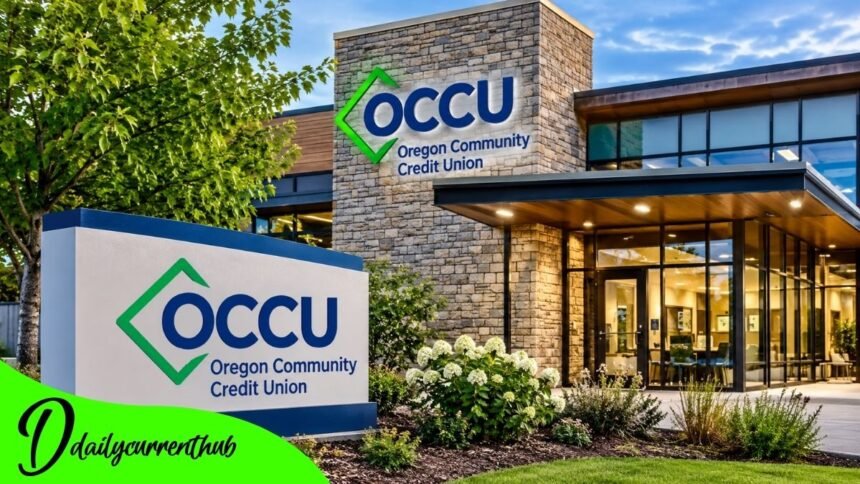
OCCU has developed from a small financial cooperative founded by Oregon state employees into a significant member-owned financial institution serving communities across the Pacific Northwest. Established in 1956, the credit union has spent seven decades expanding access to savings, borrowing, financial education, and other essential financial services.
Unlike a conventional shareholder-owned bank, OCCU operates as a not-for-profit financial cooperative, meaning its members are also its owners. This ownership model influences how the organization approaches financial services, community investment, and long-term growth.
By October 2026, OCCU had reported more than 300,000 members and over $3.5 billion in assets. Its expansion reflects both a growing membership base and a continued commitment to its founding cooperative principles.
This article examines OCCU’s background, organizational structure, financial products, leadership, community partnerships, charitable activities, and evolving role in regional banking.
Who Is OCCU?
OCCU is an American credit union headquartered in Eugene, Oregon, providing financial services through a cooperative business structure. Its purpose is to support members’ financial well-being while contributing to the development of the communities where those members live and work.
The organization began with a small group of Oregon state employees who pooled their resources in 1956. Their cooperative approach laid the foundation for an institution that would gradually extend its membership beyond government workers and university communities.
Today, OCCU provides banking products that support everyday spending, personal savings, borrowing, homeownership, and longer-term financial planning.
Its significance lies in its combination of financial services and community ownership. Rather than treating customers solely as account holders, the credit union recognizes qualifying members as stakeholders within the cooperative.
This distinction influences its governance, member benefits, charitable programs, and commitment to regional financial access.
The History and Development of OCCU
Early Beginnings and Organizational Background
OCCU’s history began in 1956, when Lane Federal Credit Union was established. According to the organization’s published historical timeline, Oregon state employees initially pooled their money to create a cooperative source of financial support.
In 1960, the credit union entered a new period, adopting the name U-Lane-O Federal Credit Union to reflect its growing association with the University of Oregon.
The credit union opened its first branch in Eugene in 1962. This development gave members a more permanent place to access financial services.
By 1981, the organization had expanded membership eligibility to include University of Oregon students and alums, family members, and Oregon state employees. It also became a state-chartered credit union and adopted the name U-Lane-O Credit Union.
Technological developments followed. OCCU introduced an ATM in 1982 and debit cards in 1985, demonstrating an early willingness to adopt new financial services.
During the 1990s, additional branches, telephone support, and internet banking increased accessibility.
The organization reached 55,000 members in 2000 and adopted the name Oregon Community Credit Union in 2003.
In 2016, it began operating under the shorter name OCCU, reflecting a membership community extending beyond Oregon.
These changes illustrate a consistent pattern: the institution expanded its services and identity as its membership needs developed.
Membership and Cooperative Ownership
The relationship between OCCU and its members is central to understanding its financial model.
Unlike banks owned by outside shareholders, a credit union operates through cooperative ownership. OCCU members collectively participate in the institution rather than simply purchasing services from it.
According to OCCU’s published membership information, qualifying individuals can establish membership by opening an eligible account and meeting the required membership conditions.
A primary savings account generally requires a $5 opening deposit.
Members can participate in the governance process, including voting rights outlined in the credit union’s membership agreements.
A member-elected board of directors guides the organization’s overall direction, while executives manage daily activities.
OCCU describes the benefits of its cooperative structure as including competitive borrowing costs, savings opportunities, reduced fees, and community investment.
These benefits should still be evaluated against the actual terms of individual products. Membership does not guarantee that every loan or savings account will offer the most favorable rate in the market.
The cooperative structure instead establishes a different relationship between ownership, financial performance, and member service.
Leadership and Behind-the-Scenes Operations
Financial institutions depend on leadership teams capable of balancing growth, financial stability, regulatory obligations, and customer service.
At OCCU, this responsibility is shared among executive officers and a member-elected board.
Greg Schumacher became OCCU’s president and chief executive officer on May 1, 2026, succeeding Ron Neumann.
Schumacher had worked with the credit union since 2013 and previously held senior responsibilities involving lending, finance, credit services, capital markets, and organizational operations.
OCCU’s published executive leadership team also includes specialists in finance, digital banking, analytics, operations, engagement, and organizational growth.
These functions are particularly relevant as the institution expands its physical locations while investing in digital services.
Leadership decisions determine how resources are allocated between new branches, lending capabilities, operational infrastructure, staff development, and member support.
A credit union must also maintain financial discipline while delivering benefits to its membership. Successful growth therefore requires more than attracting new account holders; it involves managing risks and maintaining operational reliability.
Financial Services and Member Benefits
OCCU provides a range of financial products intended to meet different stages of its members’ financial lives.
Its principal offerings include checking accounts, savings accounts, certificates, auto loans, personal loans, mortgages, and related financial services.
Checking products support everyday transactions, while savings accounts and certificates let members set money aside for planned expenses or longer-term goals.
The credit union also offers lending products for needs such as buying vehicles, purchasing homes, or managing personal financial commitments.
OCCU’s digital banking services let members handle many everyday tasks without visiting a physical branch.
However, in-person locations remain part of its strategy.
In 2026, OCCU described efforts to modernize branches by improving financial guidance, private consultation areas, accessibility, and more flexible service arrangements.
This approach recognizes that routine banking transactions can often be completed digitally, while complicated financial decisions may benefit from direct discussions with qualified staff.
Eligible deposits are federally insured through the National Credit Union Administration (NCUA), subject to applicable coverage rules and limits.
Members considering financial products should review interest rates, annual percentage yields, repayment obligations, eligibility requirements, and associated fees before deciding.
Supporting the Next Generation Through Financial Education
Financial literacy is an important part of OCCU’s community involvement.
The organization provides educational materials on budgeting, saving, borrowing, financial security, and homeownership.
These topics matter to younger adults starting their financial journeys and to established households managing increasingly complex financial responsibilities.
Financial education helps individuals understand the consequences of borrowing and the importance of planning for both expected and unexpected expenses.
OCCU also identifies education and youth opportunity among its community sponsorship priorities.
Its foundation has supported partnerships with schools to expand financial education for students.
These activities connect the credit union’s financial services with a broader educational purpose.
For a member-owned cooperative, financial education can help people use financial products more effectively while developing a clearer understanding of their responsibilities.
The benefits extend beyond future account holders. Improved financial knowledge can also help households make decisions about saving, debt, spending, and financial resilience.
Philanthropy and Community Engagement
OCCU’s charitable activities represent a substantial part of its public community role.
The OCCU Foundation was established in 2018 to support charitable initiatives and strengthen community well-being.
The foundation concentrates on three principal areas: financial health, physical health, and basic and emerging needs.
Its published activities include supporting nursing education, healthcare programs, food assistance, financial education, and local nonprofit organizations.
By 2026, the foundation reported awarding more than $5 million in grants to local nonprofits since its establishment.
OCCU also encourages employee volunteering and participates in community activities such as educational programs, fundraising events, and charitable partnerships.
One notable development came in October 2026, when OCCU, its foundation, and PeaceHealth announced Partners for Health, a collaboration connecting healthcare support with financial well-being.
The initiative builds on previous cooperation in community healthcare, education, and service access.
This partnership shows how financial institutions can support local development through activities beyond traditional banking.
The impact of such programs should ultimately be evaluated through documented outcomes, the organizations supported, and the benefits delivered to participating communities.
Privacy, Security, and Member Trust
Privacy means something different for a financial cooperative than for a private individual.
OCCU is a publicly identifiable institution with disclosed leadership, financial activities, branches, and community initiatives. However, its members depend on the organization to handle personal and financial information responsibly.
Credit unions process sensitive information connected with account ownership, transactions, identity verification, and borrowing.
Protecting this information is essential to maintaining member confidence.
OCCU publishes educational resources on digital banking security, protecting personal information, and preventing fraud.
Such resources are particularly relevant as mobile banking, electronic transactions, and online account management become more common.
The growth of digital services increases convenience but also makes sound security practices increasingly important.
For members, useful precautions include safeguarding account credentials, using available authentication protections, monitoring transactions, and communicating through official financial service channels.
Trust in a financial institution cannot be measured through charitable activities or promotional promises alone. It also depends on reliable services, clear terms, sound financial management, and appropriate handling of personal information.
Public Curiosity and Common Misconceptions About OCCU
OCCU’s name and history can sometimes create confusion.
The organization previously operated as Oregon Community Credit Union before adopting the shorter OCCU name in 2016.
It is also distinct from Our Community Credit Union, a separate Washington-based financial cooperative that formerly used similar OCCU branding and subsequently adopted the acronym OURCU.
Another misconception concerns the difference between credit unions and traditional commercial banks.
Although both may provide checking accounts, savings products, and lending services, their ownership models differ.
Credit unions are cooperatives whose members own them, while conventional shareholder-owned banks operate on behalf of their shareholders.
That distinction does not mean every credit union product is automatically cheaper or financially preferable.
Consumers should compare the terms of individual financial products rather than rely entirely on an institution’s organizational structure.
It is also useful to distinguish OCCU from OCCU Foundation. The foundation conducts charitable work, whereas the credit union provides financial services.
Understanding these differences helps prospective members develop a clearer picture of the institution and its responsibilities.
Legacy and Future Development
OCCU’s development over seven decades demonstrates how a relatively small cooperative can grow into a large regional financial institution.
Its expansion has included successive changes in membership eligibility, financial technology, physical infrastructure, and organizational leadership.
During 2026, OCCU continued investing in branch accessibility and financial guidance.
The institution opened a full-service branch in Bend, Oregon, in January 2026, extending its presence in Central Oregon.
In October 2026, the credit union also outlined plans to renovate its longstanding Downtown Eugene branch in early 2027.
These developments reflect a strategy that combines digital convenience with physical locations where members can obtain personal support.
OCCU’s ongoing community investments are another part of its institutional legacy.
Its future performance will depend on factors such as responsible lending, operational effectiveness, financial stability, member experience, and the ability to respond to changing consumer expectations.
The central challenge is maintaining the cooperative principles established in 1956 while serving a substantially larger and more diverse membership.
Conclusion
OCCU’s history reflects the transformation of a small employee-based credit union into an established financial cooperative operating across the Pacific Northwest.
Founded in Eugene in 1956, the institution has expanded its membership, banking capabilities, and community responsibilities while retaining a member-ownership structure.
Its services support savings, borrowing, personal financial management, and homeownership, while OCCU Foundation extends its activities into charitable giving, education, healthcare, and community assistance.
The organization’s growth also highlights the importance of balancing technological development with accessible personal service.
With more than 300,000 members and a documented history of community involvement, OCCU remains a practical example of the member-owned credit union model.
Its long-term significance will rest not only on financial growth but on how effectively it continues to serve members, manage their trust, and contribute to the communities that have supported its development.
(FAQs)
1. What does OCCU stand for?
OCCU is the official name of a credit union formerly known as Oregon Community Credit Union. The organization adopted OCCU as its shorter name in 2016.
2. When was OCCU founded?
OCCU traces its origins to 1956, when Oregon state employees established Lane Federal Credit Union in Eugene, Oregon.
3. Who owns OCCU?
OCCU is owned by its members. It operates as a not-for-profit financial cooperative rather than a conventional shareholder-owned bank.
4. Who is the CEO of OCCU?
Greg Schumacher became president and chief executive officer of OCCU on May 1, 2026, succeeding Ron Neumann.
5. What financial services does OCCU provide?
OCCU offers checking and savings accounts, certificates, personal loans, vehicle loans, mortgage lending, digital banking, and other financial services.
6. Can anyone become an OCCU member?
Membership is subject to eligibility requirements. Eligible individuals include residents of its designated membership region, eligible family members, and people who meet certain employment or educational criteria.
7. What is OCCU Foundation?
OCCU Foundation is the credit union’s charitable organization, established in 2018. It supports financial health, physical health, and community needs through grants and partnerships.
8. Is OCCU federally insured?
Yes. Eligible deposits at OCCU are federally insured through the National Credit Union Administration, subject to applicable coverage limits and account ownership rules.