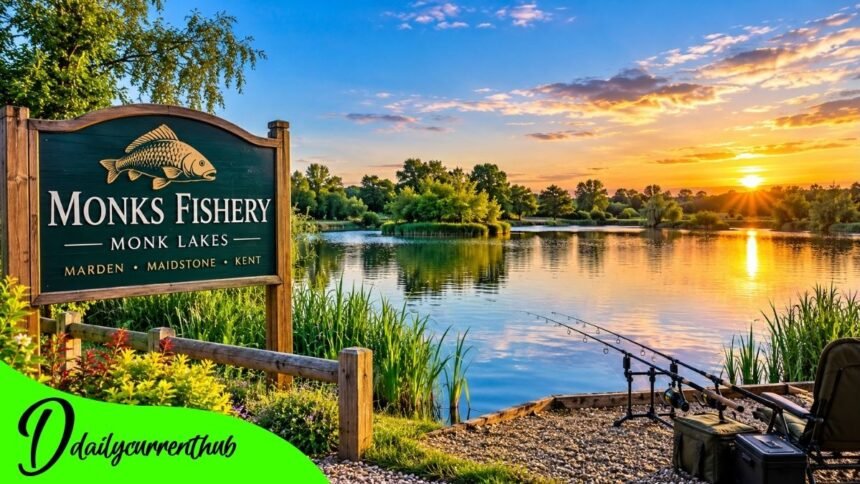
Monks Fishery, officially known as Monk Lakes Fishery, is an established coarse-fishing destination in Marden, near Maidstone in Kent, England. Covering approximately 120 acres, the complex brings together several styles of freshwater angling in one location, attracting visitors interested in carp fishing, competitive match fishing and traditional pleasure fishing.
The fishery offers approximately 45 acres of fishing water, with seven lakes and a 2,000-meter section of the River Beult. Its established fishing waters, accessible facilities, and varied fish species appeal to both experienced anglers and those developing their skills.
Monk Lakes stands out for the range of fishing experiences it offers. Some waters suit relaxed recreational sessions, while others offer a more demanding environment for dedicated specimen anglers.
This article explores the fishery’s background, individual lakes, fish species, visitor facilities, booking arrangements and fishing regulations, offering a practical overview for anyone considering a visit.
What Is Monks Fishery?
Monks Fishery is a freshwater angling complex designed to accommodate different approaches to coarse fishing. Unlike a venue centered on a single lake or one species, Monk Lakes combines several distinct fishing environments within a larger rural setting.
The complex includes two pleasure lakes, one dedicated specimen lake, four match lakes and a substantial stretch of riverbank. These waters offer different challenges and opportunities depending on the target species, equipment, and the angler’s experience.
The pleasure lakes offer options for general coarse fishing, while Mallard Lake is intended for anglers pursuing larger specimen fish. The match lakes feature purpose-built fishing platforms and established pegs suitable for organized competitions.
This variety explains much of the fishery’s appeal. Visitors can choose a fishing environment that matches their abilities and objectives instead of relying on a single style of angling.
History and Development of Monks Fishery
The official Monk Lakes website identifies 2003 as its establishment year. By the mid-2000s, the venue was already attracting attention as a substantial addition to Kent’s recreational fishing landscape.
Its development brought multiple fishing waters, visitor amenities and dedicated angling areas together on a large site near the A229.
A key feature of this arrangement is separating different fishing activities. Competitive match anglers generally have different requirements from specimen carp anglers, while casual visitors may prioritize convenience and varied fishing opportunities.
Creating distinct waters for these purposes allows a fishery to accommodate these interests without requiring every visitor to use the same lake.
The established layout also demonstrates the significance of infrastructure in modern commercial angling. Fishing platforms, parking, access arrangements, and visitor facilities all contribute to the experience beyond fish availability.
Today, the fishery remains known for its combination of lakes and access to River Beult, offering a range of options in one location.
The Main Fishing Lakes at Monks Fishery
Mallard Lake: The Specimen Fishing Experience
Mallard Lake is the fishery’s dedicated specimen water, covering approximately five acres.
Its underwater layout includes deeper holes reaching around nine feet, contoured areas, and established marginal vegetation. These features create a varied environment for anglers targeting larger fish.
According to the fishery’s published description, Mallard Lake has produced carp reaching about 45 pounds, along with catfish. Such figures describe the venue’s advertised fishery potential rather than guaranteeing the size of a future catch.
The lake is specifically intended for experienced anglers with appropriate equipment. Its management limits fishing to ten anglers at a time, and booking is essential.
Mallard also has additional equipment and access restrictions, so review its rules before arranging a session.
Bridges Lake: A Popular Pleasure Fishing Water
Bridges Lake covers approximately 16 acres and provides a different experience from the specimen lake.
Notable features include islands, five bridges, submerged vegetation, reeds, and lily beds. These features create distinct areas that anglers can explore using different fishing methods.
The lake supports techniques such as float fishing, feeder fishing and carp angling.
The fishery lists carp, barbel, bream, tench and dace.
Bridges Lake appeals for its versatility. Anglers interested in mixed coarse fish can approach the water differently from those concentrating on carp.
Its larger surface area and range of features also make swim selection an important consideration.
Puma Lake: Varied Underwater Features
Puma Lake covers approximately ten acres and includes three islands, a central gravel bar, deeper areas, and marginal vegetation.
These underwater features offer different fishing opportunities and encourage anglers to understand the lake’s structure rather than approach every swim the same way.
The fishery supports carp up to about 30 pounds, along with barbel, bream, tench and dace.
Puma is particularly relevant to anglers who enjoy spotting depth changes, fishing near natural features, and adapting their presentation to different conditions.
The official description also highlights access arrangements and facilities intended to make fishing more convenient.
The Four Match Fishing Lakes
Competitive angling forms a significant part of the Monk Lakes complex.
The four dedicated match waters have established fishing pegs and platforms, creating designated positions for anglers participating in organized events.
The official descriptions identify the following arrangements:
Match LakeApproximate SizeFishing Pegs
Match Lake 1 2.5 acres 44
Match Lake 2 4 acres 46
Match Lake 3 3.5 acres 45
Match Lake 4 1.5 acres 29
These lakes contain a mix of coarse fish, including carp, barbel, bream, and tench, with additional species present in certain waters.
Match fishing requires anglers to work within an organized competition structure. Success depends on factors such as accurate presentation, feeding decisions, equipment selection and responding to changing conditions.
Four designated match lakes give Monk Lakes the infrastructure to accommodate this form of angling separately from much of its recreational fishing.
Booking is required for the match waters.
Fish Species and Angling Opportunities
One of Monk Lakes’ strongest features is its range of freshwater fish.
Carp are a major attraction, particularly for anglers seeking larger specimens. The complex also offers opportunities to target catfish in the specimen water and mixed coarse species elsewhere.
Barbel, bream, and tench appear across several lakes. Roach and chub are also listed among the match-lake species, while dace feature in the pleasure-lake descriptions.
Different species require different approaches.
An angler targeting carp may use methods and equipment different from those preferred by someone targeting smaller mixed coarse fish. Water depth, vegetation, weather, and fish behavior can affect how well a particular presentation works.
Multiple fishing environments let visitors make these decisions based on the water they choose.
Nevertheless, the presence of a species does not guarantee a catch. Fishing results vary, and historic specimen weights should never be interpreted as reliable predictions of what an individual angler will land.
Facilities and the Visitor Experience
A well-equipped fishing venue needs more than productive water.
Monk Lakes advertises parking, toilets, a tackle and bait shop, and a catering unit with indoor seating.
These facilities matter because recreational fishing sessions can last many hours. Convenient access to essential supplies and refreshments reduces the need to leave the complex during a visit.
The fishery also provides food and drink options through its café, although café opening hours differ from general fishing hours.
Access arrangements deserve attention. While the fishery has vehicle access provisions, its published rules restrict cars to loading and unloading fishing equipment.
Visitors should therefore confirm parking and unloading arrangements before traveling, particularly when transporting substantial equipment.
Together, these amenities help make the complex suitable for different types of fishing sessions, from daytime visits to longer permitted stays.
Fishing Rules and Responsible Angling
Fish welfare is central to the regulations published by Monk Lakes.
All anglers must use landing nets, and the venue requires nets, mats and weighing slings brought onto the site to be completely dry.
Barbless hooks are mandatory. Fixed leads, bait boats, braided main lines and leadcore are prohibited under the general rules.
The venue also restricts certain bait types and permits keepnets only during matches.
Fish must be returned promptly to the water, and large specimens may only be photographed at mat level.
These measures address practical concerns associated with safely handling captured fish and protecting the fishing environment.
Anglers must also comply with national licensing requirements. In England, people aged 13 and older generally need a valid rod fishing license; junior licenses for those aged 13 to 16 are free.
A fishery ticket does not replace a government rod license.
Understanding these rules before arrival protects both the angler and the fishery.
Booking, Opening Times and Fishing Prices
Monk Lakes operates different access arrangements across its waters.
The official website states that pleasure-lake and river fishing can be undertaken without booking, while the specimen and match lakes require reservations by telephone.
The venue publishes seasonal fishing hours. Its official information lists opening at 7:00 a.m., closing at sunset from January to March and October to December, and at 7:00 p.m. from April to September.
Night fishing arrangements are separate from ordinary daytime access and should be confirmed with the fishery.
Admission charges depend on the ticket type and fishing arrangements. Because prices can change, visitors should use the latest official price list rather than relying on older third-party figures.
For bookings and current information, call 01622 833332.
Family Fishing and Community Connections
Monk Lakes offers fishing environments that accommodate recreational anglers of all experience levels, but families should understand the age restrictions.
The general rules require anglers under 18 to be accompanied by a parent. Mallard Lake has a separate restriction prohibiting junior anglers.
These distinctions matter when planning a family outing.
Accessible coarse-fishing venues also provide opportunities to practice angling skills, develop familiarity with fish handling, and enjoy outdoor recreation.
These benefits come from the activity itself and should not be confused with claims that the fishery runs particular charitable initiatives.
Monk Lakes’ combination of pleasure waters, established platforms and on-site facilities supports the practical needs of recreational fishing, including visits involving younger anglers who meet the venue’s requirements.
The River Beult: A Different Fishing Challenge
Beyond the lakes, Monks Fishery includes approximately 2,000 meters of fishing along the River Beult.
The river introduces conditions unlike those found in enclosed stillwaters.
Moving water, changing flow, and natural features can affect tackle selection and where fish are located.
The fishery identifies carp, roach, bream and pike among the species associated with its river section.
Its official description also mentions two constructed pools that provide areas where fish may gather during stronger flows.
River fishing involves additional legal considerations. In England and Wales, the statutory coarse-fishing close season generally runs from March 15 to June 15 on rivers.
Consequently, anglers must not assume that access to the fishery year-round means its river section is open for coarse fishing every day.
Check both fishery-specific requirements and applicable national regulations.
Planning a Visit to Monks Fishery
A successful visit starts with choosing the right water.
Anglers seeking mixed coarse fishing may find the pleasure lakes suitable, while experienced specimen anglers can consider Mallard Lake after reviewing its stricter requirements.
Those interested in organized competition should contact the fishery regarding match-lake availability.
Equipment preparation is equally important. Landing nets, suitable lines, barbless hooks and any lake-specific fish-handling equipment should be checked in advance.
Visitors should also check the weather, consider how long their session might last, and confirm the opening arrangements for their intended date.
The venue is on Staplehurst Road in Marden, Kent, so it’s worth checking the exact entrance and access instructions before departure.
For newcomers, understanding the rules and choosing a suitable fishing water is more useful than assuming one technique will work everywhere.
Conclusion
Monks Fishery, officially known as Monk Lakes, occupies an established place among Kent’s coarse-fishing destinations. Its appeal comes from a mix of varied fishing environments, dedicated match waters, specimen opportunities, and the natural challenge of the River Beult.
The complex’s approximately 120-acre setting supports different angling styles in one location. Mallard Lake provides a more specialized specimen-fishing environment, while Bridges and Puma offer broader pleasure-fishing opportunities. Four match lakes add another dimension for competitive anglers.
On-site facilities and published fishing regulations further define the visitor experience.
For anyone researching fishing lakes near Maidstone, Monk Lakes is a venue worth understanding in detail. The best experience begins with realistic expectations, the correct equipment, respect for fish welfare, and careful attention to current booking and licensing requirements.
(FAQs)
1. Where is Monks Fishery located?
Monks Fishery, officially Monk Lakes, is on Staplehurst Road, Marden, near Maidstone, Kent, England. Its postcode is TN12 9BS.
2. How many fishing lakes are at Monks Fishery?
The official website describes seven lakes: two pleasure lakes, one specimen lake and four match lakes. The complex also offers fishing along the River Beult.
3. What fish can you catch at Monks Fishery?
The fishery lists carp, catfish, barbel, bream, tench, roach, chub, dace and other species across its different waters. Species vary by lake.
4. Do you need to book fishing at Monk Lakes?
Booking is required for Mallard Lake and the match lakes. The fishery states that its pleasure lakes and river section do not ordinarily require booking.
5. Is Monks Fishery suitable for beginners?
The complex has pleasure-fishing waters that may suit less experienced anglers. However, visitors must follow all regulations, and Mallard Lake is specifically intended for experienced specimen anglers.
6. Can children fish at Monks Fishery?
Under the venue’s general rules, anglers under 18 must be accompanied by a parent. Junior anglers are not permitted on Mallard Lake.
7. Does Monks Fishery offer night fishing?
The official fishery information permits night fishing on its pleasure lakes and river section, subject to applicable rules and seasonal restrictions. Visitors should confirm current arrangements before attending.
8. How can you contact Monks Fishery?
The published telephone number is 01622 833332. Visitors can use this number to enquire about fishing arrangements, current prices and bookings.