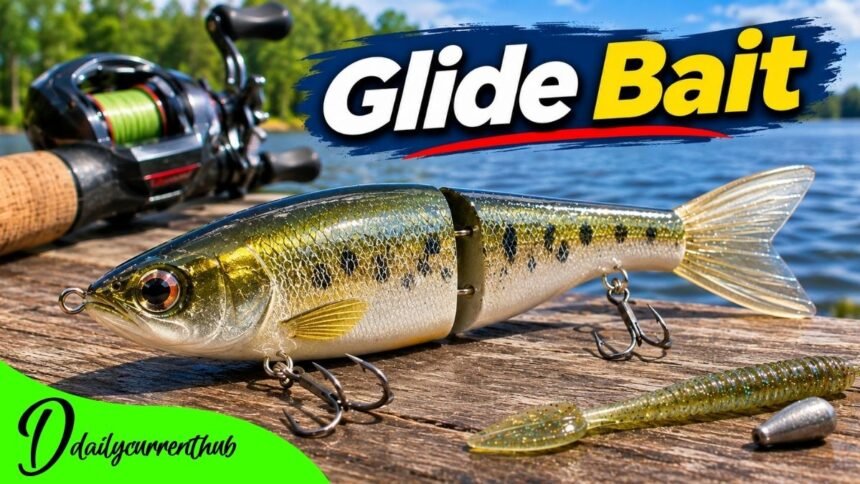
A Glide Bait is a specialized fishing lure designed to imitate the natural swimming movement of a baitfish. Known for its distinctive side-to-side motion, it has become a go-to option for anglers targeting largemouth bass, northern pike, muskellunge, and other predatory fish.
Unlike conventional lures that travel along a relatively straight path, a glide bait can sweep across the water in broad, controlled movements. Its distinctive swimming action gives anglers opportunities to imitate a cruising, turning, or vulnerable baitfish.
Glide baits are particularly associated with big-bait fishing, where anglers use larger artificial lures to attract predatory fish. Their effectiveness, however, depends on suitable equipment, realistic presentation, and an understanding of fishing conditions.
This article explores glide bait design, fishing techniques, tackle selection, retrieve methods, and common mistakes to help beginners and experienced anglers understand this distinctive lure category.
What Is a Glide Bait?
A Glide Bait is a hard-bodied fishing lure belonging to the swimbait family. Its defining characteristic is the ability to move sideways during retrieval rather than simply traveling straight toward the angler.
Most traditional glide baits feature two rigid body sections connected through a single joint. This construction lets the front and rear portions move relative to one another, producing a distinctive swimming pattern.
The movement resembles the broad, sweeping turns of fish such as shad, trout, perch, and other forage species.
Many glide baits are relatively large compared with everyday bass fishing lures, although smaller versions are available.
The design allows anglers to vary the presentation. A steady retrieve can create smooth swimming movement, while a sudden change in speed or direction may cause the lure to dart sideways.
This combination of natural movement and controllable action distinguishes glide baits from many conventional artificial lures.
Understanding Glide Bait Design and Fishing Techniques
Glide Bait Design and Construction
A glide bait’s construction directly influences its movement through the water.
A typical model includes a durable front section, a hinged rear section, attachment points, and hooks. Some designs incorporate flexible tails or realistic surface details.
The central hinge is particularly significant because it permits movement between the lure’s body sections.
Body shape also affects performance. Wider bodies and different joint configurations can produce distinct turning characteristics, while longer, narrower designs may create a smoother glide.
Manufacturers commonly use molded plastics, resin, or wood. Different materials and internal weighting systems affect buoyancy and balance.
Quality construction matters because an incorrectly balanced lure may roll, track poorly, or fail to maintain its intended swimming motion.
Anglers should inspect the joint, hooks, and attachment hardware before using a lure, especially after repeated encounters with rocks, timber, or large fish.
How Glide Bait Action Works Underwater
The characteristic glide bait action is produced through the interaction of lure design, water resistance, and retrieval movement.
As an angler reels, water pushes against the bait’s body. Its jointed construction allows the rear section to move, creating the broad S-shaped swimming pattern associated with glide baits.
The movement changes depending on retrieve speed.
Slow, consistent reeling generally produces smooth swimming motions. Short, deliberate reel-handle turns can create sharper directional changes.
Pauses may let a floating lure rise or a sinking lure descend, depending on its construction.
Some glide baits can make sudden turns when anglers combine short bursts of movement with controlled pauses.
Learning how a particular lure responds is essential. Testing its swimming action in visible water helps you set the right retrieve speed before fishing deeper areas.
History and Development of Glide Baits
The glide bait is not a completely new fishing invention.
Hard-bodied fishing lures with side-to-side swimming characteristics have existed for generations. The modern glide bait category developed through refinements in jointed lure design, weighting systems, and fishing techniques.
Its popularity in contemporary bass fishing is closely associated with the wider use of large swimbaits.
Anglers targeting trophy bass began using realistic baitfish imitations that offered more substantial profiles than many traditional lures.
Manufacturers subsequently introduced a variety of glide bait sizes, materials, and buoyancy configurations.
Professional fishing demonstrations, tackle publications, and instructional videos have helped introduce these techniques to a wider audience.
Today’s glide baits range from compact production models to large, individually crafted lures designed for specialized fishing applications.
Choosing the Right Rod, Reel, and Fishing Line
Equipment selection matters because some glide baits are substantially heavier than standard fishing lures.
A fishing rod must have an appropriate casting-weight rating for the particular lure.
Heavy or extra-heavy casting rods are commonly used for larger glide baits, but smaller models may be compatible with lighter equipment.
Rod length, action, and casting weight all influence comfort and control.
Baitcasting reels are popular because they provide controlled line retrieval and can accommodate heavier lure presentations.
Fishing line selection also deserves attention.
Anglers use both fluorocarbon and braided lines, with preferences varying by lure weight, water conditions, and technique.
Line strength should match the intended fishing application. When toothy predators such as pike are present, you may need an appropriate bite-resistant leader.
The most reliable approach is to check the manufacturer’s lure weight specifications and choose equipment that can handle that weight safely.
Best Locations and Conditions for Glide Bait Fishing
Glide baits are frequently used around areas where predatory fish encounter baitfish.
Productive locations can include points, submerged structure, vegetation edges, and open-water feeding areas.
Clear water helps anglers observe how fish respond to the lure.
However, glide baits aren’t limited to clear-water conditions.
The effectiveness of any presentation depends on fish activity, available forage, water temperature, visibility, and depth.
Floating and slow-sinking glide baits can be useful when fishing relatively shallow areas. Sinking models provide additional opportunities to reach deeper parts of the water column.
Seasonal changes also affect how fish behave.
During periods of reduced activity, a slower retrieve may be worth testing. When fish are actively pursuing baitfish, a quicker presentation may produce better responses.
No single season, depth, or retrieve speed guarantees success.
Selecting Glide Bait Sizes and Colors
Glide baits come in many sizes and color combinations.
Some smaller models suit conventional bass fishing tackle, while larger models require specialized equipment.
When selecting a lure, consider local forage size, target species, fishing depth, and available equipment.
Natural patterns often imitate species such as shad, bluegill, trout, or perch.
Other designs use brighter colors or contrasting markings to increase visibility.
Water clarity and lighting conditions influence how easily an angler can see the lure and how it appears underwater.
Color alone does not determine fishing success. Movement, depth, lure profile, and presentation are also significant.
Anglers should prioritize a lure that swims correctly and can be controlled at the desired depth rather than choosing based on appearance alone.
Understanding Fish Following Behavior
One distinctive feature of glide bait fishing is the chance to watch predatory fish follow a lure without immediately attacking it.
Bass may approach from below or behind before deciding whether to strike.
A following fish does not necessarily indicate an unsuccessful presentation. It confirms that the lure attracted attention, although the reason a particular fish did not strike cannot always be determined.
Anglers sometimes respond by briefly changing the retrieval speed or letting the lure turn.
These changes can alter the lure’s apparent direction and speed.
Nevertheless, sudden movement does not guarantee a strike.
Observing where followers appear, how closely they approach, and whether they respond to pauses can help an angler make more informed decisions about subsequent casts.
Common Glide Bait Fishing Mistakes
Glide bait fishing requires practice, particularly when transitioning from conventional lures.
A common mistake is retrieving too quickly without understanding the lure’s intended swimming action.
Excessive speed can prevent certain models from performing as designed.
Another problem is using equipment that is not rated for the lure’s weight. This can reduce casting control and potentially damage fishing equipment.
Fishing an unfamiliar sinking lure near underwater obstacles can also increase the likelihood of snagging.
Ignoring the lure’s original hook and weight configuration may create problems because modifications can change its balance.
Successful glide bait fishing depends on observation, controlled movement, and adjustments based on actual performance rather than relying on one retrieve pattern.
Responsible Glide Bait Fishing Practices
Responsible fishing protects both the angler and the fish being targeted.
Because many glide baits carry exposed hooks, careful handling is essential. Keep needle-nose pliers or suitable hook-removal tools on hand.
Anglers practicing catch-and-release fishing should minimize handling time, wet their hands before touching a fish, and support its body properly.
A rubberized landing net can reduce unnecessary contact and damage.
Fish should not be deliberately exhausted through prolonged fights, especially when they will be released.
Local fishing regulations concerning species, seasons, lure restrictions, and catch limits must also be followed.
Good fishing technique includes conservation awareness alongside equipment knowledge.
Conclusion
A Glide Bait is a distinctive artificial fishing lure that combines realistic construction with controlled side-to-side swimming movement.
Its single-jointed design, broad action, and variety of buoyancy options make it useful for presenting baitfish imitations to predatory species.
Although glide baits are strongly associated with trophy bass fishing, anglers also use them for other predators, including pike and muskellunge.
Understanding their effectiveness requires more than choosing a large, realistic-looking lure. Anglers must consider equipment ratings, retrieval speed, water conditions, depth, and their target fish’s behavior.
Observing and adjusting the lure’s movement is central to developing consistent technique.
For beginners, starting with a manageable lure and practicing its action in visible water offers a practical foundation.
With the right tackle, careful presentation, and responsible fishing practices, glide baits offer a proven, versatile approach to modern lure fishing.
(FAQs)
1. What is a Glide Bait used for?
A glide bait imitates baitfish and attracts predatory species such as largemouth bass, northern pike, and muskellunge with realistic side-to-side movement.
2. How does a Glide Bait work?
Its jointed body and hydrodynamic shape create broad swimming movements as it travels through water. Retrieve speed and pauses influence its action.
3. Are glide baits suitable for beginners?
Yes. Beginners can learn with appropriately sized models, as long as their rod and reel suit the lure’s weight.
4. What is the best retrieve for a glide bait?
Slow, steady retrieval and controlled reel-handle turns are common techniques. The most suitable retrieve depends on the lure and fishing conditions.
5. Can glide baits catch big bass?
Yes. Glide baits are widely used by anglers targeting large bass, although lure selection cannot guarantee catch size.
6. What is the difference between a glide bait and a swimbait?
A glide bait is a type of swimbait, typically characterized by a single joint and a wide side-to-side swimming action.
7. Do glide baits float or sink?
Both types are available. Manufacturers produce floating, slow-sinking, and faster-sinking models for different fishing situations.
8. What fishing line should be used with glide baits?
Fluorocarbon and braided lines are commonly used. The appropriate strength and leader depend on lure weight, equipment specifications, and target species.