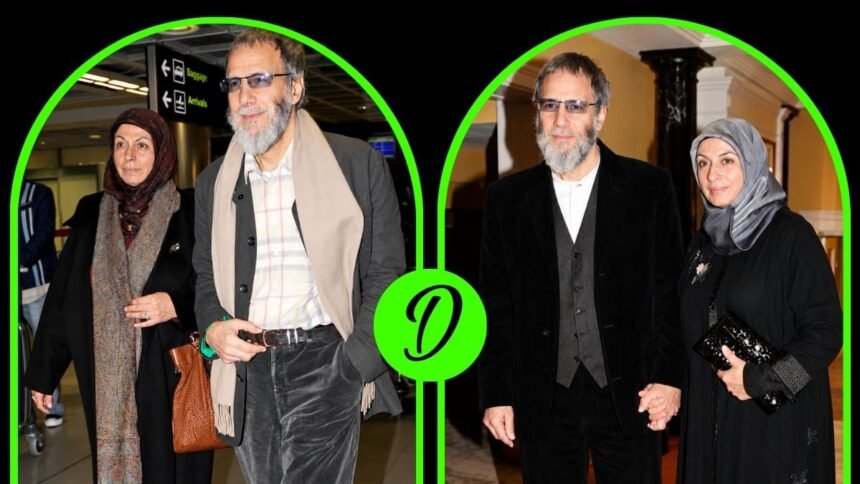
For generations of music listeners, Cat Stevens has been a familiar voice behind enduring songs such as Father and Son, Wild World, Moonshadow, and Peace Train. His transformation from an internationally successful singer-songwriter to Yusuf Islam, a musician devoted to faith, education, and humanitarian work, remains one of popular music’s most distinctive stories.
Alongside this transformation has been Fauzia Mubarak Ali, his wife since September 1979.
While her husband has spent much of his life in the public eye, Fauzia has maintained a comparatively private profile. Yet her story extends beyond her marriage to a celebrated musician. Public records connect her with educational leadership, charitable governance, and humanitarian initiatives.
Her involvement in these activities offers a fuller picture of her life than the limited personal details often repeated in celebrity biographies.
This article explores Fauzia Mubarak Ali’s marriage, family, educational contributions, public appearances, and philanthropic involvement, distinguishing facts from assumptions about her private life.
Profile Summary
| Detail | Information |
|---|---|
| Full Name | Fauzia Mubarak Ali |
| Also Known As | Fauzia Islam, Fawziah Islam |
| Known For | Wife of Yusuf Islam (Cat Stevens) |
| Husband | Yusuf Islam, formerly Cat Stevens |
| Marriage Date | September 7, 1979 |
| Marriage Location | London Central Mosque, Regent’s Park |
| Age | Exact birth date not independently verified |
| Residence | Family connections to London and Dubai |
| Children | Five living children; one son died in infancy |
| Education Work | Formerly identified as principal of Islamia Girls’ School |
| Charitable Involvement | Co-founder of Small Kindness |
| Public Governance Role | Listed trustee of Islamia Schools Limited |
| Known Philanthropic Interests | Education, humanitarian relief, support for vulnerable families |
| Social Media Presence | No widely verified personal public account |
| Public Profile | Private individual with documented educational and charitable contributions |
Who Is Fauzia Mubarak Ali?
Fauzia Mubarak Ali is best known as the wife of British singer-songwriter Yusuf Islam, previously known internationally as Cat Stevens.
The couple married in 1979, shortly after Yusuf converted to Islam and withdrew from mainstream popular music. Their marriage marked a new chapter in his life, increasingly centered on family, religious practice, education, and charitable activity.
Fauzia’s public identity, however, should not be limited to her husband’s career.
A 2009 announcement on Yusuf’s official website identified her as the principal of Islamia Girls’ School. His official biography also credits the couple with establishing Small Kindness, a humanitarian charity created in response to suffering caused by conflicts in the Balkans.
These documented responsibilities show her involvement in activities beyond the household.
Although she has occasionally accompanied Yusuf to public events, the media have generally paid far less attention to her professional and personal life than to his musical career.
The Life and Background of Fauzia Mubarak Ali
The Private Life of Fauzia Mubarak Ali
Fauzia Mubarak Ali occupies an unusual position in the history of a major music figure: she has been connected to an internationally recognized artist for decades without establishing an equivalent celebrity identity.
Her name appears in interviews, charitable announcements, educational records, and photographs from selected public gatherings. These references provide meaningful evidence of her activities, though they reveal little about her everyday routine.
This distinction matters because privacy does not necessarily mean an absence of public contribution.
Her documented work in education and charitable administration shows that someone can participate in organizations that serve wider communities without frequently appearing in entertainment interviews.
At the same time, the limited number of personal interviews means her beliefs, preferences, and motivations should not be inferred automatically from her husband’s statements.
The most reliable portrait of Fauzia comes from examining her recorded contributions rather than imagining the details of her private world.
Early Life and Background of Fauzia Mubarak Ali
Much of Fauzia’s childhood and education remains outside the public record.
A profile published by The Independent described her as the daughter of an accountant from Surbiton, a suburban area of southwest London. This provides a limited glimpse of her family background before marriage.
However, claims circulating online about her exact birthplace, date of birth, and university qualifications are not consistently supported by authoritative documentation.
Some websites link her to Pakistan and specific educational institutions, but those claims need stronger independent verification before they can be presented as biographical facts.
What can be established more confidently is her later participation in British Muslim educational institutions.
Her association with Islamia Girls’ School offers an important insight into her professional life, particularly because it is documented by the school’s founding family rather than inferred from celebrity coverage.
Marriage and Partnership with Cat Stevens
Fauzia Mubarak Ali married Yusuf Islam on September 7, 1979, at London Central Mosque.
Their wedding took place during a significant period in Yusuf’s personal and professional transformation.
He had embraced Islam in December 1977, adopted the name Yusuf Islam in 1978, and withdrawn from the conventional lifestyle associated with his international music career.
Contemporary reporting has described the couple’s marriage as arranged.
Their relationship has since become a lasting part of Yusuf’s public biography. His official website celebrated their 40th wedding anniversary in September 2019, confirming their wedding date and ongoing partnership.
They have also made occasional public appearances together.
Photographic records document their attendance at the Fortune Forum Summit in London in November 2007 and again in March 2009.
These appearances place Fauzia alongside Yusuf at charitable and philanthropic gatherings, although attendance alone does not establish responsibility for organizing those events.
By October 2026, their marriage has spanned more than 47 years.
Fauzia Mubarak Ali’s Role Behind the Scenes
Discussion of Fauzia’s contribution to family life is often framed around her husband’s achievements. Yet her documented organizational responsibilities provide a clearer picture of her individual public activities.
In August 2009, Yusuf’s official website reported strong GCSE results for Islamia Girls’ School and identified Fauzia Islam as its principal.
The announcement credited the school community, including parents and teachers, while recognizing her leadership position.
This is particularly significant because educational administration involves responsibilities beyond public representation. A principal’s work operates within a wider structure of teaching, safeguarding, institutional management, and academic expectations.
Another important detail comes from the Charity Commission for England and Wales.
Its register lists Fawziah Islam as a trustee of Islamia Schools Limited, confirming a formal governance connection with the educational organization.
These records provide stronger evidence of her contribution than unsupported claims that describe her as an invisible influence on her husband’s career.
Family Life: Raising the Next Generation
Family became central to Yusuf Islam’s life after he withdrew from the mainstream music industry.
He and Fauzia have five living children: four daughters and one son.
In a personal statement published on his official website, Yusuf also explained that the couple had lost another son, Abd Al-Ahad Ahmad, shortly after his birth.
This difficult family experience is part of their publicly acknowledged history and deserves to be treated with sensitivity.
Their children have also featured in accounts of Yusuf’s changing relationship with music.
His son Muhammad, who has pursued music under the name Yoriyos, helped encourage his father to reconsider his earlier distance from playing the guitar.
Yusuf discussed how seeing his son engage with music changed his understanding of its place in his religious and personal life.
The episode illustrates how family relationships can influence an artist’s creative decisions without requiring speculation about private conversations.
It also shows that the next generation has played a visible part in the family’s continuing story.
Philanthropy and Community Engagement
One of Fauzia Mubarak Ali’s most clearly documented public contributions is her involvement in Small Kindness.
According to Yusuf Islam’s official biography, he and Fauzia established the charity in the late 1990s in response to humanitarian suffering associated with the conflicts in the Balkans.
Its original activities focused on supporting vulnerable families, including widows, orphans, and displaced people.
The charity’s development reflected a wider period in which Yusuf devoted significant attention to relief work and social causes.
His educational activities also produced lasting institutions in Britain.
Islamia Primary School was founded in North London in 1983 and later became the first Muslim school in Britain to receive state funding.
Fauzia’s documented leadership at Islamia Girls’ School and her trusteeship connect her personally to this broader educational effort.
These activities provide a meaningful foundation for discussing her humanitarian interests without attributing unsupported campaigns, awards, or accomplishments to her individually.
The Power of Privacy: Influence Without Publicity
The contrast between Yusuf Islam’s public career and Fauzia’s comparatively low media profile offers an interesting perspective on celebrity family life.
Yusuf has spent decades communicating with audiences through recordings, concerts, interviews, books, and public statements.
Fauzia’s visibility has been concentrated in fewer documented settings, including charitable events and educational institutions.
The difference does not establish precisely why she has remained less publicly visible. She has not provided a widely documented personal explanation that would justify assigning a particular motivation to her privacy.
Nevertheless, her history shows that public recognition and documented participation are separate.
An individual may serve as a charity trustee or hold responsibility within a school without becoming a familiar face in popular culture.
For Fauzia, institutional records offer more informative evidence of involvement than the frequency of media appearances.
Public Curiosity and Misconceptions About Fauzia Mubarak Ali
Interest in Fauzia Mubarak Ali is largely connected to the enduring popularity of Cat Stevens and the public fascination surrounding his conversion to Islam.
Unfortunately, celebrity biographies sometimes fill gaps in the historical record with details that cannot be adequately verified.
The most commonly repeated claims include precise birth dates, academic qualifications, personal financial estimates, and descriptions of professional activities without supporting records.
These should not be accepted simply because they appear on multiple websites.
They also tend to describe Fauzia exclusively as a supportive wife, overlooking her documented educational and charitable responsibilities.
A more accurate account acknowledges both her family relationship and her identifiable institutional roles.
Her marriage to Yusuf is firmly documented. So are her involvement with Small Kindness, her former school leadership position, and her listing as a charity trustee.
Other aspects of her personal story require the same standard of evidence before they can be presented with confidence.
Legacy and Future
Fauzia Mubarak Ali’s public legacy is closely connected to education, humanitarian service, and a long-standing family partnership.
Her involvement with Small Kindness links her name to relief initiatives created during a period of serious humanitarian need in southeastern Europe.
Her work with Islamia Girls’ School and her trusteeship of Islamia Schools Limited connect her to institutions concerned with education and community development.
These are tangible contributions that can be examined independently of her husband’s record sales or concert appearances.
Yusuf’s continued public activity keeps interest in the family strong, but it does not make future personal or professional decisions predictable.
Fauzia’s documented history is sufficient to recognize an individual who has participated in meaningful community-oriented work while maintaining a limited public profile.
That record, rather than speculation about future activities, is the soundest basis for understanding her contribution.
Conclusion
Fauzia Mubarak Ali’s life is often introduced through her marriage to Cat Stevens, yet the available evidence reveals a story with more substance than celebrity association alone.
Since marrying Yusuf Islam in 1979, she has been part of a family whose public history encompasses music, faith, education, and humanitarian service.
Her role as principal of Islamia Girls’ School, her help establish Small Kindness, and her recorded charity trusteeship offer concrete examples of involvement beyond the domestic sphere.
At the same time, much of her personal background remains private, and responsible biography should preserve that distinction.
Her story shows that meaningful contributions do not always require public recognition. By examining the institutions and initiatives she has been associated with, readers can appreciate her documented role without inventing details about her private circumstances.
Fauzia Mubarak Ali’s legacy is best understood through her long marriage, family history, educational work, and humanitarian involvement.
Read this too:Phyllis Minkoff: The Remarkable Life, Family, and Untold Story of Maury Povich’s First Wife
(FAQs)
1. Who is Fauzia Mubarak Ali?
Fauzia Mubarak Ali is the wife of British singer-songwriter Yusuf Islam, formerly Cat Stevens. She has also been involved in educational leadership and humanitarian charitable work.
2. When did Fauzia Mubarak Ali marry Cat Stevens?
She married Yusuf Islam on September 7, 1979, at London Central Mosque in Regent’s Park, London.
3. How many children do Fauzia Mubarak Ali and Yusuf Islam have?
The couple has five living children, including four daughters and one son. Yusuf has publicly acknowledged that another son died shortly after birth.
4. What does Fauzia Mubarak Ali do professionally?
She was appointed principal of Islamia Girls’ School in 2009 and is listed as a trustee of Islamia Schools Limited.
5. Is Fauzia Mubarak Ali involved in charity work?
Yes. Yusuf Islam’s official biography credits Fauzia and Yusuf with establishing Small Kindness, a charity supporting vulnerable people affected by conflict and humanitarian emergencies.
6. How old is Fauzia Mubarak Ali?
Her exact date of birth and age have not been independently established through sufficiently reliable public documentation.
7. Does Fauzia Mubarak Ali attend public events?
Yes. Photographic records show her accompanying Yusuf Islam to events, including the Fortune Forum Summit in London in 2007 and 2009.
8. Why is Fauzia Mubarak Ali less publicly visible than Cat Stevens?
Fauzia has maintained a comparatively limited media profile. Although her educational work, charitable involvement, and select public appearances are documented, she has not built a public career comparable to her husband’s.