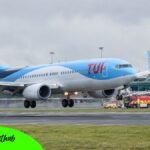
The EasyJet Flight U2238 Emergency Landing in Newcastle has attracted attention among travelers and aviation enthusiasts seeking to understand why an easyJet aircraft unexpectedly diverted during a scheduled European flight. The incident occurred on October 27, 2025, when a passenger aboard a Copenhagen-to-Manchester service required urgent medical attention.
The pilots declared an emergency and diverted to Newcastle International Airport, where the aircraft landed safely. Medical professionals attended to the passenger, and the flight subsequently continued to Manchester.
One detail requires clarification: the affected service was officially identified as U22238, also reported as EZY2238, rather than the separate flight U2238.
This article examines the verified incident timeline, reasons for the diversion, aircraft information, emergency procedures, and outcome. It also explains the difference between a passenger medical emergency and a technical aircraft emergency.
What Happened on the EasyJet Flight?
On Monday, October 27, 2025, an easyJet passenger aircraft departed Copenhagen Airport for Manchester. The journey was intended to be a routine European short-haul service.
According to aviation news outlet AIRLIVE, the aircraft departed Copenhagen at approximately 22:13 Central European Time, later than its scheduled departure of 21:45.
While flying over the North Sea, the crew encountered a passenger welfare emergency. The situation required urgent medical attention, prompting the pilots to divert from their planned route.
Instead of continuing directly to Manchester, the aircraft headed to Newcastle International Airport.
The reported emergency declaration enabled the flight to be treated as an emergency by air traffic control. After landing, medical personnel attended to the affected passenger.
EasyJet confirmed that the diversion was necessary because a customer required urgent medical assistance.
The aircraft subsequently resumed its journey and reached Manchester after midnight.
The available reporting identifies the incident as a passenger medical emergency, not an aircraft crash or a confirmed mechanical failure.
EasyJet Flight U2238 or U22238: Understanding the Confusion
An essential detail in this story is the difference between the flight numbers U2238 and U22238.
The easyJet airline designator is U2. When combined with flight number 2238, the complete commercial flight identifier becomes U22238.
Aviation tracking systems also identify the flight as EZY2238, using the airline’s three-letter designator.
However, U2238 refers to flight U2 238, a separate easyJet service. Flight-tracking records have associated that service with the Newcastle-to-Bristol route.
This distinction matters because the October 2025 emergency involved a flight traveling from Copenhagen to Manchester, not a scheduled Newcastle-to-Bristol journey.
Readers researching aviation incidents should verify the flight number, date, departure airport, and intended destination.
Using the correct identification prevents an emergency involving one service from being incorrectly attributed to another.
Timeline of the EasyJet Emergency Landing in Newcastle
Departure From Copenhagen Airport
AIRLIVE reported that easyJet flight U22238 departed Copenhagen at approximately 22:13 CET on October 27, 2025.
The scheduled departure time was 21:45 CET, meaning the flight left later than originally planned.
The aircraft was an Airbus A320 registered G-EZPB.
Emergency Declaration Over the North Sea
During the journey towards Britain, the aircraft was reported to be cruising at approximately 38,000 feet when a passenger welfare issue prompted an emergency response.
Aviation reporting indicates that the crew selected transponder code 7700 and diverted towards Newcastle.
The airline’s publicly reported statement did not detail the passenger’s exact medical symptoms.
Safe Landing at Newcastle
AIRLIVE reported that the aircraft landed at Newcastle International Airport at approximately 22:52 GMT on Runway 25.
The aircraft taxied to a parking position, where medical personnel attended to the passenger.
The safe landing allowed the medical situation to be addressed on the ground.
Continuation to Manchester
Following the medical response, the aircraft resumed its journey towards Manchester.
AIRLIVE reported a final arrival at approximately 00:28 GMT on Tuesday, October 28, 2025.
EasyJet independently confirmed that the flight continued to Manchester after the passenger was met by medical services.
Why Did the EasyJet Aircraft Make an Emergency Landing?
The confirmed reason for the diversion was a passenger requiring urgent medical attention.
Aviation emergencies are not limited to engine problems, mechanical failures or dangerous weather. Serious medical conditions involving passengers can also require an aircraft to change its destination.
During a commercial flight, cabin crew may provide initial assistance according to their training and the resources available on board. However, an aircraft cannot provide the same range of medical services as a hospital or emergency department.
When an urgent medical situation develops, landing at a suitable airport can allow professional medical responders to reach the affected passenger.
In this case, easyJet’s public statement directly connected the diversion to the customer’s medical needs.
The publicly reported facts do not establish the passenger’s diagnosis, treatment, or subsequent recovery. Those details should not be inferred from the emergency declaration alone.
What Does Squawk 7700 Mean in Aviation?
One of the most significant technical details reported during the incident was the aircraft’s use of transponder code 7700.
In aviation, a transponder communicates identifying information to air traffic surveillance systems.
The UK Civil Aviation Authority identifies code 7700 as the code used to indicate an emergency.
Why Pilots Use Emergency Transponder Codes
Selecting code 7700 alerts air traffic services that an aircraft is experiencing an emergency.
This can help air traffic controllers identify the affected aircraft and coordinate an appropriate response.
However, the code does not identify the particular reason for the emergency.
It may apply to different situations, including technical problems or urgent medical circumstances.
For easyJet flight U22238, the airline’s statement establishes that the diversion was medical.
The appearance of code 7700 on a flight tracker should therefore never be treated as independent proof of engine failure, fire or another specific aircraft malfunction.
The Airbus A320 Involved in the Incident
Aviation reporting identified the aircraft as an Airbus A320-214 with registration G-EZPB.
The Airbus A320 is a twin-engine, single-aisle commercial passenger aircraft widely used for short- and medium-haul journeys.
Aircraft registration numbers allow individual aircraft to be distinguished even when they operate numerous routes under different flight numbers.
In this case, G-EZPB provides an additional way to identify the aircraft involved in the October 2025 diversion.
The reported Newcastle emergency concerned a passenger’s medical condition rather than a confirmed defect involving the Airbus A320.
The aircraft’s subsequent journey to Manchester is consistent with the airline’s explanation that the original flight was interrupted to obtain medical assistance.
Why Was Newcastle International Airport Used?
Newcastle International Airport became the diversion destination when the flight could not continue directly to Manchester because of the medical situation.
For an aircraft experiencing an emergency, selecting an appropriate diversion airport involves operational considerations such as location, runway suitability, available services and the nature of the situation.
The contemporary public reports reviewed did not detail the crew’s precise reasoning for selecting Newcastle.
What is established is that the aircraft successfully diverted there and medical services met the affected passenger.
Newcastle therefore served as an intermediate landing point, not a replacement for Manchester as the passengers’ final scheduled destination.
The event demonstrates how an airport can play an important role in responding to an emergency involving a flight that was not originally scheduled to land there.
What Happened After the Aircraft Landed?
The immediate priority following the Newcastle landing was medical assistance for the affected passenger.
EasyJet confirmed that medical services met the customer on arrival.
Once the medical situation was addressed enough for the flight to continue, the aircraft departed Newcastle and resumed its original journey.
The final recorded destination remained Manchester Airport.
For the other travelers, the diversion meant an unexpected interruption to their journey and a later arrival than originally scheduled.
The published airline statement does not establish detailed individual passenger experiences, exact onboard announcements or the extent of any additional assistance provided.
Those details should not be presented as verified facts without supporting evidence.
Was the EasyJet Aircraft Ever in Danger?
The phrase “emergency landing” can suggest an aircraft struggling to remain airborne.
That interpretation does not match the confirmed reason for this particular diversion.
Contemporary reporting identified a passenger medical emergency, while the aircraft landed safely and later continued operating the scheduled journey.
No major mechanical failure was identified as the cause in the sources reviewed.
An emergency declaration formally indicates that urgent assistance or priority may be required. It does not automatically establish that an aircraft is damaged or facing an imminent crash.
The distinction is especially relevant when aviation events are discussed on social media, where flight-tracking alerts can circulate without the explanation provided by an airline or airport.
Passenger Safety and Emergency Response
Medical diversions highlight an important aspect of commercial aviation: the safety and welfare of people on board can require operational decisions even when the aircraft itself is functioning normally.
Cabin crew training, communication with the pilots, air traffic coordination and access to ground-based emergency services can all contribute to managing an onboard medical event.
Not every medical situation requires a diversion. The response depends on the circumstances and the assessment made during the flight.
For the Copenhagen-to-Manchester service, the crew changed course, the aircraft landed safely, and medical assistance became available on the ground.
These are the documented outcomes. Claims about specific medical procedures, passenger diagnoses, or detailed cockpit conversations would require additional evidence.
The incident also illustrates why clear communication matters after an emergency. An airline’s explanation can help distinguish the reason for a diversion from speculation based solely on aircraft movements.
Public Curiosity and Common Misconceptions
Several misunderstandings can arise when readers encounter reports about the Newcastle landing.
The first concerns the flight number. The medical diversion involved U22238 or EZY2238, not the different service identified as U2238.
The second concerns the nature of the emergency. The aircraft’s use of code 7700 signaled an emergency but did not, by itself, establish a technical failure.
A third misconception is that a diversion always means the journey has been canceled. In this case, the flight continued to Manchester after stopping at Newcastle.
Finally, the safe landing does not reveal the affected passenger’s eventual medical outcome. The airline confirmed the medical response and the flight’s continuation, but did not provide a detailed public account of the customer’s later condition.
Separating those facts from assumptions provides a more accurate understanding of the incident.
Conclusion
The EasyJet Flight U2238 Emergency Landing in Newcastle story concerns a genuine medical diversion on October 27, 2025. The aircraft involved was operating easyJet flight U22238, also identified as EZY2238, from Copenhagen to Manchester.
During the journey, a passenger required urgent medical attention. The crew declared an emergency and diverted the Airbus A320 to Newcastle International Airport.
The aircraft landed safely, medical personnel attended to the passenger, and the flight later continued to Manchester, arriving shortly after midnight on October 28.
The available evidence does not establish a major mechanical failure as the reason for the diversion.
The incident demonstrates how flight crews and ground services can respond to urgent passenger welfare situations. It also highlights the importance of checking flight identifiers and using reliable reporting before concluding aviation emergencies.
Ultimately, the confirmed outcome was a successful medical diversion followed by completion of the scheduled journey.
(FAQs)
1. Why did the easyJet flight make an emergency landing in Newcastle?
The aircraft diverted because a passenger required urgent medical attention. easyJet confirmed that medical services met the customer after the flight landed in Newcastle.
2. When did the Newcastle emergency landing happen?
The incident took place on Monday, October 27, 2025. The aircraft reportedly landed in Newcastle at approximately 22:52 GMT.
3. Was the emergency flight U2238 or U22238?
The correct commercial flight number was U22238, also reported as EZY2238. U2238 refers to a different easyJet service.
4. What aircraft was involved in the incident?
Contemporary aviation reporting identifies the aircraft as an Airbus A320-214, registration G-EZPB.
5. Did the easyJet flight experience an engine failure?
No engine failure was identified as the cause in the reliable contemporary reports reviewed. The airline attributed the diversion to an urgent passenger medical issue.
6. What does emergency code 7700 mean?
Transponder code 7700 indicates that an aircraft is experiencing an emergency. It does not identify the cause.
7. Did the aircraft eventually arrive at Manchester Airport?
Yes. The flight continued to Manchester after its Newcastle stop. AIRLIVE reported that it arrived at approximately 00:28 GMT on October 28, 2025.
8. What happened to the passenger who required medical assistance?
EasyJet confirmed that medical services met the affected passenger after the aircraft landed. The person’s diagnosis, treatment details, and subsequent medical condition were not established in the reliable public reports reviewed.