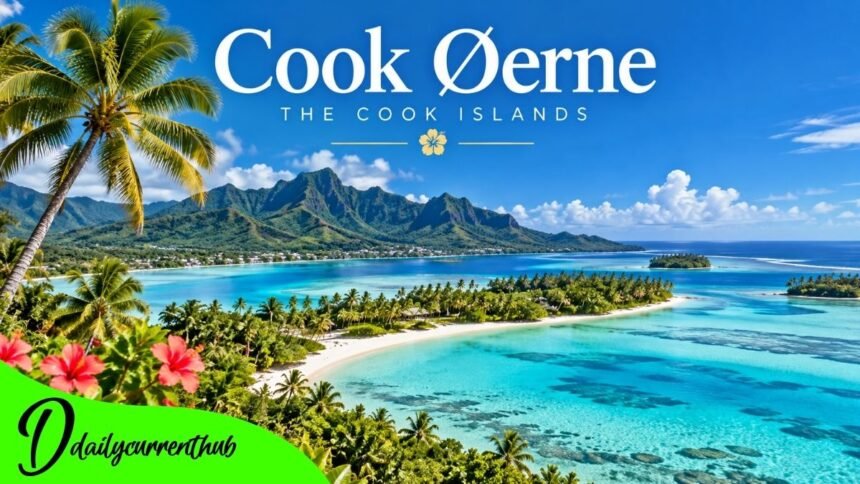
Hidden across a vast stretch of the South Pacific Ocean, Cook Øerne, internationally known as the Cook Islands, is a remarkable collection of tropical islands celebrated for its turquoise lagoons, white-sand beaches and distinctive Polynesian culture. Although the islands attract visitors seeking beautiful coastal scenery, their identity extends far beyond tourism.
The Cook Islands are a self-governing country in free association with New Zealand, with their own parliament, traditions, and strong cultural identity. Its 15 islands include mountainous landscapes, coral atolls, and small communities separated by long stretches of open ocean.
The term Cook Øerne is a variation of the Danish name Cookøerne, meaning the Cook Islands.
This article explores the geography, history, people, cultural traditions, economy and natural environment of the Cook Islands. It also examines why these relatively small islands matter in the wider Pacific region and what visitors should know before traveling there.
What Is Cook Øerne?
Cook Øerne refers to the Cook Islands, a group of 15 islands scattered across an extensive area of the South Pacific. Geographically, the country belongs to Polynesia, a cultural and geographical region that includes several island societies with shared historical connections.
Unlike a single large island, the Cook Islands comprise separate communities spread across the Northern and Southern island groups. The Southern Group includes Rarotonga, Aitutaki, Atiu, Mangaia, Mauke and Mitiaro, while the Northern Group includes more remote islands such as Penrhyn, Manihiki and Pukapuka.
The islands have relatively little land compared with the enormous ocean area surrounding them. This geography has shaped transport, settlement, economic development, and relationships between island communities.
For travelers, the destination is associated with tropical scenery and lagoon activities. For residents, however, the islands are a homeland defined by language, ancestry, community institutions and longstanding connections to the Pacific Ocean.
Geography and Natural Landscape of Cook Øerne
A Country Spread Across the Pacific
The Cook Islands are unusual because their land occupies only a tiny fraction of their wider geographical area. Its islands are spread across about two million square kilometers of ocean, creating long distances between communities.
The landscape varies significantly. Rarotonga is volcanic, with a mountainous interior, forested slopes and coastal settlements. Other islands have limestone formations, coral reefs and relatively flat terrain.
Northern atolls differ sharply from Rarotonga’s mountainous scenery. These islands consist largely of coral formations and low-lying land surrounding lagoons.
The surrounding ocean influences almost every aspect of island life, from fishing and inter-island transport to tourism and environmental management.
Coral Reefs, Lagoons and Wildlife
Coral reefs are among the Cook Islands’ most recognizable natural features. They help shape lagoons, support marine ecosystems and provide habitats for fish and other ocean life.
The islands also attract seasonal marine visitors, including humpback whales. According to Cook Islands Tourism, whales can often be observed from Rarotonga’s coastline between July and October.
These natural attractions support tourism, but they also show why marine conservation remains a national priority.
Early History and Polynesian Settlement
The First Polynesian Communities
Long before European explorers reached the region, Polynesian voyagers traveled through the Pacific using sophisticated knowledge of ocean currents, stars, winds, and navigation.
Historical accounts describe Polynesian communities settling Rarotonga many centuries ago. Cook Islands Tourism dates Polynesian arrival on Rarotonga to around AD 800, although the region’s broader settlement history involves multiple migrations and island traditions.
These early communities established systems of leadership, land use, agriculture and fishing suited to their environments.
Traditional authority structures, including the role of ariki, or chiefly leaders, became important elements of Cook Islands society.
European Exploration and Colonial History
European contact developed gradually. Spanish explorer Álvaro de Mendaña recorded a sighting of Pukapuka in 1595, while Pedro Fernandes de Quirós encountered Rakahanga in 1606.
British navigator Captain James Cook visited several islands during the 1770s. The island group was subsequently named in his honor.
Christian missionaries began arriving during the nineteenth century, influencing religious and social institutions across the Southern Group.
The Cook Islands became a British protectorate in 1888 and were incorporated into New Zealand’s administration in 1901.
A major constitutional change followed on August 4, 1965, when the islands achieved self-government in free association with New Zealand.
Political Status and Relationship With New Zealand
The Cook Islands have a distinctive constitutional arrangement that can confuse international readers.
It is self-governing, with its own elected parliament, government and domestic laws. Its relationship with New Zealand is described as free association rather than ordinary territorial administration.
Cook Islanders hold New Zealand citizenship, an arrangement that supports extensive family, educational and employment connections between the two countries.
The Cook Islands also maintain their own international relationships and participate in regional organizations.
This political structure reflects the country’s historical path from colonial administration towards self-government while retaining a formal relationship with New Zealand.
Understanding this arrangement is essential because describing the islands simply as a New Zealand tourist destination overlooks their separate government and political identity.
Rarotonga: The Cultural and Administrative Center
Why Rarotonga Matters
Rarotonga is the largest island by population and the principal administrative center of the Cook Islands. The capital, Avarua, lies on its northern coast.
Much of the country’s transport, commerce and government activity is concentrated here.
The island has a circular coastal road about 32 kilometerskilometers long, making its villages and attractions relatively easy to reach.
Rarotonga combines beaches and lagoons with a mountainous interior. Visitors can experience coastal activities, local markets, cultural performances and walking routes through tropical landscapes.
Life Beyond the Beaches
Although resorts and tourism facilities are prominent, Rarotonga remains a functioning island community.
Schools, churches, government offices, family businesses, and traditional institutions all support everyday life.
Its importance therefore extends beyond its role as an international arrival point. Rarotonga is central to the country’s administration, cultural events, and connections with the outer islands.
Aitutaki and Its Famous Lagoon
Aitutaki is one of the Cook Islands’ best-known islands, largely because of its extraordinary lagoon.
Located approximately 220 kilometers north of Rarotonga, it is accessible by a domestic flight of around 50 minutes.
The island’s broad turquoise lagoon contains numerous smaller islets, locally called motu, surrounded by shallow water and coral formations.
Lagoon cruises, kayaking, snorkeling and visits to small sandy islands are popular activities.
Aitutaki also has permanent residential communities whose lives extend beyond the tourism industry.
The contrast between Rarotonga and Aitutaki helps explain the Cook Islands’ geographical diversity. Rarotonga is the main center of government and commerce, while Aitutaki is best known for lagoon tourism.
Both are important destinations, but neither represents the country’s island communities as a whole.
Culture, Language and Traditional Life
Cook Islands Māori Identity
Cook Islands Māori, also known as Māori Kūki ‘Āirani, is central to the country’s cultural identity.
English is also an official language, and both languages have roles in public life, education and communication.
Cultural practices vary across islands, reflecting differences in local histories, languages and community traditions.
Music, dance, storytelling, and traditional celebrations remain important ways to express cultural identity.
Traditional Arts and Craftsmanship
Among the country’s distinctive cultural traditions is tivaevae, the creation of decorative quilts using carefully arranged fabric designs.
These quilts can involve collaborative work and often feature floral or other patterns.
Weaving, wood carving, and traditional performance are also significant parts of the islands’ artistic heritage.
Drumming and dance are particularly visible during cultural celebrations, where performance connects contemporary communities with practices passed through generations.
These traditions demonstrate that cultural heritage is not simply a tourist attraction. It remains part of how Cook Islanders preserve knowledge and express their identity.
Family and Community Values in Cook Øerne
Family relationships and community networks have long played important roles in Cook Islands society.
Traditional social organization includes connections between extended families, inherited land relationships, and chiefly institutions.
Land is especially significant because it is closely tied to family history and community belonging.
Religious institutions have also influenced the islands since the nineteenth century. Churches and community gatherings remain part of the social landscape.
Migration has created another important dimension of family life.
According to Australian government figures, more than 94,000 people identifying with Cook Islands ancestry lived in New Zealand at the 2023 census, while approximately 28,000 lived in Australia at the 2021 census.
These overseas communities contribute to a broader Cook Islands identity that stretches beyond the country’s geographical boundaries.
The population living abroad is therefore an important part of understanding modern Cook Islands culture.
Tourism and the Local Economy
Tourism is a principal driver of economic activity in the Cook Islands.
Visitors support accommodation providers, restaurants, transport operators, cultural activities and businesses offering marine excursions.
The country’s natural scenery attracts tourists, but its remoteness also creates economic challenges.
Transporting goods between islands and importing essential supplies can be expensive. Smaller islands generally have fewer commercial services than Rarotonga.
The tourism industry also depends on international air connections and demand from overseas markets.
Concentrating economic activity in tourism creates opportunities for local businesses while increasing exposure to travel disruptions.
For this reason, economic resilience, infrastructure investment and sustainable tourism are important subjects in national development planning.
Marine Conservation and Environmental Protection
One of the Cook Islands’ most significant environmental initiatives is Marae Moana, a marine park established under legislation in 2017.
The initiative covers the country’s exclusive economic zone, which is approximately 1.9 million square kilometers.
It aims to support marine conservation and coordinated management of ocean resources while recognizing economic and community interests.
The initiative’s scale reflects the sea’s importance to the country’s ecology and future development.
Climate Change and Environmental Challenges
Like many Pacific island countries, the Cook Islands face environmental risks connected with climate change.
Sea-level rise, extreme weather, coastal erosion and changes affecting coral reefs present challenges, especially for low-lying islands.
Environmental protection also has an economic dimension because healthy beaches, reefs and marine ecosystems support tourism and local livelihoods.
Long-term planning involves balancing conservation, infrastructure development and the practical needs of island communities.
The islands’ future depends partly on their ability to protect natural resources while adapting to changing environmental conditions.
Best Time to Visit Cook Øerne
The Cook Islands have a warm tropical climate year-round, though rainfall and humidity vary seasonally.
The generally drier period extends from April to November, with average temperatures around 26°C.
The warmer period between November and March brings greater humidity and more frequent tropical showers.
April, May, September and October can offer a useful balance of warm weather and comparatively drier conditions.
Visitors interested in marine wildlife may prefer the whale-watching period, which generally runs from July to October.
The best travel period ultimately depends on preferred activities, rainfall tolerance and seasonal conditions rather than a single universally ideal month.
Travel Information and Practical Considerations
Arriving and Traveling Between Islands
Rarotonga International Airport is the main gateway for international visitors.
Domestic flights connect Rarotonga with Aitutaki and certain other islands, although services and accessibility vary by destination.
On Rarotonga, visitors can travel by road, use local transport services or hire suitable vehicles.
Driving takes place on the left-hand side of the road.
Because outer islands can be remote, travel arrangements should account for transport availability and weather conditions.
Currency, Language and Entry Requirements
The New Zealand dollar is used throughout the Cook Islands, alongside locally issued currency.
English is widely spoken, while Cook Islands Māori remains an essential part of local identity and daily communication.
Entry requirements depend on nationality and travel circumstances.
Cook Islands Tourism’s October 2026 travel guidance states that visitors generally need passports valid for at least six months beyond their departure, evidence of onward travel, and accommodation arrangements. Standard visitor stays vary according to passport nationality.
Travelers should check the latest immigration requirements before departure, especially when planning extended visits or travel through other countries.
Future Challenges and Opportunities
The Cook Islands have considerable natural and cultural strengths, but geographical isolation continues to pose challenges.
Economic dependence on tourism, climate-related risks and the costs of infrastructure development are central long-term issues.
Access to reliable transport, energy, water systems and communication services is particularly important for communities outside Rarotonga.
At the same time, conservation initiatives and sustainable tourism planning offer opportunities to connect economic activity with environmental protection.
The country’s international relationships and overseas population also connect it to the wider Pacific region.
The long-term challenge is to support economic development without weakening the cultural and environmental foundations that make the islands distinctive.
Conclusion
Cook Øerne, or the Cook Islands, is much more than a collection of tropical beaches. It is a self-governing Polynesian country with a distinctive constitutional history, living cultural traditions, and communities whose relationship with the ocean spans generations.
From Rarotonga’s mountainous landscape and administrative center to Aitutaki’s celebrated lagoon, the islands offer a varied geographical experience. Their language, artistic traditions, and extended family connections also shape national identity.
The Cook Islands also face practical challenges tied to remoteness, tourism dependence, and environmental change. Initiatives such as Marae Moana show how marine conservation fits within the country’s broader development priorities.
For anyone researching or planning to visit the islands, understanding their people, history and environment offers a richer perspective than coastal scenery alone.
(FAQs)
1. What does Cook Øerne mean?
Cook Øerne refers to the Cook Islands in the South Pacific. The conventional Danish spelling is Cookøerne.
2. Where are the Cook Islands located?
The Cook Islands are located in Polynesia in the South Pacific Ocean, northeast of New Zealand.
3. How many islands make up Cook Øerne?
The country has 15 islands, divided into Northern and Southern groups.
4. What is the capital of the Cook Islands?
The capital is Avarua, situated on Rarotonga.
5. Is Cook Øerne an independent country?
The Cook Islands are a self-governing country in free association with New Zealand. Its constitutional relationship differs from both full integration with New Zealand and conventional independent-state arrangements.
6. What language is spoken in the Cook Islands?
The official languages are Cook Islands Māori and English.
7. What is the best time to visit Cook Øerne?
April to November is generally the drier period, while April, May, September and October often provide a favorable balance of warmth and relatively dry weather.
8. Why are the Cook Islands famous?
They are particularly known for Rarotonga, Aitutaki’s turquoise lagoon, coral reefs, Polynesian culture, traditional arts and scenic beaches.