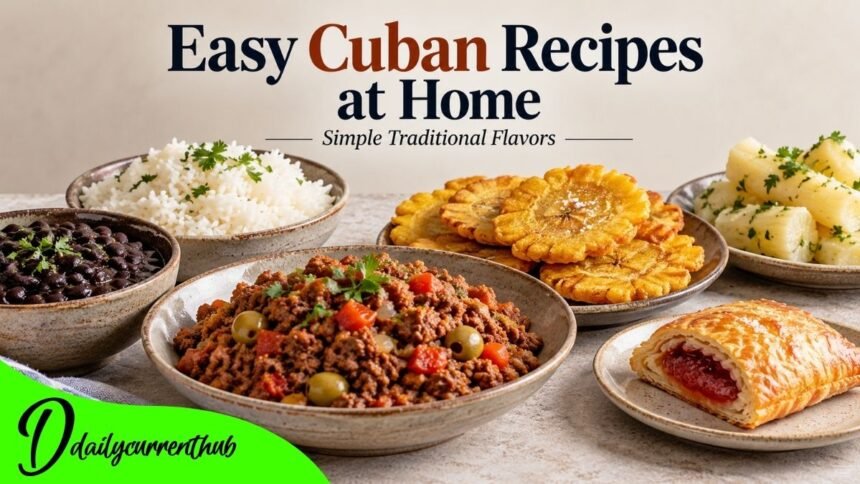
Cuban food brings together comforting ingredients, fragrant seasonings, and cooking traditions shaped by the Caribbean island’s history. From savory rice dishes to golden fried plantains, Cuban cuisine offers plenty of satisfying meals that home cooks can prepare without specialist equipment.
If you want to explore Easy Cuban Recipes at Home, start with familiar ingredients such as rice, black beans, garlic, onions, bell peppers, chicken, and beef. These ingredients form the foundation of numerous Cuban favorites.
Some recipes take less than half an hour, while others benefit from slow cooking that develops deeper flavors. Both approaches have a place in Cuban home cooking.
This guide explores eight approachable recipes, including Cuban picadillo, arroz con pollo, ropa vieja, and yuca con mojo. Each recipe includes practical ingredients, straightforward preparation steps, and helpful serving suggestions.
This article explains how to prepare easy Cuban dishes at home, choose essential ingredients, understand traditional cooking methods, and build flavourful meals with confidence.
What Makes Cuban Food Special?
Cuban cuisine reflects several culinary traditions, including Spanish, African, and Indigenous Caribbean influences. Its dishes frequently combine slow-cooked meats, rice, beans, plantains, root vegetables, and aromatic sauces.
Unlike cuisines associated primarily with intense chili heat, many familiar Cuban preparations build flavor through garlic, cumin, oregano, onions, peppers, and citrus.
A particularly important preparation is sofrito, an aromatic mixture usually made by cooking vegetables such as onions, peppers, and garlic in oil. It provides a flavourful starting point for stews, beans, and rice dishes.
Another familiar seasoning is mojo, a garlic-and-citrus mixture commonly associated with Cuban cooking.
These preparations help explain why relatively simple ingredients can produce satisfying dishes.
Essential Ingredients for Cuban Cooking
You don’t need a large collection of specialty ingredients to start cooking Cuban-style meals.
Ingredient Common culinary use
White rice Rice dishes and accompaniments
Black beans Soups, side dishes, and rice combinations
Garlic Sofrito, marinades, and sauces
Onions Stews, beans, and meat dishes
Bell peppers Sofrito and savory sauces
Ground cumin Seasoning for beans and meats
Dried oregano Marinades and stews
Lime or sour orange Citrus-based mojo preparations
Plantains Fried side dishes
Yuca (cassava) Boiled or fried accompaniments
Green olives Picadillo and selected rice dishes
Keeping these ingredients available makes it easier to prepare different Cuban-inspired meals throughout the week.
8 Easy Cuban Recipes at Home
The following recipes are beginner-friendly adaptations of established dishes. Cooking times are approximate, and quantities may be adjusted to suit taste and serving requirements.
1. Cuban Picadillo – Savory Ground Beef
Preparation time: 10 minutes
Cooking time: 20–25 minutes
Servings: 4
Cuban picadillo is a seasoned ground beef dish commonly prepared with tomatoes, onions, peppers, and olives. Some versions also include raisins, creating a contrast between savory and sweet flavors.
Ingredients:
- 500 g ground beef
- 1 medium onion, chopped
- 1 green bell pepper, chopped
- 3 garlic cloves, minced
- 1 cup tomato sauce
- 2 tablespoons olive oil
- 1 teaspoon ground cumin
- ½ teaspoon dried oregano
- ¼ cup sliced green olives
- 2 tablespoons raisins (optional)
- Salt and black pepper to taste
Method:
- Heat the olive oil in a large frying pan over medium heat.
- Add the onion and bell pepper and cook until softened.
- Stir in the garlic and cook briefly.
- Add ground beef, breaking it into smaller pieces.
- Mix in the tomato sauce, cumin, oregano, and olives.
- Simmer until the sauce thickens and the beef is thoroughly cooked.
- Add raisins if desired, then adjust the seasoning.
Ground beef should reach an internal temperature of 160°F (71°C).
Serving suggestion: Serve with fluffy white rice, black beans, or fried sweet plantains.
2. Cuban Black Beans – Frijoles Negros
Preparation time: 10 minutes
Cooking time: 15–20 minutes
Servings: 4
Black beans are an important part of Cuban cooking. They are often seasoned with aromatic vegetables and spices and served alongside rice.
Using canned beans makes this an especially convenient dish for busy households.
Ingredients:
- 2 cans black beans, approximately 400 g each
- 1 small onion, chopped
- ½ green bell pepper, diced
- 2 garlic cloves, minced
- 1 tablespoon olive oil
- ½ teaspoon ground cumin
- ½ teaspoon dried oregano
- 1 bay leaf
- 1 tablespoon vinegar
- Salt and black pepper
Method:
- Heat olive oil in a saucepan.
- Cook the onion and pepper until soft.
- Add garlic, cumin, and oregano.
- Stir in the canned beans with their liquid, adding a little water if necessary.
- Add the bay leaf and simmer gently for approximately 15 minutes.
- Mash a small portion of the beans against the side of the saucepan for a thicker consistency.
- Remove the bay leaf, stir in vinegar, and adjust the seasoning.
Serving suggestion: Pair with white rice or use as a side dish for grilled chicken.
3. Arroz con Pollo – Cuban-Style Chicken and Rice
Preparation time: 15 minutes
Cooking time: 35–45 minutes
Servings: 4
Arroz con pollo, meaning chicken with rice, appears in different forms throughout Latin America. Cuban-style preparations commonly feature seasoned chicken, vegetables, and rice cooked together.
This simplified version uses one pan and familiar supermarket ingredients.
Ingredients:
- 450 g boneless chicken thighs
- 1 cup long-grain white rice
- 1¾ cups chicken broth
- 1 onion, diced
- 1 bell pepper, diced
- 2 garlic cloves, minced
- 2 tablespoons olive oil
- ½ teaspoon ground cumin
- ½ teaspoon turmeric
- ½ cup frozen peas
- Salt and black pepper
Method:
- Season the chicken with salt and pepper.
- Heat oil in a deep pan and brown the chicken on both sides.
- Remove the chicken temporarily.
- Cook the onion, pepper, and garlic in the same pan.
- Add rice, cumin, and turmeric, stirring gently.
- Pour in the chicken broth and return the chicken.
- Cover and simmer gently for approximately 20–25 minutes, or until the rice is tender and the chicken reaches 165°F (74°C).
- Add the peas near the end and heat through.
If the rice requires additional cooking, add a small amount of hot broth or water.
Serving suggestion: Serve with a fresh salad or fried plantains.
4. Tostones – Crispy Fried Green Plantains
Preparation time: 10 minutes
Cooking time: 15 minutes
Servings: 3–4
Tostones are made from green, unripe plantains that are fried, flattened, and fried again.
This double-frying method creates a crisp exterior while keeping the center relatively tender.
Ingredients:
- 2 green plantains
- Vegetable oil for shallow frying
- Salt to taste
Method:
- Remove the plantain skins carefully.
- Cut each plantain into thick rounds.
- Heat a shallow layer of oil in a frying pan over medium heat.
- Fry the plantains for approximately 2–3 minutes per side until lightly golden.
- Remove and drain briefly.
- Flatten each round using a plantain press or the bottom of a sturdy cup.
- Return to the hot oil and fry until crisp and golden.
- Drain on kitchen paper and sprinkle with salt.
Serving suggestion: Enjoy with a garlic dipping sauce or alongside beans and rice.
For this recipe, choose firm green plantains rather than yellow, ripened ones.
5. Maduros – Sweet Fried Plantains
Preparation time: 5 minutes
Cooking time: 10 minutes
Servings: 3–4
Maduros are fried ripe plantains with a naturally sweet flavor and soft texture.
Unlike tostones, which require green plantains, maduros are best made with yellow plantains showing substantial dark spotting.
Ingredients:
- 2 ripe plantains
- 2 tablespoons vegetable oil
- A small pinch of salt (optional)
Method:
- Peel the ripe plantains.
- Slice diagonally into thick pieces.
- Heat oil in a frying pan over medium heat.
- Arrange plantain slices in a single layer.
- Fry until both sides become deeply golden and caramelized.
- Remove carefully and drain excess oil.
The natural sugars in ripe plantains encourage browning, so moderate heat helps prevent burning.
Serving suggestion: Pair with picadillo, black beans, or chicken and rice.
6. Yuca con Mojo – Cassava with Garlic-Citrus Sauce
Preparation time: 10 minutes
Cooking time: 25–40 minutes
Servings: 4
Yuca con mojo combines tender boiled cassava with a fragrant garlic-and-citrus dressing.
Cassava has a starchy texture and works particularly well with bright, acidic sauces.
For beginners, commercially prepared peeled frozen yuca can simplify the preparation process.
Ingredients:
- 750 g prepared yuca
- 4 garlic cloves, minced
- 3 tablespoons olive oil
- 2 tablespoons lime juice
- 2 tablespoons orange juice
- ½ teaspoon dried oregano
- Salt to taste
Method:
- Place the prepared yuca in a saucepan and cover with water.
- Add salt and bring to a boil.
- Simmer until completely tender, following package instructions if using frozen yuca.
- Drain and remove any remaining tough central fibers.
- Warm olive oil in a small saucepan.
- Add garlic and cook gently without browning.
- Remove from the heat, then stir in the citrus juices and oregano.
- Pour the warm sauce over the cooked yuca.
Cassava must be properly peeled, prepared, and thoroughly cooked before consumption.
Serving suggestion: Serve beside grilled chicken or beef.
7. Ropa Vieja – Cuban Shredded Beef
Preparation time: 20 minutes
Cooking time: Approximately 2½–3 hours
Servings: 5–6
Ropa vieja is one of the best-known Cuban beef dishes. Its name translates to “old clothes,” referring to the appearance of shredded meat.
Although the cooking time is longer than the other recipes, most of the process involves gentle simmering rather than constant attention.
Ingredients:
- 900 g beef chuck roast
- 1 onion, thinly sliced
- 1 red bell pepper, sliced
- 1 green bell pepper, sliced
- 4 garlic cloves, minced
- 1 cup crushed tomatoes
- 2 cups beef broth
- 2 tablespoons olive oil
- 1 teaspoon ground cumin
- 1 teaspoon dried oregano
- 1 bay leaf
- Salt and black pepper
Method:
- Season the beef with salt and black pepper.
- Heat oil in a heavy cooking pot and brown the beef.
- Remove the beef and soften the onions and peppers.
- Add garlic, cumin, and oregano.
- Stir in tomatoes and beef broth.
- Return the beef and add the bay leaf.
- Cover and simmer gently until the meat becomes fork-tender.
- Remove the beef, shred it using two forks, and return it to the sauce.
- Simmer briefly so the shredded beef absorbs the seasoned liquid.
Serving suggestion: Serve with white rice and black beans.
Ropa vieja is a practical make-ahead dish because you can prepare it in a larger batch and portion it for later meals.
8. Guava Pastries – Easy Cuban-Inspired Pastelitos
Preparation time: 15 minutes
Baking time: 18–22 minutes
Servings: Approximately 8 pastries
Guava pastries are popular in Cuban bakeries, particularly within Cuban-American food culture.
Their sweet fruit filling contrasts with crisp, flaky pastry. Using ready-made puff pastry simplifies the process considerably.
Ingredients:
- 1 sheet ready-made puff pastry
- 150 g guava paste
- 1 beaten egg for brushing
- Optional: 100 g cream cheese
Method:
- Preheat the oven to 400°F (200°C).
- Roll out the puff pastry if necessary.
- Cut into evenly sized rectangles.
- Place small pieces of guava paste in the center of half the rectangles.
- Add a little cream cheese if desired.
- Cover with the remaining pastry pieces.
- Seal the edges gently with a fork.
- Brush the tops with beaten egg.
- Bake until puffed and golden, approximately 18–22 minutes.
Let the pastries cool slightly before eating, as the fruit filling can stay extremely hot.
Serving suggestion: Enjoy with coffee or tea.
Tips for Cooking Cuban Food Successfully
Build Flavor with Sofrito
Cooking onions, peppers, and garlic before adding other ingredients helps establish a savory base. Give the vegetables enough time to soften without burning.
Use Citrus Thoughtfully
Lime and sour orange contribute acidity to Cuban mojo preparations. If sour oranges are hard to find, a mix of orange and lime juice offers a practical alternative, though the flavor will differ.
Choose the Correct Plantains
Green plantains are suitable for tostones because they are firmer and starchier. Ripe plantains are better for maduros because their higher natural sugar content produces a sweeter result.
Adjust Cooking Times to the Ingredients
Different rice varieties, meat cuts, and cassava pieces may require different cooking times. Check doneness rather than relying entirely on a timer.
Keep Meals Balanced
Cuban-style dinners can combine a protein, rice or another starch, beans, and vegetables. Smaller portions of several dishes can also make an appealing family-style meal.
Preparing and Storing Cuban Meals
Several of these recipes work well to prepare ahead.
You can make picadillo, black beans, and ropa vieja in larger quantities, cool them promptly, and refrigerate them in covered containers.
For food safety, refrigerate cooked perishable foods within two hours, or within one hour when temperatures exceed 90°F (32°C). Store leftovers at 40°F (4°C) or below and generally use refrigerated leftovers within three to four days.
Reheat leftovers to an internal temperature of 165°F (74°C).
Cooked rice also requires prompt cooling and refrigeration. Divide large quantities into shallow containers rather than leaving a large covered pot at room temperature.
Tostones and maduros are generally best served soon after frying because their texture changes as they cool.
Guava pastries can be prepared in smaller batches whenever a fresh dessert is needed.
Conclusion
Exploring Easy Cuban Recipes at Home provides an enjoyable introduction to a cuisine built around familiar ingredients and distinctive cooking techniques.
The beauty of many Cuban dishes lies in how simple components work together. Rice and black beans create a satisfying foundation, garlic and citrus bring brightness, and plantains contribute contrasting textures and sweetness.
For beginners, Cuban picadillo, seasoned black beans, and maduros are particularly approachable choices. Arroz con pollo offers a comforting one-pan dinner, while ropa vieja introduces the rewards of slow cooking.
These recipes are home-friendly adaptations, not definitive versions of every dish. Cuban cooking varies across families, regions, and communities, and individual preparations often reflect personal traditions.
Start with one or two recipes, become familiar with the seasonings, and gradually build a complete Cuban-inspired meal. With thoughtful preparation and simple ingredients, the flavors of Cuban cooking can become part of an everyday home kitchen.
(FAQs)
1. What are the easiest Cuban recipes for beginners?
Cuban black beans using canned beans, picadillo, fried ripe plantains, and tostones are approachable options because they use relatively few ingredients and straightforward cooking techniques.
2. What ingredients are commonly used in Cuban cooking?
Common ingredients include rice, black beans, garlic, onions, peppers, plantains, citrus, cumin, oregano, and various meats and root vegetables.
3. Is Cuban food usually very spicy?
Many familiar Cuban dishes emphasize aromatic seasonings rather than strong chili heat. Garlic, cumin, oregano, and citrus are common flavoring ingredients.
4. What is the difference between tostones and maduros?
Tostones are made from green plantains that are fried twice, producing a crisp texture. Maduros use ripe plantains and develop a naturally sweet, caramelized flavor.
5. Can Cuban recipes be made without pork or alcohol?
Yes. Numerous Cuban dishes use beef, chicken, beans, rice, vegetables, and plantains. Recipes containing pork or cooking wine can also be adapted, although substitutions may change the traditional flavor.
6. What is traditionally served with Cuban picadillo?
White rice is a common accompaniment. Black beans and fried plantains also pair well with the dish.
7. Can Cuban meals be prepared ahead of time?
Yes. You can prepare cooked black beans, picadillo, and ropa vieja in advance. Refrigerate promptly and use most cooked leftovers within three to four days.
8. What Cuban dish should I prepare for a family dinner?
Arroz con pollo is a convenient option because it combines chicken, rice, and vegetables. For a multi-dish meal, picadillo, black beans, white rice, and maduros make a satisfying combination.