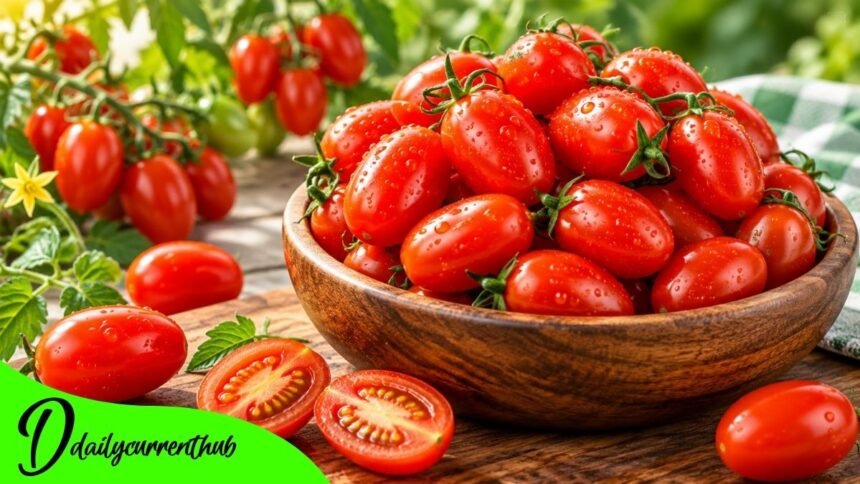
Grape Tomatoes have become a familiar kitchen staple because of their sweet-tart flavor, convenient size, and versatility. These small, oval-shaped tomatoes are often eaten fresh, added to colorful salads, or roasted to bring out their natural sweetness. Their firm texture and relatively thick skins also make them practical for packing in lunches and preparing simple meals.
Despite their name, they are not related to grapes. They are genuine tomatoes, belonging to the same species as larger garden varieties. Their distinctive appearance comes from their elongated shape, which resembles a miniature grape.
Beyond their culinary appeal, these tomatoes contain vitamin C, potassium, dietary fiber, and lycopene, a naturally occurring plant pigment.
Understanding their nutritional properties, growing conditions, storage requirements, and cooking applications makes it easier to appreciate their everyday value.
This guide explores this popular tomato type, supported by agricultural research, food composition data, and established food-safety recommendations.
What Are Grape Tomatoes?
Grape Tomatoes are small-fruited tomato varieties distinguished by their oval shape, firm flesh, and convenient size. They belong to Solanum lycopersicum, the species that also includes beefsteak, plum, and many cherry tomato varieties.
Their name describes their appearance rather than a botanical relationship with grapes. A typical fruit is elongated, with smooth skin and a compact interior.
North Carolina State University researchers described these tomatoes as small, sweet fruits that grow in clusters and stay marketable for a relatively long time after Harvest.
Their firm flesh and thicker skins distinguish them from many cherry tomatoes, which are generally rounder and juicier.
They are suitable for eating whole, slicing into salads, or cooking with vegetables, grains, and pasta. Their modest size also makes portioning easy, though their nutritional value depends on how much you eat.
Origins and Growing Popularity
The modern commercial development of grape-type tomatoes reflects growers’ interest in producing small fruits with appealing flavor, reliable yields, and useful storage characteristics.
North Carolina State University’s specialty crops research documented grape tomatoes’ commercial importance in the early 2000s. Its 2003 research project evaluated several breeding lines, including the established Santa variety.
The report also recorded strong growth in the American market during 2001, a period when consumer interest in small specialty tomatoes was increasing.
Breeding programs have continued to explore combinations of sweetness, productivity, fruit quality, and post-harvest durability.
These characteristics help explain why grape varieties have become a recognizable part of fresh produce selections. Their suitability for both fresh consumption and cooking gives them more than a single culinary purpose.
Grape Tomatoes vs. Cherry Tomatoes
Grape and cherry tomatoes are frequently confused because both are small and commonly sold in similar containers. However, their physical characteristics create noticeable differences in the kitchen.
CharacteristicGrape TomatoesCherry Tomatoes
Shape Usually oval Usually round
Skin Generally thicker Often thinner
Flesh Firmer and meatier Typically softer and juicier
Flavor Sweet with acidity Varies from mild to very sweet
Moisture Generally less juicy Often more juicy
Cooking Hold shape relatively well Often burst and release juice
Fresh Eating Excellent Excellent
One important misconception is that every grape tomato is sweeter than every cherry tomato. Sweetness varies considerably among cultivars, growing conditions, and ripeness.
In cooking, moisture differences can matter more than flavor differences. Cherry tomatoes tend to release more juice when heated, while grape varieties usually hold their shape longer.
Neither is universally better. The ideal choice depends on the recipe and the texture you want.
Nutritional Value of Grape Tomatoes
These small tomatoes contribute water, vitamins, minerals, and plant compounds to a balanced diet.
According to USDA FoodData Central’s FoodData Central record for raw grape tomatoes, a 100-gram serving provides approximately:
NutrientAmount per 100 g
Calories 27 kcal
Water 92.5 g
Carbohydrates 5.51 g
Protein 0.83 g
Fat 0.63 g
Dietary Fiber 2.10 g
Potassium 260 mg
Vitamin C 27.2 mg
Lycopene 4.1 mg
These figures are reference values, not guarantees for every tomato. Actual composition can vary with cultivar, cultivation conditions, and maturity.
The relatively high water content contributes to their refreshing texture, while their fiber and micronutrients make them a useful addition to meals.
Vitamin C and Everyday Nutrition
Vitamin C supports normal immune function, collagen production, and several other biological processes.
Grape tomatoes provide this nutrient naturally. Eating them alongside other fruits and vegetables can help people meet the recommended daily intake.
However, they should not replace a varied diet or be used to treat illness.
Lycopene and Other Plant Compounds
Lycopene is a carotenoid responsible for much of the red coloration in tomatoes.
It has antioxidant properties and has been studied for possible connections with long-term health outcomes. These findings should not be interpreted as proof that eating one particular tomato variety prevents disease.
Red tomatoes also contain other carotenoids and naturally occurring plant compounds. Their precise concentrations vary.
The strongest nutritional reason to eat them is straightforward: they add variety to a diet that includes vegetables, fruits, and other minimally processed foods.
Flavor, Texture, and Culinary Appeal
These tomatoes appeal because of the balance between natural sweetness, acidity, and a firm bite.
Their skins help protect the flesh during ordinary handling. When sliced, they often release less liquid than especially juicy cherry varieties, making them convenient for salads and certain cooked dishes.
Ripeness strongly influences taste. Fully ripe fruits generally have a more developed flavor than those harvested too early.
Cultivar and growing conditions also matter, which is why tomatoes that look similar can taste noticeably different.
Their small size lets cooks use them whole or halve them with little prep. Roasting softens the flesh and concentrates flavors as moisture evaporates.
This flexibility is especially valuable in everyday cooking, where ingredients that need little prep can simplify meals.
How to Choose Fresh Grape Tomatoes
Selecting good produce begins with inspecting appearance and condition.
Look for fruits with smooth, intact skins and consistent coloring appropriate to the variety. They should feel firm without being excessively hard.
Avoid containers containing leaking, moldy, severely bruised, or decaying tomatoes.
Color alone doesn’t indicate quality because tomatoes come in several natural colors. Even among red varieties, ripeness can vary.
Inspect packaged produce carefully, including the tomatoes underneath the visible top layer.
After purchase, keep them separate from raw meat, poultry, and seafood to reduce the risk of cross-contamination.
For the best eating experience, choose tomatoes that are appropriately ripe for when you intend to use them.
Proper Storage and Food Safety
Storage affects both the quality and safety of fresh tomatoes.
Health Canada recommends keeping whole, unwashed tomatoes at room temperature until ripe, away from direct sunlight. Once ripe, they can be refrigerated and should be used within a few days.
Refrigeration can affect tomato texture and flavor, especially when fruits are chilled before they ripen. Allowing refrigerated whole tomatoes to warm slightly before serving may improve their eating quality.
Food safety becomes especially important after cutting.
Cut tomatoes should be refrigerated promptly. Health Canada’s consumer guidance recommends using refrigerated cut or peeled tomatoes within three days and discarding them if left at room temperature for more than two hours.
Before eating or slicing, wash whole tomatoes gently under clean running water. Soap, detergent, and household cleaning products should not be used on fresh produce.
Keep cutting boards, utensils, and preparation surfaces clean. Proper handling helps reduce contamination risks, although washing cannot eliminate every microorganism.
Growing Grape Tomatoes at Home
Growing tomatoes at home can be practical for gardeners with suitable outdoor space, whether in a garden bed or a sufficiently large container.
Sunlight and Soil Requirements
Tomato plants perform best with plenty of direct sunlight. University extension guidance commonly recommends at least six hours daily, with around eight hours desirable for strong production.
They prefer fertile, well-drained soil containing organic matter.
Poor drainage can damage roots and reduce plant performance, while inadequate sunlight may limit flowering and fruit development.
Gardeners should choose a cultivar suited to their climate and growing space.
Watering and Plant Care
Consistent moisture is especially important during flowering and fruit development.
Let the soil dry out completely before applying excessive water, as this can contribute to fruit cracking and other problems.
Irregular moisture conditions can also encourage blossom-end rot, a disorder associated with inadequate calcium reaching developing fruit.
Water the soil rather than soaking the leaves, and let excess water drain from containers.
Tomato plants also benefit from appropriate fertilization and support. Some varieties grow vigorously and need stakes or cages as their stems thicken.
Harvesting Ripe Tomatoes
Harvest timing depends on the cultivar and growing conditions, not a single universal number of days.
Ripe tomatoes generally develop the color associated with their variety and feel appropriately firm.
Check plants regularly during productive periods because fruits don’t necessarily ripen at the same time.
Harvest carefully to avoid damaging stems or neighboring fruit. Tomatoes picked at a mature stage may continue ripening after Harvest, although flavor can differ from fruit allowed to ripen fully on the plant.
Delicious Ways to Eat Grape Tomatoes
Their size and texture make these tomatoes useful in a wide range of dishes.
Fresh salads: Halved tomatoes combine well with cucumbers, leafy vegetables, herbs, and simple olive-oil dressings. They add color and acidity without requiring elaborate preparation.
Roasted vegetables: Roasting grape tomatoes with olive oil, garlic, and herbs softens their texture and develops concentrated flavor. They can be served with roasted vegetables, grains, or pasta.
Pasta dishes: Cook whole or halved tomatoes briefly in a pan until softened. Their juices help form a light sauce when combined with olive oil and pasta cooking water.
Sandwiches and wraps: Sliced tomatoes add freshness to fillings containing cheese, eggs, beans, or grilled vegetables.
Grain bowls: They complement cooked rice, quinoa, bulgur, and other grains, particularly when paired with vegetables and protein-rich ingredients.
Simple snacks: Washed tomatoes can be eaten without cooking. For young children, however, whole small tomatoes are a choking hazard and should be cut appropriately for the child’s age and development.
Their usefulness comes from how easily they fit into familiar meals, not from any need for complicated recipes.
Common Misconceptions About Grape Tomatoes
Several claims about these tomatoes deserve clarification.
One is that they are genetically related to grapes. Their name refers only to their appearance. Another is that they always contain more sugar than cherry tomatoes. In reality, sugar content and perceived sweetness vary among varieties.
It is also inaccurate to assume that smaller tomatoes automatically have greater nutritional value than larger ones. Comparisons depend on the particular nutrient, variety, and serving size.
A final misconception concerns food safety. A tomato that looks clean may still carry microorganisms on its surface. Proper washing and hygienic preparation remain necessary.
Recognizing these distinctions helps consumers make decisions based on measurable characteristics rather than marketing descriptions.
Conclusion
Grape Tomatoes offer a practical combination of flavor, nutritional value, and cooking convenience. Their small oval shape, relatively firm texture, and sweet-tart taste distinguish them from many other tomato varieties, while their adaptability makes them suitable for both fresh and cooked meals.
They provide vitamin C, potassium, dietary fiber, and naturally occurring carotenoids. Their nutritional benefits are best understood as part of a varied eating pattern rather than as extraordinary properties of one food.
For home gardeners, success depends on suitable sunlight, fertile soil, consistent watering, and choosing an appropriate variety. For shoppers, careful selection, proper refrigeration, and safe handling help preserve quality.
Whether served in a colorful salad, roasted alongside vegetables, or enjoyed as a simple snack, these tomatoes remain a versatile ingredient that brings freshness, appealing texture, and natural flavor to everyday meals.
(FAQs)
1. What are Grape Tomatoes?
They are small, oval-shaped tomato varieties known for their sweet-tart flavor, firm flesh, and relatively thick skins.
2. Are grape tomatoes healthier than cherry tomatoes?
Both can contribute valuable nutrients to a healthy diet. Their precise nutritional differences depend on the variety and serving size.
3. How many calories are in grape tomatoes?
USDA reference data reports approximately 27 calories per 100 grams of raw grape tomatoes.
4. Can grape tomatoes be eaten raw?
Yes. People commonly eat them raw in salads and snacks. Wash them thoroughly under running water before preparation.
5. Should grape tomatoes be refrigerated?
Keep whole tomatoes at room temperature until ripe. Refrigerate ripe tomatoes and use them within a few days.
6. Can grape tomatoes be grown in containers?
Yes. Choose a suitable variety and provide adequate sunlight, enough space in the container, drainage, consistent moisture, and appropriate plant support.
7. Are grape tomatoes good for roasting?
Yes. Their relatively firm flesh and lower moisture content make them well suited to roasting, and they often hold their shape better than juicier cherry varieties.
8. Do grape tomatoes contain lycopene?
Yes. Red varieties contain lycopene, a carotenoid pigment with antioxidant properties. Concentrations vary by cultivar and growing conditions.