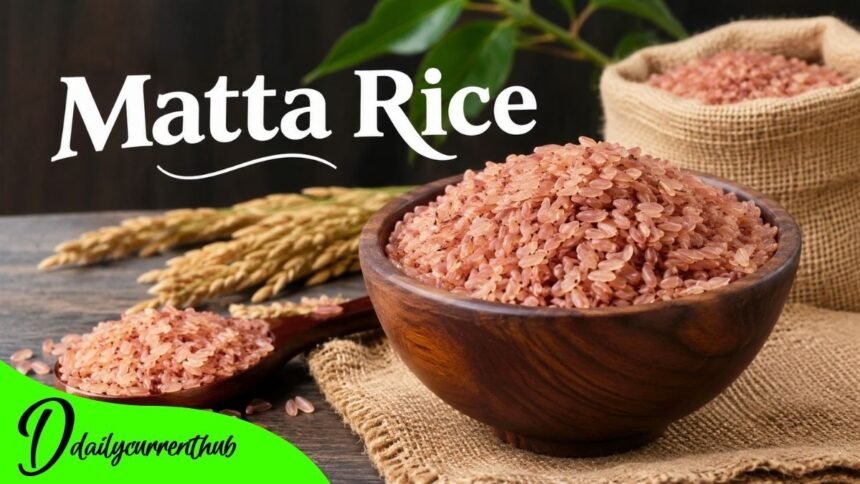
Matta rice is one of the most recognizable traditional rice types associated with Kerala, a state in southern India celebrated for its distinctive food culture. Known for its reddish outer layer, substantial grains, and earthy flavor, this rice holds an established place in everyday meals and traditional cooking. Unlike the slender grains of many popular white rice varieties, matta rice has a fuller appearance and firmer texture, making it especially well-suited to accompany richly flavored curries.
Closely associated with the Palakkad district, the grain has cultural and agricultural significance beyond its role as a staple food. Palakkadan Matta Rice received geographical indication recognition in India in 2007, acknowledging its link to a specific growing region.
This article explores matta rice, including its agricultural background, Processing, nutritional characteristics, cooking techniques, regional dishes, and importance in Kerala’s food heritage.
What Is Matta Rice?
Matta rice is a traditional rice type most closely associated with Kerala’s Palakkad region. It is distinguished by its broad grains and red pericarp, the pigmented outer covering of the rice kernel. Wide commercially available varieties are parboiled, giving the cooked rice a firmer texture than ordinary polished white rice.
People sometimes call it Kerala red rice or rose matta rice. Its appearance can vary depending on how much of the outer bran layer remains after milling.
Matta rice is closely tied to Kerala’s everyday lunch traditions, where it commonly accompanies vegetable curries, lentil dishes, and fish preparations. Its relatively substantial texture lets the grains stay distinct while absorbing the flavors of accompanying foods.
The name also carries a regional identity. Palakkadan Matta Rice is a registered geographical indication, while the broader term matta rice is also used in the commercial rice market. The distinction matters when examining a product’s claimed place of origin.
Origins and Agricultural History of Matta Rice
The history of matta rice is closely connected to rice cultivation in Kerala, where different communities developed agricultural practices suited to local soil, rainfall, and growing conditions.
Palakkad occupies a significant place in this tradition. The district has long been associated with paddy cultivation, and its agricultural landscape has supported several traditional rice types.
Rather than representing only a modern commercial product, matta rice belongs to a wider agricultural heritage shaped by local cultivation and food preferences.
Kerala’s traditional cuisine developed around ingredients readily available in its agricultural environment. Rice became a foundation of daily meals, while coconut, vegetables, pulses, and seafood contributed to a distinctive regional cooking style.
The continued consumption of matta rice illustrates the relationship between local crops and established eating habits.
Historical claims about the rice’s precise age or exclusive use by ancient royal families should be treated carefully unless supported by specific documentary evidence. Its modern geographical and agricultural identity, however, is well established through official records.
What Makes Palakkadan Matta Rice Special?
Palakkadan Matta Rice is recognized for its bold grains, red pericarp, and distinctive flavor.
According to Kerala’s official geographical indication information, the rice is linked to specific agricultural conditions in the Palakkad district.
One important feature of the region is its black cotton soil. Certain paddy fields, locally called poonthalpadam, contain substantial clay and silt and can retain water.
These soil characteristics shape the region’s distinctive cultivation environment.
The rice also differs visually from the widely consumed polished white varieties. Its reddish outer layer gives the grain a characteristic appearance, although the precise color depends on milling and Processing.
When cooked, the rice has a substantial texture and an earthy flavor that complement traditional Kerala dishes.
Its regional importance received formal recognition when Palakkadan Matta Rice was registered under India’s geographical indications system in September 2007.
That registration connects the protected product name with its recognized geographical origin and traditional characteristics.
Cultivation and Traditional Farming Practices
Matta rice cultivation is part of Kerala’s broader paddy-growing tradition.
Rice farming depends on several interacting agricultural factors, including water availability, soil conditions, suitable seed material, and crop management.
In Palakkad, local soil properties are closely linked to paddy farming. The clay-rich soils described in official geographical indication records have relatively high water-holding capacity.
Water management is especially important because rice requires suitable moisture conditions during growth.
Cultivation also involves preparing fields, establishing the crop, maintaining appropriate growing conditions, and harvesting mature paddy.
The exact cultivation schedule varies by variety, season, and farming system.
Although matta rice is often discussed as a single plant variety, the protected Palakkadan Matta tradition encompasses several recognized local cultivars. These include Aryan, Aruvakkari, Chitteni, Chenkazhama, Chettadi, Thavalakannan, Eruppu, Vattan Jyothy, Kunjukunj, and Poochamban.
This diversity demonstrates why preserving traditional agricultural knowledge and seed varieties matters to the region’s food heritage.
Processing and Parboiling of Matta Rice
One defining characteristic of many matta rice products is parboiling, a process performed before the rice is milled and prepared for sale.
Parboiling differs from cooking rice immediately before a meal.
In traditional Processing, farmers soak harvested paddy in water, heat it by steaming or boiling, and then dry it before milling.
The Food and Agriculture Organization explains that parboiling changes the grain’s starch structure and can help retain certain nutrients during subsequent Processing.
This treatment influences the cooking properties of the finished rice.
Parboiled grains generally require different cooking conditions from ordinary raw, polished rice. Their firmer structure means they may need additional soaking or cooking time to become tender.
The amount of polishing also affects the finished product. Rice that retains more of its bran layer usually contains more fiber and certain micronutrients than heavily polished rice.
However, not every bag labeled matta rice has identical nutritional characteristics. The underlying variety, parboiling process, milling degree, and final moisture content can all affect the product.
Consumers should therefore check the packaging rather than assume every matta rice product is processed the same way.
Nutritional Value and Potential Health Benefits
Matta rice is primarily a source of carbohydrates, which supply energy to the body.
Like other rice varieties, it also contains smaller amounts of protein and naturally occurring minerals.
Its nutritional profile depends considerably on whether the bran and germ have been retained.
Fiber content: Rice with more of its outer layers intact generally contains more dietary fiber than fully polished white rice. Fiber supports normal digestion and is part of a balanced diet.
Mineral content: Less-refined rice can provide minerals such as magnesium and phosphorus. The amounts vary by variety, growing conditions, and Processing.
Energy: Matta rice supplies calories principally through starch. It should not automatically be considered a low-calorie food simply because it has a red outer layer.
Gluten: Rice does not naturally contain gluten. People who must avoid gluten should still check packaged products for possible cross-contact during handling or Processing.
Research comparing whole-grain and refined rice generally shows nutritional advantages when more of the bran and germ remain intact.
That does not mean matta rice should be regarded as a treatment for medical conditions or that it is necessarily superior to every other rice product.
Its value is best understood within the context of the complete meal and the individual’s dietary needs.
Matta Rice and Blood Sugar Management
Questions about matta rice and blood sugar are particularly common because red rice is frequently marketed as a healthier alternative to polished white rice.
The relationship is more complicated than color alone.
Rice contains digestible starch, and eating it can increase blood glucose levels. The size and timing of that response depend on factors such as the rice variety, processing method, cooking conditions, portion size, and other foods eaten during the meal.
The glycaemic index measures how quickly a carbohydrate-containing food raises blood glucose under standardized test conditions.
Scientific research shows that glycaemic responses differ among rice products. Parboiling and retaining outer grain layers may influence those responses, but they do not establish one universal glycaemic index for every matta rice product.
Therefore, a claim that all matta rice has a low glycaemic index would be too broad.
People managing diabetes or other blood glucose concerns should consider portions and the overall composition of their meals. Pairing rice with vegetables, protein-rich foods, and other fiber sources can help create a more balanced plate.
Matta rice can fit into different dietary patterns, but its effects shouldn’t be assumed to be automatically beneficial without considering these factors.
How to Cook Matta Rice Properly
Cooking matta rice successfully requires an understanding of its relatively firm grain structure.
Unlike many polished white rice varieties, matta rice generally benefits from soaking and sufficient cooking time.
Begin by measuring the quantity needed and rinsing the grains thoroughly in clean water.
Soaking for approximately 15–30 minutes is a practical starting point, although some preparations use longer soaking periods.
For a pressure-cooker method, a published Kerala cooking guide recommends approximately three to three-and-a-half cups of water for one cup of rice.
Pressure-cook the soaked rice until tender, adding more water on low heat as needed. Cooking time varies by cooker, heat setting, grain type, and desired softness.
A traditional open-pot approach uses plenty of boiling water. Simmer the rice until the center of the grains is tender, then drain any excess water.
The open-pot method lets you check the texture as you cook.
Properly prepared matta rice should be tender enough to eat comfortably while retaining its characteristic substantial texture.
If the center remains hard, cook it longer.
After cooking, you can serve the rice immediately with curries and side dishes.
For food safety, cool leftover cooked rice quickly and refrigerate it. Cooked rice left at room temperature for extended periods can create conditions in which harmful bacteria multiply.
Traditional Kerala Cuisine and Matta Rice
Matta rice holds an established place in Kerala’s culinary traditions because it pairs well with strongly flavored regional dishes.
A traditional Kerala lunch often combines rice with several vegetable preparations and sauces. Matta rice provides a substantial base for these combinations.
One familiar accompaniment is sambar, a lentil-based preparation typically seasoned with spices and vegetables.
Another is avial, a mixed-vegetable dish associated with Kerala cuisine. The vegetables and coconut-based preparation contrast with the rice’s firm grains.
People also commonly serve matta rice with fish curry, vegetable thoran, rasam, and other regional dishes.
The rice has culinary uses beyond the ordinary lunch plate.
Kerala’s official geographical indication information mentions preparations such as kanji, murukku, and kondattam in connection with the Palakkadan Matta tradition.
Kanji is a rice-based porridge or gruel, while murukku and kondattam represent different types of traditional snacks or accompaniments.
These uses demonstrate the grain’s versatility.
Its continuing role in home cooking and regional food traditions reflects more than a preference for its color or nutritional characteristics. It is also an ingredient closely associated with familiar tastes and established meals.
Matta Rice vs White Rice: Understanding the Differences
Although both products belong to the same broad cereal category, matta rice and ordinary polished white rice can differ in several meaningful ways.
FeatureMatta RicePolished White Rice
Appearance Often reddish with bold grains Typically white
Texture Generally firm Often softer, depending on variety
Flavor Earthy and mildly nutty Usually relatively mild
Processing Commonly parboiled Processing varies; bran largely removed
Fiber Depends on bran retention Generally lower
Cooking time Often longer Frequently shorter
Culinary use Common in Kerala meals Used across many cuisines
The nutritional comparison requires particular care.
Matta rice that retains much of its bran can offer advantages over heavily polished white rice. However, color alone does not confirm whole-grain status.
Some matta rice products undergo considerable polishing.
White rice also has practical advantages, including its relatively mild flavor and, in many varieties, shorter cooking time.
Don’t judge either solely by appearance. Processing, serving size, and overall diet quality matter more.
Buying and Storing Matta Rice
When purchasing matta rice, consumers should examine the product label carefully.
Packaging may describe the rice as Kerala matta, rose matta, Palakkadan matta, or Kerala red rice.
These names are often encountered in retail settings, but they should not be treated as automatic proof that every product has the same geographical origin or processing characteristics.
For consumers specifically seeking geographically recognized Palakkadan Matta Rice, reliable information about the producer and origin is especially valuable.
It is also useful to check whether the rice is described as parboiled, unpolished, partially polished, or fully polished.
The grains should appear reasonably uniform and free from signs of excessive moisture, insects, or visible contamination.
For storage, uncooked rice should be kept in a clean, dry, tightly closed, food-safe container.
A cool storage location helps reduce moisture and pest problems.
After opening a package, follow any manufacturer storage instructions, especially in humid climates.
Cultural Heritage and the Future of Matta Rice
The importance of matta rice extends beyond its immediate value as food.
Traditional rice cultivation represents a connection between regional agriculture, local knowledge, and culinary identity.
The geographical indication registration of Palakkadan Matta Rice formally recognizes a product tied to a specific place and established characteristics.
It also distinguishes this protected regional identity from the wider rice marketplace.
Kerala’s agricultural heritage includes numerous traditional rice varieties, several of which have received geographical indication recognition.
Maintaining that diversity matters for the continuation of regional food traditions and agricultural knowledge.
Farmers, producers, food businesses, and consumers all help sustain demand for these products.
For matta rice, its future significance lies in the continued cultivation of recognized varieties, responsible Processing, accurate product identification, and the preservation of traditional culinary uses.
Conclusion
Matta rice remains a distinctive part of Kerala’s agricultural and culinary heritage. Its bold grains, reddish outer layer, earthy flavor, and substantial cooked texture set it apart from many popular polished white rice varieties.
The grain’s association with the Palakkad district is particularly significant, supported by the formal geographical indication registration of Palakkadan Matta Rice in 2007.
Its nutritional value depends on Processing, especially how much of the outer grain layers are retained. While less-refined products can provide useful fiber and minerals, claims about exceptional health benefits or guaranteed blood sugar control require caution.
In the kitchen, matta rice continues to complement traditional dishes ranging from sambar and vegetable curries to fish preparations and rice-based porridges.
Its enduring appeal comes from its regional identity, familiar flavor, culinary versatility, and agricultural heritage. Matta rice is both an everyday staple and a recognized expression of Kerala’s food traditions.
(FAQs)
1. What is matta rice made from?
Matta rice comes from paddy plants. It is known for its relatively bold grains and red outer covering. Commercial products are commonly parboiled before final milling.
2. Is matta rice healthier than white rice?
Matta rice that retains more bran may contain more fiber and certain minerals than heavily polished white rice. The nutritional advantage depends on the product’s Processing and how much you eat.
3. Is matta rice good for people with diabetes?
Matta rice contains carbohydrates and can raise blood glucose. Its glycaemic response depends on the specific rice and how it’s prepared. Appropriate portions and an overall balanced diet remain important.
4. Why is matta rice red in color?
Its characteristic reddish appearance comes from pigments in the grain’s outer layer, particularly the red pericarp. The shade can change depending on milling and cooking.
5. How long does matta rice take to cook?
Cooking time varies according to soaking, grain type, and equipment. It commonly needs longer than polished white rice. Pressure cooking can reduce preparation time, while open-pot cooking allows the tenderness to be checked.
6. What is the difference between matta rice and brown rice?
Brown rice broadly describes rice that retains its bran and germ. Matta rice refers to a traditional Kerala-associated rice type with distinct grain characteristics. Depending on the level of polishing, some matta products may retain more outer grain layers than others.
7. Is matta rice naturally gluten-free?
Yes. Rice is naturally gluten-free. However, people with coeliac disease or serious gluten sensitivity should check packaged products for possible cross-contact with gluten-containing grains.
8. Why is Palakkadan Matta Rice famous?
Palakkadan Matta Rice is recognized for its regional origin, bold reddish grains, distinctive flavor, and place in Kerala cuisine. It received geographical indication registration in India in 2007.