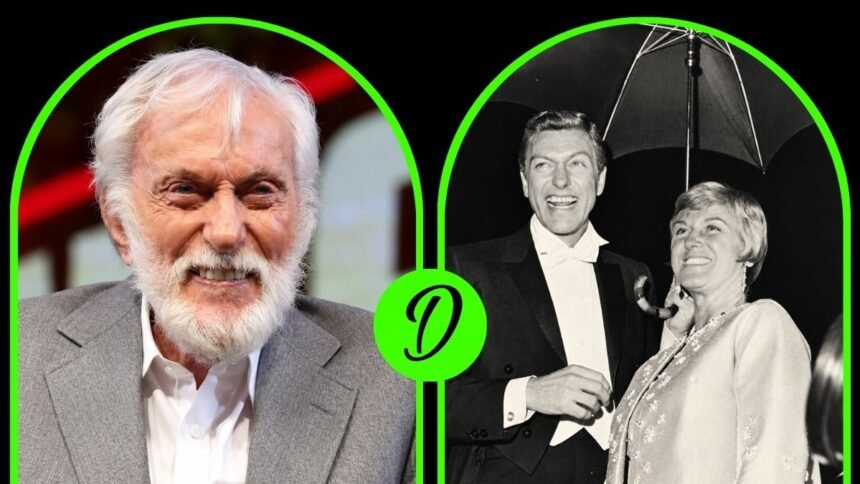
Margie Willett was the first wife of legendary American actor, comedian, and television personality Dick Van Dyke. Although her husband became one of Hollywood’s most recognizable entertainers, Willett maintained a comparatively private life, with her public identity closely connected to their long marriage and four children.
Dick Van Dyke achieved international recognition through The Dick Van Dyke Show, Mary Poppins, and Chitty Chitty Bang Bang. Yet his personal history began long before that success, when he and Willett were a young couple facing the uncertainties of building a family and a career.
Their marriage lasted from 1948 until 1984, spanning an extraordinary transformation in American entertainment. Over those decades, they faced financial struggles, parenthood, professional success, personal difficulties, and, eventually, separation.
Understanding Margie Willett requires looking beyond her famous husband’s achievements. Her story offers a revealing perspective on family responsibilities, the pressures of celebrity, and the complicated relationship between private identity and public recognition.
Profile Summary
| Detail | Information |
|---|---|
| Name | Margie Willett |
| Alternative Name | Margerie Willett |
| Nationality | American |
| Known For | First wife of Dick Van Dyke |
| Husband | Dick Van Dyke (1948–1984) |
| Marriage Date | February 12, 1948 |
| Divorce Year | 1984 |
| Children | Christian, Barry, Stacy, Carrie Beth |
| Early Life Connection | Danville, Illinois |
| Family Residence | Lived in California and later at a ranch near Phoenix, Arizona |
| Public Profile | Primarily known through family history and occasional public appearances |
| Profession | No independently verified professional career established |
| Philanthropic Interests | No independently documented charitable organization or initiative |
| Social Media Presence | No verified personal social media accounts |
| Death | Reported as 2008 by Dick Van Dyke |
| Cause of Death | Pancreatic cancer |
Who Was Margie Willett?
Margie Willett was an American woman whose marriage to Dick Van Dyke placed her alongside one of the most successful entertainers of the twentieth century. Unlike many celebrity spouses who develop independent careers in entertainment or media, Willett remained relatively distant from the professional world that made her husband famous.
The couple met in Danville, Illinois, and began their relationship before Van Dyke achieved major commercial success. They married in 1948, several years before his breakthrough on Broadway and television.
Their family eventually included four children, all of whom had some connection to entertainment, although their professional paths differed considerably.
Willett’s importance in Van Dyke’s biography extends beyond being his first wife. She was part of his life during the formative years of his career, the growth of their family, and the period when his public reputation developed.
Her story is best understood through documented family history and Van Dyke’s own recollections, rather than unsupported claims about her private thoughts or ambitions.
The Life of Margie Willett: A Closer Look
The Private Life of Margie Willett
Margie Willett lived much of her adult life outside the kind of continuous publicity associated with Hollywood celebrities. Although her marriage occasionally put her in the public eye, she never built a comparable public-facing entertainment career.
In a 2016 interview with The Guardian, Dick Van Dyke described Willett as an earthy, artistic person with little affection for Hollywood culture. He recalled that people could overlook her at entertainment gatherings because they were more interested in speaking with him.
His recollection offers a meaningful distinction between participating in a celebrity marriage and enjoying celebrity itself.
Photographic archives show that Willett did accompany Van Dyke to public occasions. Nevertheless, the surviving record of her life is dominated by family events rather than promotional appearances, personal interviews, or independent publicity.
These details suggest a woman whose everyday circumstances were shaped by fame without necessarily sharing her husband’s enthusiasm for the entertainment industry.
Her private life should not automatically be interpreted as complete withdrawal from public society. She occupied a distinctive position: connected to an internationally recognizable performer while maintaining an identity not built primarily around professional celebrity.
Early Life and Background of Margie Willett
Margie Willett’s early life is most reliably tied to Danville, Illinois, where she and Dick Van Dyke met before marriage.
Van Dyke was born in Missouri in 1925 and grew up in Danville. According to People, the couple began dating when he was about 20.
This establishes an important fact about their relationship: it developed before the glamour, financial success, and professional commitments that later became central features of Van Dyke’s career.
They began their association within a shared community rather than through Hollywood studios or celebrity social circles.
That background makes the timing of their relationship particularly significant. Willett knew Van Dyke early in his career, when his success in entertainment remained uncertain.
Major biographical sources do not provide enough detail about her formal education, parents, or independent professional ambitions to support a more elaborate personal history.
Rather than constructing an unsupported childhood narrative, her documented early connection with Van Dyke provides the strongest foundation for understanding the life they subsequently built together.
Marriage and Partnership with Dick Van Dyke
Margie Willett and Dick Van Dyke married on February 12, 1948, in an unusual ceremony associated with the radio program Bride and Groom.
The program featured engaged couples whose wedding stories became part of its broadcasts. Historical accounts say ceremonies took place in a chapel adjoining the Chapman Park Hotel in Los Angeles, where couples were introduced and interviewed during the event.
The program also provided wedding-related gifts, making it appealing to couples with limited financial resources.
Van Dyke later acknowledged that the benefits offered by the program helped make their marriage financially possible.
This wedding is one of the most distinctive facts in their relationship history. It took place long before Van Dyke became a household name on television.
His breakthrough came with the Broadway production of Bye Bye Birdie, followed by the enormous popularity of The Dick Van Dyke Show, which premiered in 1961.
His 1964 appearance in Disney’s Mary Poppins further expanded his international reputation.
Willett experienced this professional transformation as his spouse and the mother of their growing family.
They were also photographed together during the height of his career, including at entertainment-related events in the 1960s.
Their marriage therefore combined a long shared personal history with increasingly different experiences of public attention.
Margie Willett’s Role Behind the Scenes
Perhaps the clearest evidence of Willett’s contribution to family life comes from Van Dyke himself.
During his 2016 discussion of parenting with The Guardian, he acknowledged her substantial role in raising their children.
His remarks were especially meaningful because he also reflected critically on his own difficulties with alcohol and the effects those difficulties had on family life.
Van Dyke’s professional schedule included television production, theatrical performances, filming, and other commitments associated with an increasingly successful entertainment career.
Against that background, Willett’s responsibilities as a parent played an important role in the family’s everyday life.
This does not mean she should be credited with her husband’s creative achievements or business decisions without evidence. Her documented contribution belongs principally to their shared domestic and family history.
One particularly revealing example of her influence concerned the family’s move to Arizona.
The PBS American Masters documentary about Dick Van Dyke describes Willett’s dissatisfaction with Hollywood life and her role in encouraging the family to buy a ranch near Phoenix.
The move also affected Van Dyke’s professional arrangements. The family’s move also affected Van Dyke’s professional arrangements: his series, The New Dick Van Dyke Show, was initially produced in Arizona, closer to the family’s home.
That connection demonstrates how family preferences could intersect with decisions surrounding a major television career.
Family Life: Raising the Next Generation
Margie Willett and Dick Van Dyke had four children: Christian, Barry, Stacy, and Carrie Beth.
Their children were born as Van Dyke’s career grew from uncertain beginnings into sustained national recognition.
Christian Van Dyke, the eldest, pursued a path that eventually took him beyond acting. He studied law and worked in legal and business roles, including positions connected to Nike and Patagonia.
Barry Van Dyke followed his father more directly into entertainment. He became a professional actor and is best known for playing Detective Steve Sloan alongside his father on Diagnosis: Murder.
Stacy Van Dyke also appeared in television productions involving her father, including The New Dick Van Dyke Show and Diagnosis: Murder. She has also performed in musicals.
Carrie Beth Van Dyke, the youngest, made television appearances but spent much of her adult life outside extensive celebrity publicity.
Their different careers show that growing up in a prominent entertainment family did not lead every child down the same professional path.
The family’s life was not without challenges. Van Dyke has publicly acknowledged that his alcoholism affected his parenting and domestic relationships.
He also spoke with appreciation about how his children grew into adulthood, explicitly recognizing Willett’s contribution.
Her role as their mother remains one of the clearest and most enduring aspects of her biography.
Philanthropy and Community Engagement
Dick Van Dyke’s long public career includes documented charitable and community involvement.
He has been associated with volunteer work benefiting vulnerable people in Los Angeles, including activities connected to the Midnight Mission.
However, those public contributions must be distinguished from Margie Willett’s individual activities.
No sufficiently documented basis exists to attribute a specific philanthropic organization, charitable foundation, or formal community initiative to Willett personally.
The distinction matters because celebrity family histories sometimes combine different relatives’ achievements into a single account.
A husband’s charitable work does not automatically establish his spouse’s participation, just as a family’s public reputation cannot reliably determine an individual’s private interests.
Willett’s documented legacy is more clearly associated with her marriage, parenthood, and influence on family living arrangements.
A responsible biography can recognize the broader Van Dyke family’s charitable footprint while avoiding the invention of personal philanthropic accomplishments.
The Power of Privacy: Influence Without Publicity
Margie Willett’s life demonstrates an important distinction between public visibility and personal significance.
She became connected to a world-famous entertainer without pursuing the same degree of publicity.
Van Dyke’s accounts of her discomfort with Hollywood suggest that the entertainment industry’s social environment did not suit her particularly well.
Their move toward ranch life in Arizona provides a concrete example of the family’s search for an alternative to constant proximity to Hollywood.
Privacy, however, should not be romanticized into an invented philosophy.
No reliable evidence supports claims that Willett deliberately adopted a particular public-relations strategy, rejected fame for moral reasons, or intended to inspire others through anonymity.
What can be said is that her life was not extensively documented through media interviews and professional publicity.
Consequently, surviving accounts rely heavily on her former husband’s recollections and her children’s experiences.
Recognizing that limitation is essential. It helps readers appreciate Willett’s place in the family without assigning her motives she never publicly confirmed.
Marriage Difficulties, Separation, and Divorce
The relationship between Margie Willett and Dick Van Dyke became increasingly difficult during the 1970s.
Van Dyke has publicly discussed his long struggle with alcoholism, including his admission to treatment in 1972.
He also disclosed that Willett received treatment for dependence on antidepressant medication.
These experiences were discussed by Van Dyke as part of the broader difficulties affecting their marriage. They should be understood as personal health struggles rather than material for sensational speculation.
Another major development was Van Dyke’s growing relationship with Michelle Triola, who had worked as his agent’s secretary.
In his memoirs, Van Dyke acknowledged that he became romantically involved with Triola while still married to Willett. He also described feeling guilty about the situation.
The marriage had already been strained by growing emotional distance and differing attitudes toward life in the entertainment industry.
By the mid-1970s, Willett and Van Dyke had separated.
They finalized their divorce in 1984, ending a marriage of about 36 years.
Van Dyke subsequently maintained a long relationship with Triola, who died in 2009.
The divorce did not erase the couple’s shared history or their continuing connection through four children.
Public Curiosity and Misconceptions About Margie Willett
Interest in Margie Willett continues largely because Dick Van Dyke’s career spans several generations of television and film audiences.
As viewers revisit his work, they naturally encounter questions about his early marriage and family.
However, recurring online biographies can create confusion when unverified details are repeated without clear sourcing.
One example concerns Willett’s personal identity. Her name appears in different forms, including Margie and Margerie, in biographical materials.
Another concerns her death year. In his published family interview, Van Dyke identified 2008, while some secondary celebrity biographies report 2007.
These discrepancies show why precise biographical information shouldn’t be treated as established merely because it appears across multiple websites.
Another misconception is portraying Willett as a permanent recluse. Archival photographs establish that she attended public occasions with her husband.
Equally, her limited publicity does not justify assuming a detailed set of personal beliefs, financial circumstances, or private relationships.
The strongest portrait is built around her marriage, children, documented family choices, and accounts from people directly connected to her life.
Death, Legacy, and How Margie Willett Is Remembered
Margie Willett died after suffering from pancreatic cancer.
Dick Van Dyke discussed her death in a 2016 interview with The Guardian, identifying the year as 2008 and speaking about the personal loss he experienced.
A retrospective in Vanity Fair likewise places her death in 2008 and describes Van Dyke as being at her side near the end of her life.
Her death closed an important chapter in the personal history of a performer whose career continued long after their divorce.
Willett’s legacy is closely tied to the four children she raised and the decades during which her family watched Van Dyke emerge as a major television and film star.
Her descendants’ continued public careers and family lives also preserve that connection.
Yet her personal history deserves recognition separate from the romantic developments that followed her marriage.
She was part of Van Dyke’s life before his greatest success, experienced the transformations that success brought, and contributed substantially to raising their family.
Those documented facts provide a meaningful account of her place in entertainment history without exaggerating her public role.
Conclusion
Margie Willett’s life offers a perspective on celebrity history that is often overlooked: the experience of someone who shared a famous person’s journey without becoming a public entertainer herself.
Her 36-year marriage to Dick Van Dyke began before he became a television legend and continued through major professional milestones, four children, personal difficulties, and changing family circumstances.
Although the couple ultimately divorced, their shared history remained an important part of Van Dyke’s recollections.
His acknowledgment of her contribution to raising their children offers one of the clearest statements about her lasting significance.
Willett’s biography is not a story of hidden fame or undocumented achievements. It is the history of a woman whose family life intersected with one of America’s most recognizable entertainment careers.
Her legacy survives through documented family relationships, personal memories, and the broader history of the Van Dyke family.
Read this too:Jane Elizabeth Ebsworth Oriel: The Remarkable Life and Legacy of David Attenborough’s Beloved Wife
(FAQs)
1. Who was Margie Willett?
Margie Willett was the first wife of American actor and comedian Dick Van Dyke. They married in 1948, had four children, and divorced in 1984.
2. When did Margie Willett marry Dick Van Dyke?
Margie Willett married Dick Van Dyke on February 12, 1948. Their wedding was tied to the Los Angeles radio program Bride and Groom.
3. How many children did Margie Willett have?
She had four children with Dick Van Dyke: Christian, Barry, Stacy, and Carrie Beth.
4. Why did Margie Willett and Dick Van Dyke divorce?
Their marriage experienced personal difficulties, including substance-dependence struggles, growing emotional distance, and Van Dyke’s relationship with Michelle Triola. They divorced in 1984.
5. Was Margie Willett an actress?
No evidence suggests Margie Willett pursued a professional acting career. She is best known for her marriage to Dick Van Dyke and their family life.
6. Did Margie Willett enjoy Hollywood life?
Dick Van Dyke described her as uncomfortable with Hollywood culture. The couple eventually settled in a home near Phoenix, Arizona, away from the center of the entertainment industry.
7. When and how did Margie Willett die?
She died of pancreatic cancer. Dick Van Dyke identified 2008 as the year of her death, although some secondary publications report 2007.
8. What is Margie Willett’s lasting legacy?
Her legacy centers on her four children, her long marriage to Dick Van Dyke, and her significant role in the family’s life as he built his successful entertainment career.